Get Full Government Meeting Transcripts, Videos, & Alerts Forever!
Get email alerts on the Executive Session Litigation topic
No spam. Unsubscribe anytime.
Polk County board announces executive session to discuss possible litigation
Summary
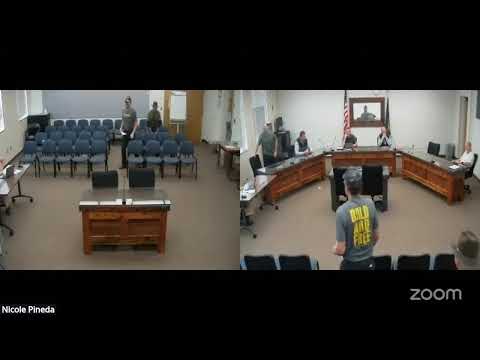
At its Sept. 24 meeting the Polk County Board of Commissioners approved the agenda and minutes and announced it will meet in executive session under ORS 192.660(2)(h) to consider legal rights and duties related to current and potential litigation.
An unidentified presiding official opened the Polk County Board of Commissioners meeting Wednesday, Sept. 24, approved the agenda and the minutes from Sept. 17, and announced the board would move into an executive session under Oregon law to discuss litigation. The board approved the agenda and minutes by voice vote, with two affirmative votes recorded.
The presiding official said the board would meet in executive session pursuant to ORS 192.660(2)(h) "to consider the legal rights and duties of a public body with regard to current litigation and litigation likely to be filed." The announcement appeared to end public business on the record and move the board into a closed session allowed by state statute.
The action to convene an executive session was an administrative direction; the transcript records no further public discussion or formal, on-the-record decisions about the subject of the anticipated litigation. The transcript also notes that one commissioner was excused from the meeting; the transcript does not identify which commissioner.
Under ORS 192.660(2)(h), executive sessions may be used to consult with legal counsel about litigation; the transcript shows the board invoked that provision but did not provide details about the matter to be discussed in public or on the record. No votes or substantive policy decisions about the litigation were recorded in the provided transcript.
The meeting record supplied ends at the announcement of the executive session. The transcript does not specify the matter that prompted the closed-session notice, any court, plaintiff, defendant, or timeline for further public action.