Get Full Government Meeting Transcripts, Videos, & Alerts Forever!
Get email alerts on the Solid Waste topic
No spam. Unsubscribe anytime.
Residents and justices raise concerns about waste facilities and odor amid growth discussion
Summary
Public commenters and a quorum court member raised complaints about local landfill odors and long-term capacity constraints for regional waste disposal; consultants said waste management was outside their study scope but acknowledged the issue should be elevated for planning.
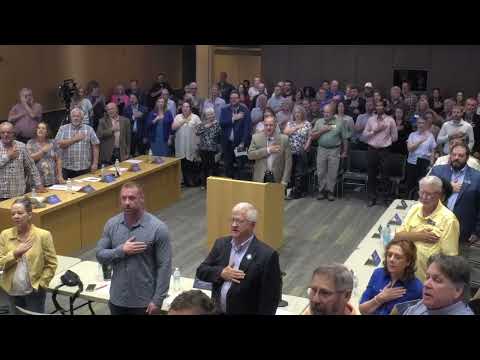
Two moments in the joint Washington and Benton County quorum courts meeting shifted attention from growth analytics to waste management: a Fayetteville resident raised persistent odors from a local landfill operation, and a county justice warned that the primary regional landfill may be nearing capacity.
Kenneth Lovett, identified in the meeting as a Washington County resident from Fayetteville, asked whether the Growing Home study considered waste management and whether that topic will be part of future regional planning. Lovett said he is affected daily "by vapors from Waste Management, EcoVista" and offered to show officials where the odors come from. Consultants replied that their current work has not focused on solid-waste siting and operations and that they had not done deep analysis on landfill capacity or recycling systems.
Later in the meeting Justice (JP) Moore raised the issue of regional disposal capacity, saying that "Mount Trashmore and Taneytown is quickly running out of capacity," and asked whether the consultants or the council had addressed options. Consultant presenters said they had discussed the issue with council staff and that a separate study had been done on waste capacity; they acknowledged the matter is pressing but said it was outside the scope of the Growing Home fiscal and land-use analysis.
No formal action was taken at the meeting on solid-waste siting, odor complaints, or capacity planning. Multiple county officials and several justices said the issue should be elevated to appropriate agencies and to regional planning bodies as part of coordinated infrastructure and environmental work.