Get Full Government Meeting Transcripts, Videos, & Alerts Forever!
Get email alerts on the Transportation And Traffic topic
No spam. Unsubscribe anytime.
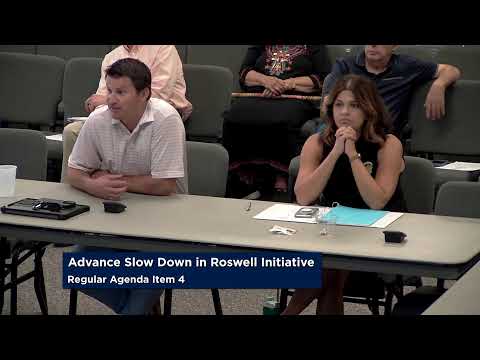
Roswell committee approves traffic‑calming matrix and 11‑neighborhood pilot; staff seeks $400K and one analyst in 2026 budget
Summary
The committee approved the neighborhood traffic-calming matrix and a pilot program covering 11 neighborhoods, with a staff request for $400,000 for temporary devices and a $102,000 traffic analyst position to be considered in the 2026 budget.
The Roswell mayor and council committee voted unanimously on Sept. 23 to approve the neighborhood traffic‑calming matrix and a pilot program covering 11 neighborhoods as the first phase of the “Slowdown in Roswell” initiative. The decision followed a presentation by Greg Nicholas, interim director of Transportation.
What the matrix is: Staff described a weighted scoring system to prioritize neighborhoods for traffic-calming measures. Factors include speeding (weighted 40%), average daily traffic volume, sidewalk completeness, proximity to amenities (schools, parks, shopping) and neighborhood poverty rate. Nicholas said initial rankings were calculated with citywide mobility data purchased from a private vendor (streetlight data) and will be validated with field collection during the pilot.
Pilot program and evaluation: The pilot uses a three‑step process in the 11 highest‑scoring neighborhoods: (1) targeted data collection with city traffic devices to confirm speeds and volumes; (2) temporary installations of traffic‑calming devices and a 30–60 day evaluation period; and (3) an assessment to decide whether to make installations permanent or adjust spacing or device types.
Budget and staffing requests: Nicholas said staff will seek $400,000 in the 2026 budget for temporary devices, additional data collection and speed‑feedback signs. He also proposed a traffic analyst position with an estimated $102,000 annual cost to support program delivery; both the budget and position were presented for council consideration during the budget process.
Public process and opt‑out: Nicholas told the committee the pilot includes public outreach, school engagement and giveaways at community events. In response to council questions, staff said neighborhoods cannot opt out of the program because the work addresses public roads and public safety; staff said individual neighborhoods may still pursue smaller, locally led initiatives and the city will not block those voluntary efforts.
Council action: Council member David Johnson moved to approve the neighborhood traffic‑calming matrix and pilot program; Council member Northland seconded. The committee voted unanimously to adopt the matrix and pilot.
Next steps: Staff said it will return to the council with pilot data and recommendations — likely in second or third quarter 2026 — to determine expansion or changes. If the pilot proves effective, additional funding and a broader rollout will be proposed during the budget cycle.
Speakers who addressed this topic included Greg Nicholas (Interim Director of Transportation), Council member David Johnson, Council member Christine Hall and Council member Martha Lynn.