
Melbourne council hears hours of public comment on proposal to rename Cypress Avenue for Charlie Kirk; no immediate action taken
Get AI-powered insights, summaries, and transcripts
Subscribe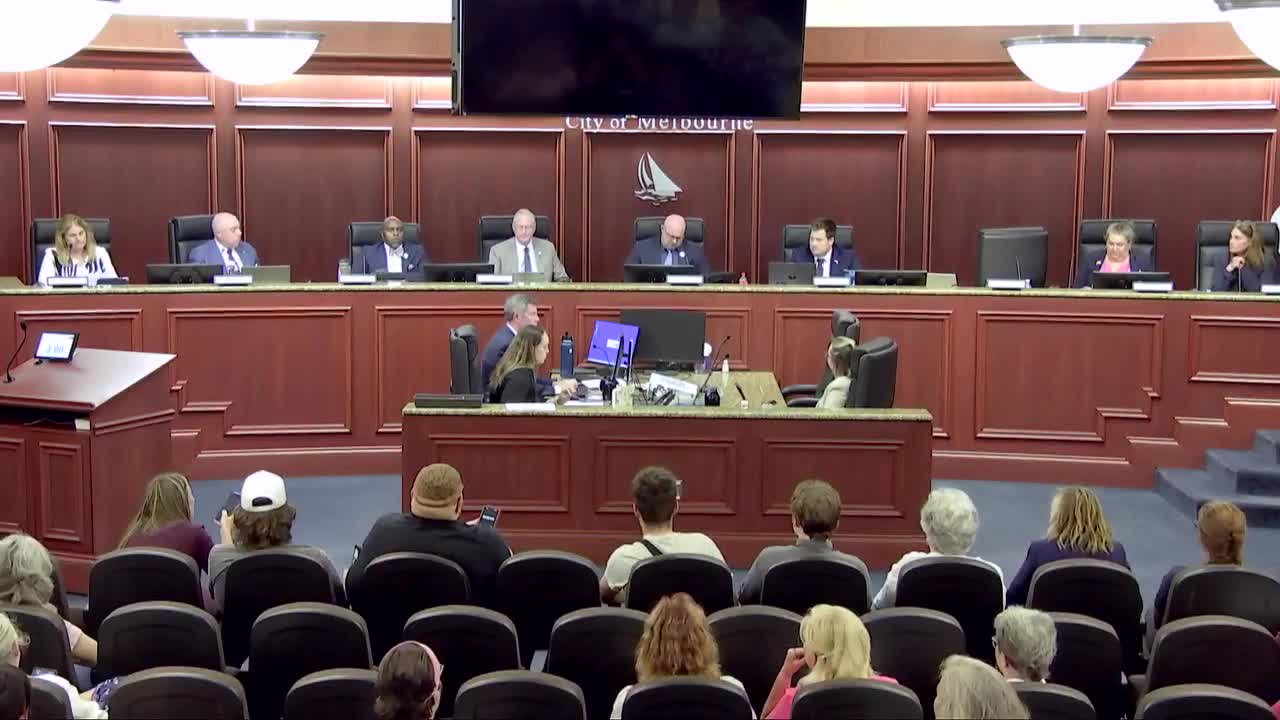
Summary
The Melbourne City Council spent more than two hours debating a mayoral proposal to rename part of Cypress Avenue for conservative activist Charlie Kirk. Dozens of residents spoke for and against the move; council members did not adopt a street‑name change at the meeting and directed staff to return with options after further review.
The Melbourne City Council on Tuesday took up a mayor‑sponsored proposal to rename the southern segment of Cypress Avenue “Charlie Kirk Lane,” prompting more than two hours of public comment and a heated council discussion.
Mayor Paul Alfrey introduced the proposal and framed it as an affirmation of free speech and civic engagement, saying in the council chamber: “Charlie Kirk devoted his life to encouraging civil, civic participation, free expression, and political engagement, especially among young people.” He said a local landowner had offered to pay any fees associated with a renaming.
The measure drew large public turnout and sharply divergent testimony. Opponents said Kirk’s public statements were racist, misogynistic and anti‑Semitic and argued that his name would divide the city. “Honoring someone in this way is not neutral,” said Wendy Hixson, a licensed mental‑health counselor who told council she had worked with at‑risk youth, and urged members to consider the effect of such an endorsement on vulnerable residents.
Supporters argued Kirk’s work mobilized young people and defended his right to be memorialized. “This is more than just a change of signage,” said Ricky Diaz, who described himself as a conservative activist and city resident, calling the proposal a tribute to free speech and civic debate.
Council members debated the proposal at length. Several members said they were reluctant to act on a high‑profile naming proposal on short notice and asked for additional review of legal and policy constraints and community impacts. At one point a motion was made to schedule a workshop to further consider the naming and related issues; a roll‑call vote was taken. The record shows multiple ‘nay’ votes by council members and aye votes from Vice Mayor Newman and Mayor Alfrey. Shortly after that roll‑call the mayor announced there would be no workshop on the proposal at this time and the council moved on to other business.
Council members and staff also discussed code criteria for street renaming. Several speakers pointed to city ordinance language requiring consideration of historical or cultural significance and a waiting period for naming (counsel cited City ordinance language requiring a five‑year minimum after death in some naming processes). Council member comments repeatedly returned to the need for a deliberate process that would consider alternatives and community consensus before placing a new name on public signage.
The mayor and other council members said they nonetheless wanted options on the table that might achieve the stated goal of recognizing free‑speech values while reducing community division — for example, dedicating a larger, less residential arterial or a public plaza, or establishing an honorary designation rather than a full renaming of a street. City staff indicated they would return with details about code requirements, possible alternate locations, and the timetable for any formal action.
For now, no ordinance, resolution or formal street‑name change was adopted.
Why it matters: The debate highlighted competing priorities for local elected officials — protecting freedom of expression, protecting vulnerable residents from divisive symbolism and the technical policy steps cities use to approve permanent civic honors. The topic drew large public attendance and sharply polarized testimony, making it one of the most contentious single items the council has taken up this year.
What’s next: City staff will return to council with clarifying information about ordinance criteria, alternate forms of civic recognition (plaques, honorary designations, other public sites) and the financial and operational steps needed for renaming streets. Council indicated it expects a more detailed staff report before considering a final vote.