
Ouray-area district attorney urges county support as office faces staffing, caseload strain
Get AI-powered insights, summaries, and transcripts
Subscribe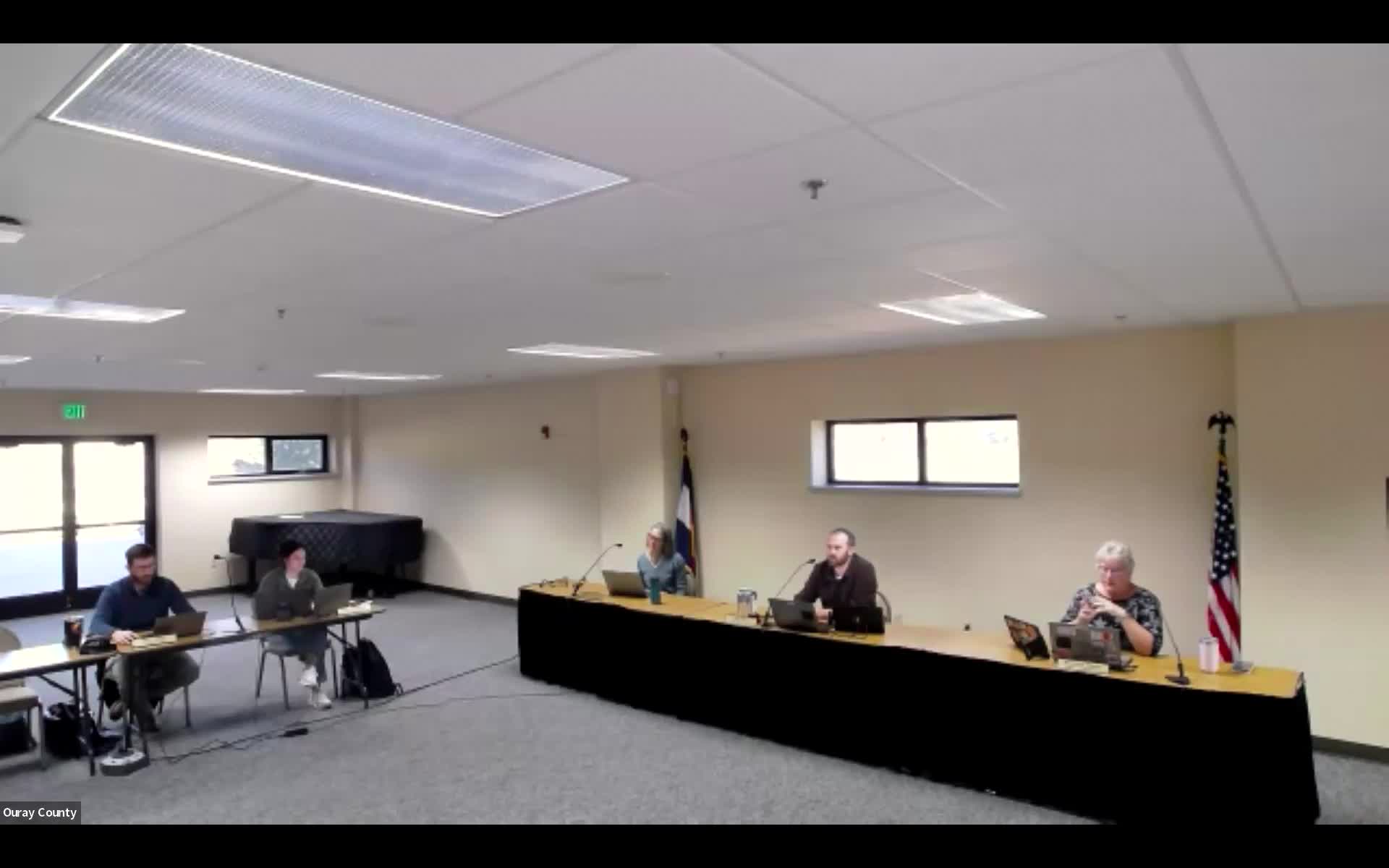
Summary
Seventh Judicial District District Attorney Anna Kuehling told Ouray County commissioners she needs additional county funding to retain and hire prosecutors and support staff to handle high caseloads, body-camera discovery deadlines and victim services.
District Attorney Anna Kuehling told the Ouray County Board of County Commissioners on Sept. 24 that her Seventh Judicial District office is under severe staffing and financial strain and asked counties in the district to help cover shortfalls so prosecutors can meet statutory deadlines and maintain public safety.
Kuehling, who said her jurisdiction covers six counties and more than 10,000 square miles, told commissioners the office has lost attorneys in the past and currently is at a staffing minimum. "Our needs are extreme," she said. She cited about 368 "cases to date" handled in Ouray County during her nine months in office and said that attorneys were carrying caseloads she described as roughly four times recommended American Bar Association levels.
Kuehling said state law requires that her salary meet the district court judge salary and Assistant District Attorney Jessica Wagner’s pay meet the county court salary; she said the state pays 80% of her salary and employer PERA for her position but that the legislature reduced anticipated state support for ADA salaries to 25% and did not cover associated PERA for ADAs. She said the district had received nearly $300,000 in victim-services grants secured by a former victim advocate; after accounting for that grant funding and an amended budget, she said the per‑county request for Ouray County amounts to a net of about $64,644.34 for this budget year.
Kuehling outlined office changes since she took office, including creation of a Special Victims Unit with an attorney, investigator and additional victim-advocate staff. She described discovery and Rule 16 compliance challenges after the state’s body-worn camera requirements moved evidence from paper reports to video files and imposed a 21‑day disclosure timeline; she said her office reduced discovery violations from about 15 per month previously to four in the last nine months by creating an evidence‑tech division.
Kuehling said plea agreements are a necessary tool given limited trial capacity — two judges and approximately 40 trial days in the district — and the statutory six‑month speedy‑trial standard that, if not satisfied, can result in dismissal. "If we do not plead cases, then the entire system will implode," she said, adding that taking a case to trial is risky for victims and the justice system.
Commissioners and county officials asked for more regular reporting from the DA’s office so elected officials can track how additional staffing would change outcomes. Commissioner comments and county staff indicated willingness to consider funding increases but noted strained county budgets and competing priorities such as sheriff staffing, road and other county services. Undersheriff Tammy Stroop, Sheriff Perry and others described local law‑enforcement support for the DA’s requests; Stroop said the sheriff’s office stands ready to coordinate on victim response and that a Sexual Assault Response Team (SART) is in formation.
Kuehling also said the office is prioritizing DUIs, domestic‑violence prosecution — and a lethality assessment tool (ODARA) for officers to identify victims at high risk of lethality — and that community outreach sessions are planned to explain prosecutorial practices to residents and law enforcement.
Ending
Commissioners asked Kuehling for follow‑up metrics they can use in budget deliberations; Commissioner Jake Kurzweil suggested semiannual briefings and asked for statistics showing what additional funding would produce for retention and case processing. Kuehling agreed to produce future reporting on discovery compliance, caseloads and how additional attorneys would change outcomes.
Topics in this meeting were discussed; no formal budget votes or motions were recorded in the public work session.