Grundy County land-use panel recommends against several nearby solar farms amid resident safety and property concerns
Loading...
Summary
The Grundy County Land Use Committee on Sept. 23 recommended denial or negative recommendations for multiple proposed solar projects after residents raised worries about property values, well water contamination, glare for Morris Municipal Airport pilots and road impacts; staff and developers highlighted tax revenue and subscription savings.
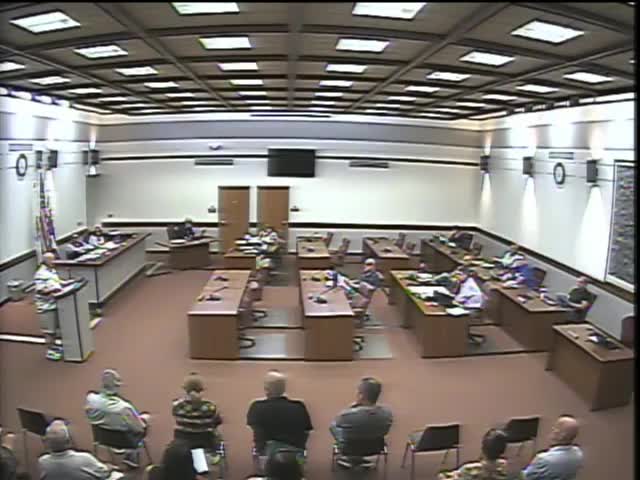
The Grundy County Land Use Committee recommended against several proposed utility-scale solar projects after a night of public comment and technical presentations that spotlighted concerns about groundwater, property values, aviation safety and cumulative impacts. Committee members forwarded negative recommendations for Montgomery, Delta, Keeneland and the Goose Lake Township Solar 1 proposals to the full county board for final action.
Residents living near the proposed sites described the proposals as poorly sited and too close to homes. “We are the only residence that is looking to be boxed in by this solar farm,” said Jen Carroll, a Morris-area resident, during public comment. “They told me that it would not affect our property value. I dare them to move where I am at and tell me it's not going to affect my property value.”
The committee heard multiple technical points and assurances from developers. Tyler Morris, a US Solar representative, said the projects would raise local tax revenues and offer subscription discounts to county residents. “After the construction and it's reassessed, that tax base goes up to between $30,000 and $35,000 in the first year,” he said, describing projected revenue to schools and other taxing bodies.
Why it matters: The decisions will shape whether large tracts of farmland in Saratoga Township and nearby areas become long-term sites for ground-mounted panels, affecting farmland use, local road wear, school and county tax bases and potential aviation safety reviews tied to the Morris Municipal Airport.
What the committee did - Montgomery Solar (US Solar; 25ZBA017): Zoning Board of Appeals (ZBA) had issued a positive recommendation; the Land Use Committee voted to forward a negative recommendation to the full board (motion carried). - Delta Solar (US Solar; 25ZBA015): After public comment and staff presentation, the committee voted to forward a negative recommendation (motion carried). - Keeneland Solar (US Solar; 25ZBA016): The committee voted to forward a negative recommendation (motion carried, 5–1). - Goose Lake Township Solar 1 (Goose Lake Township Solar 1 LLC; 25ZBA018): The committee voted to forward a negative recommendation (motion carried).
Resident concerns at the meeting focused on several recurring themes: possible contamination of well water from panel breakage or from herbicide use; the effect of panels on nearby property values; glare or "glint and glare" risks to pilots and potential impacts on navigation and the newly expanded Morris runway; and road damage from construction traffic on roads not built for heavy equipment.
“My wife and I sit on the porch every morning and have our coffee from April to November,” said Dennis Wills, who lives near a proposed event venue and spoke generally about preserving rural character when development proposals arise. “There’s hardly any cars that go by here. … I just can’t imagine that there will not be any accidents.”
Developers, regulators and staff Developers and their representatives repeatedly described compliance with county checklists and state and federal reviews. Al (staff) and Heidi (planning staff) told the committee that project applicants had submitted required materials — interconnection agreements with ComEd, NRI/LISA environmental reviews, IDNR/FEMA/US Fish and Wildlife screening and decommissioning bonds that, staff said, comply with IEMA guidance.
Tyler Morris of US Solar told the committee the projects use silicon-based panels and are designed to be low-maintenance; he said producers follow Agricultural Impact Mitigation Agreements and other state-level protections. “These are silicone based panels. So there's no cadmium or telluride,” Morris said, arguing that panels of that type do not present the specific heavy-metal risk some residents cited.
Officials and statutes referenced at the meeting included a City of Morris resolution (R25-12, Sept. 15) objecting to large-scale solar developments within the city’s 1.5-mile planning jurisdiction, Commerce/utility interconnection agreements with ComEd, IDNR and US Fish and Wildlife screenings, and county unified development-code sections cited by staff.
What’s next Each negative recommendation will go to the full Grundy County Board for final action on Oct. 14. Developers and opponents were told the committee's recommendation is advisory and that the county board will make the final decision.
Ending note: The meeting captured a county in tension between local residents seeking protection of rural land and character, and developers and some local officials stressing tax and subscription benefits; the county board will weigh those competing claims next month.