
State officials tell lawmakers registered apprenticeships depend on available jobs; wait lists reflect job scarcity, not training capacity
Get AI-powered insights, summaries, and transcripts
Subscribe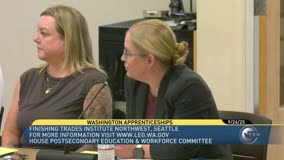
Summary
South Seattle Community College — Washington State apprenticeship leaders told the House Postsecondary Education & Workforce Committee that registered apprenticeship is fundamentally a job-based training model and that expanding apprenticeship in the state depends on creating and using job opportunities, not only standing up training programs.
South Seattle Community College — Washington State apprenticeship leaders told the House Postsecondary Education & Workforce Committee that registered apprenticeship is fundamentally a job-based training model and that expanding apprenticeship in the state depends on creating and using job opportunities, not only standing up training programs.
"Registered apprenticeship starts with a job," Rachel McAloon, program manager of the registered apprenticeship section at the Washington State Department of Labor and Industries, said during a Sept. work session at the Georgetown campus. She and other presenters described the model as a combo of paid on‑the‑job training and classroom instruction, and reiterated federal and state minimums: at least 2,000 hours of paid on‑the‑job training and a minimum of 144 hours of classroom instruction per year.
That linkage matters for policy, presenters said. "Thereis not a worker shortage. Thereis a living‑wage job shortage," Ray Dumas of Masons and Plasters Local 528 said, summarizing a building trades survey showing large numbers of workers on out‑of‑work lists and more than 8,000 people waiting to enter apprenticeship programs. Dumas and others urged lawmakers to focus on policies that create demand for apprentices—such as apprentice utilization requirements on public projects and incentives for employers to become training agents rather than assuming more training programs alone will solve the backlog.
McAloon provided a statewide snapshot: roughly 205 active registered apprenticeship programs, about 17,000 active apprentices, roughly 80% of the system concentrated in building and construction trades, and about 3,800 active training agents (employers) in 2024, up from roughly 900 in 2014. She emphasized that apprenticeships are administered in Washington as an SAA state through the Washington State Apprenticeship and Training Council; Labor & Industries is the councils administrative arm.
Presenters described barriers that keep apprentices from being dispatched to jobs even when training spots exist: employers who do not sign on as training agents, projects that do not require apprentice utilization, and the financial instability apprentices face during classroom blocks or unemployment between projects. Ray Dumas said programs and training funds are largely privately financed in the building trades via hour‑based payroll contributions; that private investment sustains classroom and continuing education, but it requires employer commitment to place apprentices on job sites.
Committee members asked whether the state has data to guide prospective apprentices to occupations and regions with shorter wait lists. McAloon said Labor & Industries maintains the ARTS (Apprenticeship Registration and Tracking System) database and that it allows searches by county and occupation, but it does not report which employers are hiring. She and other speakers pointed to navigators and the Construct a Career pilot as best practices to connect individuals to programs and openings.
Why it matters: lawmakers weighing workforce policy or public contracting requirements can influence apprenticeship employment more quickly by encouraging apprentice utilization and lowering barriers for employers to serve as training agents. Presenters repeatedly asked legislators and public owners to consider policies that create job demand for apprenticeships on public works and grant‑funded projects.
Details and context: presenters said federal law (the National Apprenticeship Act of 1937) authorizes states to operate registered apprenticeship programs and that Washingtons council composition mirrors program committees, with equal labor and management representation. McAloon, Dumas and others noted growth in pre‑apprenticeship recognition (61 programs in 2025) and racial and gender participation rates (statewide apprenticeship participation cited at about 13% female, 36% minority, 8% veteran). Speakers warned that wage and participation statistics reflect the large share of union building trades in the system and suggested readers interpret averages accordingly.
What lawmakers asked next: committee members sought clearer tools to report local demand and to connect high‑school counselors and job‑seekers to openings; presenters recommended investing in navigator capacity and in apprentice support services that reduce dropouts during classroom periods or temporary unemployment.