
Residents urge DuPage County to form ad hoc response as ICE enforcement prompts calls for mental-health, legal and outreach supports
Get AI-powered insights, summaries, and transcripts
Subscribe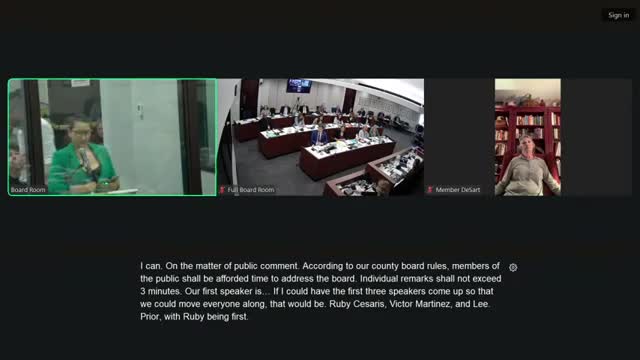
Summary
Public comment at the DuPage County Board’s Sept. 23 meeting focused on immigration enforcement; residents and community leaders urged a county-led response to trauma, legal risk and service withdrawal.
Public comment at the DuPage County Board’s Sept. 23 meeting was dominated by calls for a county-led response after multiple speakers described recent immigration-enforcement activity they say has traumatized families, driven people from public programs and hurt local businesses.
“Trauma-informed counseling and clear referral pathways reduce long-term harm,” Ruby Cesaris told the board, urging the formation of an ad hoc committee of county officials, health experts and community partners to coordinate mental-health response, service protection and economic stabilization. Multiple speakers described volunteers patrolling neighborhoods, limited local resources and widespread fear that keeps people from seeking services or going to work.
Several speakers linked the effects of enforcement to public-health outcomes. Dr. Lily Burciaga, president and founder of Alliance of Latinos Motivating Action in the Suburbs (ADONAS) and a licensed clinical professional counselor, told the board that research shows children in communities with high ICE activity face elevated anxiety and depression symptoms and argued a county resolution and coordinated supports would reduce harm.
Legal and constitutional concerns were also raised. Jack Bentley cited the U.S. Supreme Court’s language in Reno v. Flores and argued, “It is well established that the Fifth Amendment entitles aliens to due process of law in deportation proceedings.” Several speakers urged the county to promote remote-court options and legal-observation training so residents attending court or community events risk fewer collateral consequences.
Veterans and business advocates warned of ripple effects on the local economy when workers avoid job sites out of fear. Jesse Gutierrez said incidents in Naperville where people were chased and detained had left neighbors traumatized and workplaces short-handed. Rebecca Hackman stressed that declining participation in county programs can jeopardize grant-funded services.
Speakers proposed practical steps: train volunteers and township emergency-response teams in lawful legal observation and de-escalation; provide multilingual “know your rights” materials at libraries, schools and park districts; integrate rapid-response connections into workforce-development and employer outreach; and expand county mental-health outreach and crisis services to stabilize affected neighborhoods.
Board members responded publicly. Chair Conroy condemned what she described as “racist, inhumane” enforcement actions and called for due process and bipartisan work on a pathway to citizenship. Several members agreed on the need for a coordinated county response: Member Martinez and others volunteered to help shape an ad hoc committee; Member Schorze offered to serve. At the Judicial and Public Safety committee last week, according to Member Evans, Undersheriff Moore confirmed the sheriff’s office “does not and will not aid ICE in their mission” and cited state statute as guidance; the transcript records that deputies said ICE agents have been present outside jails and have taken individuals when those persons were released into public lobbies.
The meeting included procedural action to extend the public-comment period so additional speakers could address the board. No formal county resolution or binding directive to create an ad hoc committee was adopted during the meeting; several members said they would continue work in committee and seek ways the county can coordinate mental-health resources, legal supports and outreach.
(Ending) Speakers and board members said they expect follow-up through committees. Community groups suggested immediate next steps — a multilingual know-your-rights campaign, volunteer legal-observer training and closer workforce-outreach connections — which county staff and board committees would need to evaluate and implement if the board pursues them.