
Planning commission hears objections, approves Lynnwood preliminary plat after code updates
Get AI-powered insights, summaries, and transcripts
Subscribe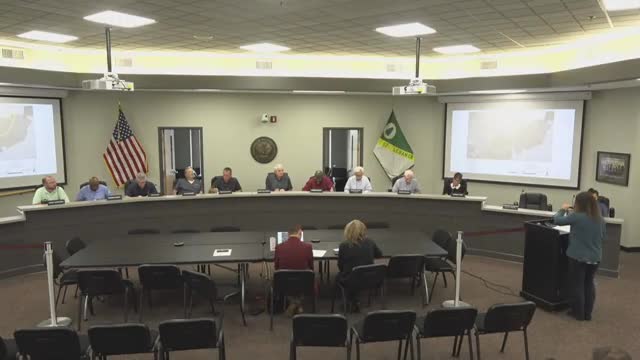
Summary
Commission approved a preliminary plat for Lynnwood Subdivision after staff said the plan was revised to meet updated standards; a resident voiced environmental concerns and sought protections for trees and wildlife.
The Wilson County Planning Commission voted to recommend approval of the preliminary plat for Lynnwood Subdivision, a proposed 124‑lot subdivision on about 62.38 acres at 811 Hartsville Pike, after staff said the project was revised to comply with updated subdivision and design standards.
Tammy Hunt, a resident of Johnson Heights, asked whether the plan had changed compared with the version shown to the community a year earlier, asking, “has it changed the plans that we've seen a year ago?” Planning staff member Josh replied, “It has changed a little bit. ... It has had to change, and they've come up to meet all of our new regulations,” and described additions such as open space, tree protection, single‑family design standards and an additional road connection to the south.
During public comment, Kjell Johnson of Lovers Lane urged commissioners to consider environmental impacts, saying the development would “have an adverse effect upon my community” and warning that clearing trees removes habitat and harms air quality: “when you remove all these trees, you're... killing the oxygen ... we're destroying places for animals to live.”
After public testimony, a commissioner moved to remove the Lynnwood item from the consent agenda for separate consideration. On the merits, a commissioner said the plan ‘‘aligns perfectly with our code’’ and moved to approve; the motion was seconded and carried.
Staff recommended approval provided the applicant meet the current code requirements. Because the applicant’s original approvals had expired after more than three years, the project was revised to satisfy the city’s updated standards before the commission’s vote.