
Resident asks Chilton County to back four‑bed sober‑living house with opioid funds
Get AI-powered insights, summaries, and transcripts
Subscribe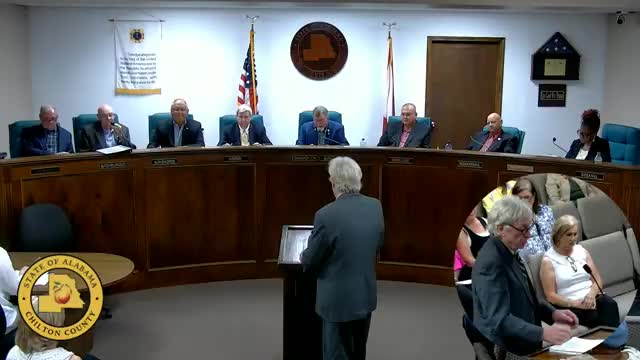
Summary
A resident urged the Chilton County Commission to use opioid‑abatement funds to start a four‑bed sober‑living house for women, citing local treatment shortfalls and recent arrest statistics; commissioners said they would "look into this."
Ralph, a resident who identified himself during public comment, asked the Chilton County Commission on Sept. 23 to support starting a four‑bed sober‑living house for women with opioid‑abatement funding. "We are asking for the opioid funding to help us start a sober living house for 4 women," he said. He told commissioners there is currently no sober‑living facility for that subgroup in Chilton County.
The request came during the commission's public comment period. Ralph said he and his board visited model programs and met operators including Caroline Potter and staff at a Greenville facility and the Lovelady Center. "I spent about an hour with her ... which was one of the most impressive facilities I've ever seen," he said, describing program practices and supports that he said could be replicated in Chilton County.
Ralph outlined local needs and trends. He said local incident summaries showed increased contacts with law enforcement: "From August 14 to September 3, there were 26 incidences, 8 for drugs, 13 for domestic violence, and 5 for alcohol" in Clanton, and he cited sheriff's calls for a narrower date range with similar counts. He also said the number of people entering treatment locally has fallen from 213 in 2014 to 94 in 2023.
Ralph described the proposed house as a post‑detox, transitional residence rather than a treatment or detox center and emphasized a small start: "Miss Potter told me to start small and which is what we're doing." He named potential funding sources discussed with his board, including opioid settlement funds and support from organizations such as Alabama Power and local grant writers.
Commissioners asked procedural questions about funding and operations but made no formal commitment. Commissioner Billingsley asked whether Potter had explained how the facility secures funding; Ralph said she had discussed a variety of resources and grantwriting capacity. The commission did not take a vote; the chair said, "We'll look into this," and no specific funding or follow‑up deadline was set.
Why it matters: Commissioners allocate or approve use of certain local funds and can help coordinate access to settlement or grant dollars. The county currently lacks a dedicated sober‑living facility for women after detox, and speakers said treatment entry has declined in recent years.
Next steps: Commissioners did not adopt any resolution at the meeting; staff and commissioners indicated they would investigate the request further and report back at a future meeting.