
Dayton leaders approve next steps for Cure Violence Global pilot, set application timeline
Get AI-powered insights, summaries, and transcripts
Subscribe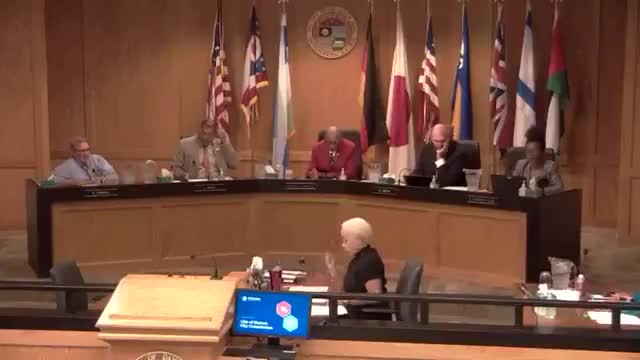
Summary
City commissioners approved staff recommendations to move forward with a Cure Violence Global–aligned community violence intervention pilot, including posting a request for applications for a local community-based organization, an Oct. 2 Q&A and an Oct. 30 application deadline.
Dayton city leaders on Tuesday authorized staff to post a request for applications and move forward with pre-implementation work for a Cure Violence Global (CVG)–aligned community violence intervention pilot, a multi‑partner effort organizers said is intended to reduce shootings and violent incidents in target neighborhoods.
The vote to approve the city manager’s recommendations followed more than an hour of presentations and questions from commissioners on the proposed model, which pairs local partners with CVG for training, technical assistance and a one‑year start‑up agreement. Sarah Hockenbrack, who leads the local peace campaign team, said the city and local partners have run facilitated sessions since November 2024 and will rely on local organizations and residents to run the program.
Why it matters: CVG’s model treats violence as a public‑health problem and relies on trained community outreach workers and violence interrupters to mediate conflicts, connect participants to services and document intervention activity. Supporters said the pilot could produce behavior change over time but cautioned it will take months to train staff and collect meaningful outcome data.
What the city approved and next steps: The commission approved staff’s recommendation to post the application on the implementing partner’s website and the city’s “Peace Campaign” site; host a virtual applicant Q&A at 11 a.m. Oct. 2; close applications at 11:59 p.m. on Oct. 30; and aim to select a community‑based organization (CBO) by Dec. 1 so CVG and partners can begin training and hiring. Sarah Hockenbrack and a representative of the Greater Dayton Area Hospital Association told commissioners that the first six months after award would focus on hiring, training and setting up reporting systems.
What organizers said about the model: Quionis ("Q") Cornel, strategic partnerships director at Cure Violence Global, said the approach adapts epidemic‑control methods to violence: “Looking at violence as a public health issue and a public health disease,” he said. He described a training package that includes a 4–5 day violence interruption course, a 4–5 day case management/outreach course and a 1–2 day database/reporting training, plus a short booster session to account for turnover.
Questions from commissioners and clarifications: Commissioners pressed staff on governance, reporting metrics, sustainability and the proposed catchment areas. Commissioners asked for clarity on who would govern the program locally; staff said the city manager and the five commissioners would act as the formal city leadership while a steering committee of community partners would advise implementation. CVG and the implementing partner described a database that logs staff activity, mediations, participant contacts and shooting responses; staff said the city and partner organization would combine CVG data with city crime data for broader reporting. On sustainability, organizers said fundraising and philanthropic work would be required to continue the program beyond the first year and that the governing committee would pursue those funds.
Limitations and timing for evaluation: CVG staff and city presenters recommended against short‑term claims about homicide reductions. CVG advised waiting 18–24 months before using reduction in shootings or homicides as a rigorous program evaluation benchmark, noting the first six months are typically consumed by hiring, training and data setup.
Community and youth components: Presenters described a youth dimension that has already piloted training with about 20 Westwood youth, paid for in part by the city’s planning budget and county support; organizers said youth participants may be invited to receive additional training in future phases but that the CBO’s full‑time outreach and interruption staff are expected to be adults employed by the selected organization.
What the vote means: With the commission’s approval of the city manager’s recommendations, staff will post application materials, convene stakeholders and proceed with the timetable described. No final CBO selection or long‑term funding decision was made at the meeting; those steps will return to the commission and steering committee as contracts and budgets are developed.
Ending: Organizers asked for broad community involvement in disseminating the application and for patience as the program moves from planning into operational phases. City staff and CVG urged commissioners and community partners to treat the pilot as a multi‑year effort that requires sustained funding and interagency coordination.