Get Full Government Meeting Transcripts, Videos, & Alerts Forever!
Get email alerts on the Wind Energy Ordinance topic
No spam. Unsubscribe anytime.
Des Moines County supervisors review draft wind-energy ordinance; debate road use, wildlife monitoring and decommissioning
Summary
Supervisors and county staff spent a work session reviewing draft sections of a proposed Des Moines County wind-energy ordinance, focusing on road-use agreements, wildlife monitoring and mitigation, emergency response and decommissioning standards.
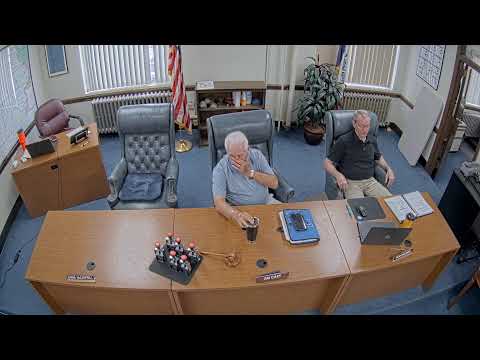
Des Moines County supervisors and staff spent a work session on Sept. 23 reviewing draft chapters of a proposed county wind-energy ordinance, focusing on road-use agreements, wildlife monitoring and mitigation, emergency response and decommissioning. County staff presented changes to four draft chapters and invited questions from supervisors, county engineers, conservation staff and members of the public.
The county’s draft updates would require developers to put a road-use agreement in place before moving oversized equipment on county roads, expand wildlife-study requirements to follow U.S. Fish and Wildlife guidance, require post-construction mortality monitoring with follow-up mitigation if observed mortality exceeds predictions, and set decommissioning standards that generally require complete removal of structures and restoration of soil to near preconstruction levels unless a participating landowner waives the requirement.
Jared, a staff member leading the review, described the meeting’s purpose: “So basically, we'll be going through the chapters that have previously been discussed at work sessions and the list of changes that have been made, since then.” He said the immediate focus was articles on road use, wildlife monitoring, emergency response and decommissioning.
On road use, the draft now separates three scenarios that trigger a road-use agreement: (1) initial construction, (2) planned end-of-life decommissioning (developer contact at least one year before transport), and (3) targeted repowering or equipment replacement during operations (developer contact at least 30 days before transport). The draft also includes a blanket statement, requested by Secondary Roads, that “under no circumstances shall any oversized equipment associated with construction, repowering, or decommissioning be transported on Des Moines County roadways prior to the adoption of a road-use agreement.”
County Engineer Brian told the board the county’s permitting steps should not be the project bottleneck for emergency moves and oversize transports: “The permitting process is pretty straightforward,” he said, and noted that the county could often process permit requests quickly so long as bridges or posted structures were not involved.
Several participants asked the staff to clarify the 30-day and one-year timing in emergency versus planned situations. Jared and Brian said the 30-day requirement was intended for planned repowering and that the ordinance should explicitly allow a shorter, expedited timeline for emergency removal or replacement so responders and operators can act quickly. Supervisors and staff also agreed to add explicit language that above-ground, hazardous components must be removed quickly in emergency events (participants suggested 30 days for removal of unstable or hazardous above-ground components) while allowing longer timelines for foundation and underground remediation when warranted by weather or technical constraints.
On wildlife monitoring, the draft expands the required field studies, saying studies must be done by a licensed third-party professional and comply with the U.S. Fish and Wildlife Service land-based wind energy guidelines. The studies would include acoustic bat monitoring, migratory bird observations, radar monitoring, raptor and eagle nesting surveys, and wetland and habitat corridor assessments. The county conservation director, Chris Lake, supplied many of those recommendations and the draft now asks the Des Moines County Conservation Board to review monitoring plans in consultation with the Iowa Department of Natural Resources and U.S. Fish and Wildlife.
Brad Coates, a resident who asked several technical questions, told the board the ordinance needs measurable thresholds. “I wanted some sort of tangible measurable number,” he said, reflecting concerns that open-ended language could leave the county without an objective trigger for mitigation. The draft includes one numerical threshold suggested by conservation staff: if observed post-construction mortality exceeds 25 percent above the rate predicted in the developer’s monitoring plan, the owner/operator must identify and implement mitigation strategies. Staff noted the word “predicted” should be used consistently and that the county needs a clear approach for how the predicted rate is established and reviewed.
The draft calls for annual monitoring reports for each of the three years following construction that must include methods used, raw data and an analysis of avian and bat mortality. County conservation staff asked that those reports be publicly available. The draft also lists mitigation options such as deterrent technologies and temporary shutdowns during peak activity.
Emergency-response language in the draft was updated after review by county emergency management and local fire departments. The plan would be required to cover incidents such as fire, hazardous materials, ice throw and other site-specific risks, and it must specify roles and responsibilities for operator personnel and local responders. The draft calls for annual training for local fire and EMS personnel, an annual on-site familiarization tour for responders, and designated medevac landing zones where appropriate. Reporter Tracy Lam of The Hawk Eye asked how quickly operator personnel would be expected to reach a site; county staff and emergency-management representatives said plans must demonstrate the operator can “readily coordinate the immediate deployment of personnel at the site once an emergency is reported.”
Decommissioning standards drew substantial discussion. The draft generally requires removal of all above- and below-ground structural components and restoration of disturbed soils to a corn suitability rating (CSR) value no less than 95 percent of the preconstruction CSR for the same location, unless the participating property owner signs a waiver at the time of decommissioning. The draft also requires surety in the form of a bond; the board has discussed a bond amount equal to at least 150 percent of estimated decommissioning costs.
Residents raised concerns about emergency cleanup of blades and fiberglass and the potential for soil contamination and crop loss if debris remains on fields into planting season. One resident described private cleanup firms that use two crews—one to take a damaged turbine down and the other to clean up debris—and quoted an approximate on-site crane cost of about $200,000 for very large cranes. Staff said the ordinance will require operators to pay for emergency cleanup and for environmental remediation where appropriate, but they also said the county will consult with the Iowa Department of Natural Resources on the technical details of contamination response and liability.
The board and staff agreed to several follow-up directions: clarify emergency vs. planned timelines for road-use notifications, ensure the 25-percent threshold references a clearly defined “predicted” mortality rate, add a clear public-availability requirement for monitoring reports, confirm bond language and acceptable insurance coverage (including environmental liability) with county insurance counsel, and add language making clear that the county engineer will issue a certificate of completion after road repairs associated with construction or decommissioning are finished.
The board did not adopt a final ordinance at the session. Jared said staff will compile the chapter-by-chapter edits discussed at this meeting and return with a consolidated revised draft. Tracy Lam asked that the working draft with staff notes be made available to the public; staff said the draft materials would be posted on the county agenda page and that a cleaned-up consolidated draft would be distributed after the next editing pass. Supervisors scheduled the next wind ordinance work session to begin with siting and design standards, including setbacks, on Oct. 7.
The work session drew repeated public comment and a high level of engagement from supervisors and technical staff. The items discussed will require further coordination with the Iowa DNR, U.S. Fish and Wildlife Service and other agencies before any final ordinance is adopted.