Get Full Government Meeting Transcripts, Videos, & Alerts Forever!
Get email alerts on the Transportation Plan topic
No spam. Unsubscribe anytime.
Planning commission adopts Jefferson County Transportation and Mobility Plan to guide multimodal investments
Summary
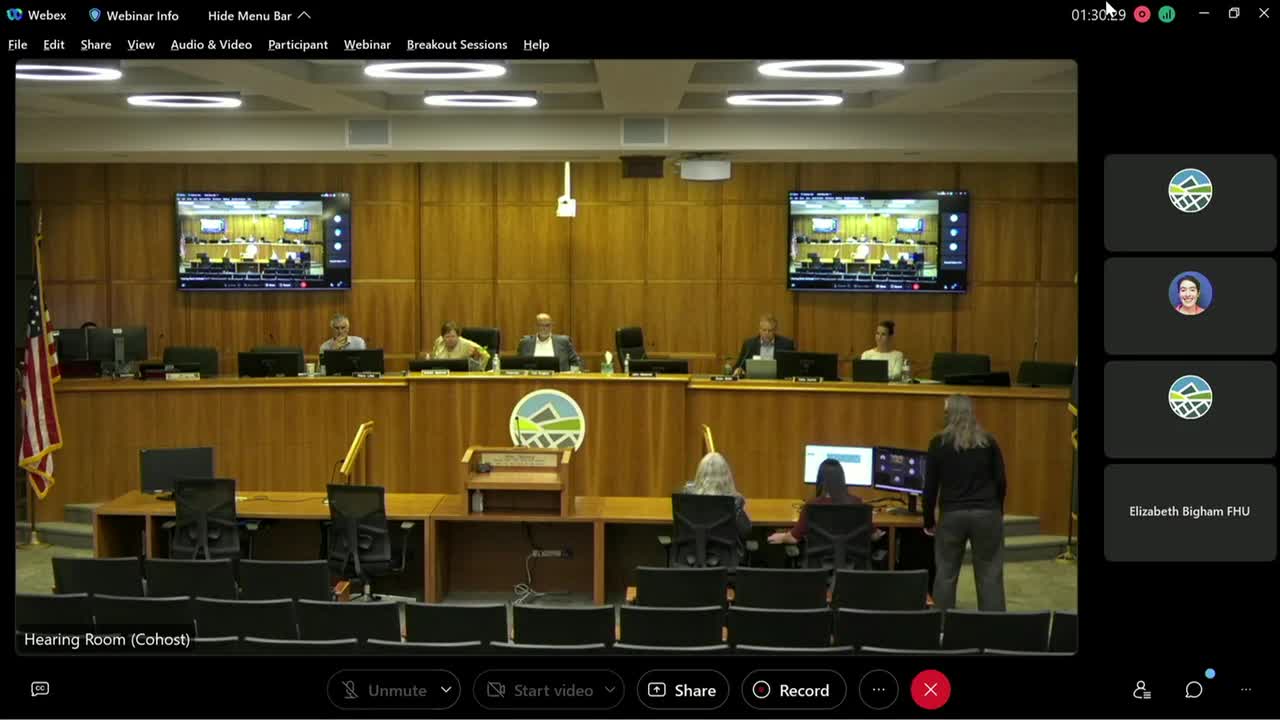
The Jefferson County Planning Commission unanimously adopted a new Transportation and Mobility Plan Sept. 24 that replaces the county’s 1998 transportation plan and major thoroughfare plan and sets a multimodal agenda and project priorities for the county.
The Jefferson County Planning Commission unanimously adopted the Jefferson County Transportation and Mobility Plan (TMP) on Sept. 24, approving a comprehensive update that replaces the county's 1998 countywide transportation plan and consolidates the separate major thoroughfare plan. Staff said the plan will guide multimodal investments, inform the county’s five‑year capital improvement program and influence updates to design manuals and the Unified Land Use Code.
Christina Lane, transportation operations and planning manager for Jefferson County Transportation and Engineering, summarized a two‑and‑a‑half year engagement process that produced a new vision, goals and a prioritized project list informed by five phases of public outreach. "The plan prioritizes a safe, connected, and sustainable transportation network with the intent to enhance and support our multimodal networks," Lane said. She noted the TMP was developed in coordination with the Together Jeffco comprehensive plan update and regional partners including CDOT and DRCOG.
The plan establishes seven goals (asset management, collaboration and partnerships, connectivity, equity and accessibility, funding, safety, and sustainability and resiliency) and a project prioritization methodology that weights goals differently by project type. Lane said staff identified 114 bicycle projects (many consisting of signing/marking and spot treatments), 45 pedestrian projects, 52 multimodal corridor projects, 16 intersection projects and 35 projects that rely on CDOT coordination. She said building and maintaining the recommended projects — plus the county’s routine maintenance obligations for roughly 3,500 miles of roadway — shows an implementation and maintenance need in the high hundreds of millions to over a billion dollars in today’s dollars.
Lane said available federal funding sources include Safe Streets and Roads for All (SS4A), elements of the Infrastructure Investment and Jobs Act (IIJA), and competitive programs such as RAISE and the DRCOG Transportation Improvement Program. She also noted state funding is uncertain and flagged local tools such as the Southeast sales tax district and traffic impact fee policy as implementation options. The department plans to use the TMP to prioritize projects for grant applications and to influence the county’s five‑year CIP, and staff will pursue updates to the Transportation Design and Construction Manual and the Unified Land Use Code to implement policy recommendations.
Public testimony included both praise and requests for additions. John Goldman of the Daniels Association commended the plan’s emphasis on safety and urged stronger policies to protect low‑density neighborhoods from spillover traffic in areas that could be subject to state density mandates (House Bill 1313). "Once you lose the ability to say where development should be, you need to have the right requirements codified in the land‑use code to address the impacts," Goldman said. Anne Imzi, representing wildfire safety interests, said wildfire evacuation and wildfire‑related road capacity concerns need to be more clearly tied into the TMP; she urged the commission to “add wildfire” to the plan’s safety priorities.
Lane and other staff replied to public concerns. She said the county now reserves the right in traffic studies to request additional analysis for areas that may be subject to HB 1313 and that more corridor‑level studies are planned where dense development is likely (she identified South Golden Road as an upcoming corridor study with consultant selection under way). Lane explained that the TMP intentionally avoids designating fixed evacuation routes — emergency routing depends on the incident — and said the county is coordinating vegetation and roadside work with emergency management and in the Community Wildfire Protection Plan to reduce wildfire risk along corridors. She also said Jefferson County continues to press CDOT for safety improvements on state highways such as U.S. 285.
After discussion, Commissioner Spencer moved to adopt the Transportation and Mobility Plan; Commissioner Bowman seconded. The commission voted unanimously to adopt the plan. Staff said adoption will allow the TMP to guide capital priorities, grant submittals, and forthcoming updates to design standards and land‑use regulations.