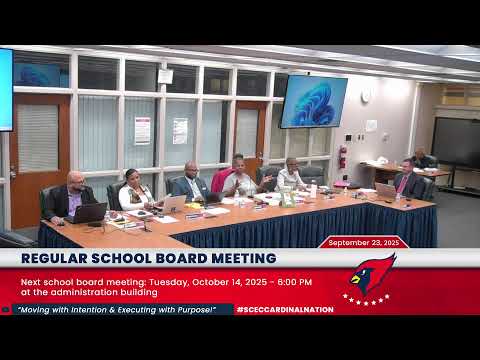
East Chicago district projects $2 million shortfall within three years; superintendent outlines phased spending cuts and capital priorities
Loading...
Summary
Superintendent Dr. Borne said the School City of East Chicago expects an operating budget of $48,175,043 for fiscal 2026 and a combined operating total of $53,630,793 when federal grants are included.
Superintendent Dr. Borne said the School City of East Chicago expects an operating budget of $48,175,043 for fiscal 2026 and a combined operating total of $53,630,793 when federal grants are included. He told the board that recent state property-tax changes and reductions in grant funding have left the district projecting “somewhere having a shortfall of collectively $2,000,000 within the next 3 years.”
The shortfall stems from multiple factors, Dr. Borne said: a newly issued general-obligation bond that increases the district’s debt-service levy; a net federal grant loss of $127,547 this year; an approximately $372,000 distribution of local levy dollars to charter schools; and statutory changes in SEA 1 that limit referendum timing and constrain districts’ use of short-term bonds. “We must adapt and operate within this new reality,” Dr. Borne said.
Why it matters: the education fund and operations fund together cover teacher and staff salaries and building upkeep; debt-service payments are growing after the district borrowed for capital work. Dr. Borne told trustees that the education fund’s largest line item is salaries and that the operations fund and debt service now carry increased pressure because of the limits SEA 1 places on issuing new debt and referendum timing.
Planned and proposed actions. Dr. Borne outlined a series of low-impact and progressive steps already under way and others under consideration to reduce spending over two years: hiring freezes for non–student-facing positions, attrition, a 10% operational spending challenge to departments, targeted reductions in administrative salaries, and reductions in overtime and grant-funded roles where necessary. He said the district will consider offering early-retirement incentives, researching more cost-effective health-insurance providers, and establishing a budget task force of stakeholders (a board member or principal, a teacher and an administrator) to vet options.
Capital priorities and fleet. The superintendent said capital work this year focuses on East Chicago Central High School — HVAC and doors — plus auditorium upgrades at elementary schools, a full remodel of Lincoln’s cafeteria, replacement of failing fire panels, phased classroom floor replacements (removing classroom carpet in favor of laminate or VCT), landscaping, and work on pools so the district can sustain a single operable pool. For transportation, the district will accept one new mini-bus and one full-size 72-passenger bus for 2026, prioritize replacing mini-buses in 2027, and plan additional full-size replacements into 2028–2030.
Contingencies and timing. Dr. Borne told the board the district is not currently operating at a deficit but is implementing a reduced-spending plan to avoid a projected gap. He said SEA 1 creates a one-year waiting period after certain short-term GO bonds expire before new ones may be issued and limits referendums to general elections, reducing districts’ debt tools for deferred maintenance.
Next steps and public engagement. The superintendent recommended transparency and a “classroom-last” approach — preserving student-facing positions as long as possible — and said the board will review specific reductions and proposals in public sessions before any final personnel actions. He also proposed a pilot four-day work week in 2026 to reduce utility costs and asked the board to appoint members to a budget task force.
Trustee context. Trustees asked clarifying questions about chillers and HVAC components at Central High and expressed support for working with the superintendent and unions to avoid abrupt cuts. The superintendent and CFO said staff will provide more detailed cost breakdowns and that further public hearings and the October adoption vote will follow the required notice period.