Get Full Government Meeting Transcripts, Videos, & Alerts Forever!
Get email alerts on the Public Health topic
No spam. Unsubscribe anytime.
Supervisors direct development of procedure to use opioid‑settlement funds for jail MOUD medications
Summary
After receiving an unpaid bill for medication prescribed to an incarcerated person, Jackson County supervisors asked jail and auditor staff to draft a HIPAA‑compliant, auditable procedure for paying medication costs from opioid‑settlement funds and to return with the protocol for approval.
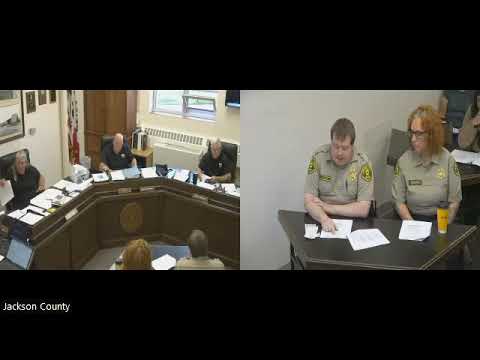
Jackson County supervisors asked jail and auditor staff on Tuesday to draft a written procedure for paying medications for incarcerated people with opioid use disorder from opioid‑settlement funds, following a presentation by the jail administrator about an unpaid bill.
"We received a bill from Osterhaus for one of our inmates that is on MOUD medication. That medication is $150.82," Andrew Long, the county jail administrator, told the board. Long said the county had asked whether the Administrative Service Organization (ASO) would cover the bill and had not yet received an answer.
Long described contract language he referenced during the meeting — "exhibit e, schedule a section f" — which he said supports providing evidence‑based treatment and recovery support, including medications for opioid use disorder, for incarcerated populations transitioning out of the criminal justice system. He asked the board whether opioid‑settlement funds could be used if the ASO did not cover the medication.
Supervisors and auditor staff discussed audit and HIPAA requirements. Supervisor Don Sminker said the county would need an audit trail that ties opioid funds to eligible opioid‑related treatment, asking "How do they identify or tagged as an opioid abuser where this qualifies?" Auditor Lisa Smith and others described a tracking system that would avoid public disclosure of names: assigning a jail identification number (for example, "patient Alpha123") for internal auditing so the public claims listing would not publish the individual's name.
Board members asked for a written request form and recordkeeping procedure. "Why don't you guys figure out a procedure and bring it to us next week, and we can approve a receipt after that," Sminker said. The board emphasized that any use of opioid‑settlement money should be coordinated so county taxpayers are not asked to pay where other funds are available.
Long said the jail will meet this week with a consulting firm that advises on implementing such programs and that Dubuque County has been pursuing similar efforts; supervisors encouraged exploring reimbursement models used elsewhere. The board did not approve payment at Tuesday's meeting and did not vote on authorizing an expenditure; instead, supervisors directed staff to prepare a HIPAA‑compliant, auditable procedure for case‑by‑case requests to use opioid funds and to return for formal approval.
The board also asked that each request include documentation and appropriate signatures for auditing. Long said this was the first such bill the jail has received and that staff will track medications and bills while the procedure is developed.
No formal motion or appropriation occurred at the meeting; supervisors issued direction to staff to develop and return with the procedure.