Get Full Government Meeting Transcripts, Videos, & Alerts Forever!
Get email alerts on the Energy Policy Interruptible Tariffs topic
No spam. Unsubscribe anytime.
Wyoming utilities, co-ops and miners clash over interruptible power tariff; committee to redraft
Summary
A proposed law to require interruptible electricity tariffs and allow alternate service within certificated territories drew extensive testimony from the Public Service Commission, utilities, cooperatives and cryptocurrency miners.
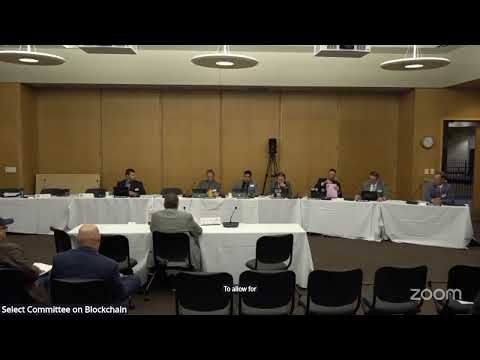
A Wyoming select committee reviewed a draft bill that would require electric utilities to offer interruptible or load-management rates and to permit other utilities to serve customers in certificated territories where such tariffs are not available. The bill — introduced as a new statute (drafted in materials as proposed 37-3-120) — prompted extended testimony from the Wyoming Public Service Commission (PSC), investor-owned utilities, generation-and-transmission cooperatives and mining companies. Committee members did not adopt the draft; instead they asked staff to revise language and continue working with stakeholders.
Talise Hanson, the bill’s presenting staff attorney, walked members through the draft sections, portions of which would require utilities to establish at least one interruptible service or load-management rate beginning July 1, 2027; allow utilities to apply for an exemption to that requirement by May 1, 2027 (and annually thereafter); and require utilities to submit interruptible-service rates to the PSC by Sept. 1, 2027. The draft also included a process by which, if a utility lacked a tariff or received an exemption, customers located in that certificated territory could procure service from another electric utility after notice to the PSC and the incumbent utility, provided the new service did not reduce service to other customers in the territory.
The PSC’s chairman, Mike Robinson, and Deputy Chairman Petrie recommended several changes. They noted the PSC does not generally regulate municipal electric utilities (except in narrow cases) and that including municipal systems in a statewide mandatory requirement would raise franchise and constitutional questions. The commission also warned that an automatic annual exemption-review calendar and a 180-day deadline for a commission to set a rate after denying an exemption may not align with the commission’s contested-case processes and could overburden staff and utilities. The PSC offered a lower-burden alternative: expand the commission’s annual-report requirements to capture data on inquiries, applications and deployments of interruptible or load-management services so the commission can identify opportunities and decide whether new rules or proceedings are warranted.
Investor-owned and cooperative utilities described the operational and commercial landscape. Rocky Mountain Power said it previously had a Schedule 30 interruptible tariff but saw no customer uptake; the company now offers a demand-response schedule (Schedule 114, approved May 1, 2025) and a large-customer contract route (Schedule 400) for loads of 10 MW or greater. Tom Carter of Rocky Mountain Power said the utility currently had no cryptocurrency mining load in its Wyoming service territory. Black Hills Energy told the committee its interruptible tariff (created under earlier legislation) produced one customer in Cheyenne, CleanSpark, and that the tariff includes bill credits that benefit other customers. Basin Electric, Tri-State, Powder River and other cooperatives described existing demand-response programs and large-load offerings and stressed member governance and financing considerations.
Mining operators and proponents said clearer state rules or a targeted governance for interruptible service would unlock projects. Jamie Terranova, CEO of 44 West Mining (a Gillette-based Bitcoin miner), said miners currently self-curtail and that unclear signal timing and punitive peak charges had reduced uptime and sunk margins. He said his operation would benefit from reliable short-notice signals that allow miners to shut down on demand without facing punitive month-end peak demand charges.
Utilities and co-ops described multiple technical and economic barriers: many small municipal utilities do not have advanced metering infrastructure (AMI) or real-time telemetry to support five-minute signaling; the capital cost to deploy AMI and distribution telemetry can be high for small systems; cooperatives stressed that certificated service territory is exchanged for an obligation to serve and said investors and lenders rely on territorial certainty. Tri-State and Basin described recently filed and approved demand-response and high-impact-load programs (Tri-State’s FERC-approved demand-response rider effective May 20, 2025, and Basin’s new large-load program implemented in June) intended to provide pathways for large customers.
Committee direction and next steps: members said the draft needs substantial work. Multiple members recommended narrowing the draft (for example, removing municipal electric utilities from the mandatory definition and streamlining the exemption language) and considering a threshold (committee discussion suggested a 1-MW minimum) to limit incursions into certificated territories to larger loads. Committee staff and members agreed to continue to revise the draft and to incorporate PSC suggestions (including capturing data in annual reports) rather than move the bill forward in its current form.
Why it matters: the legislation aims to expand options for very large electricity customers — including blockchain miners and large industrial loads — and to create a statutory pathway so customers can access interruptible service where incumbents cannot provide it. Utilities cautioned the committee that hasty or broadly punitive statutory language could undermine cooperative governance, municipal franchise rights and regulated processes, and could impose large costs on small utilities that lack AMI or telemetry.
Practical details from the record: the draft required interruptible rates beginning 07/01/2027, allowed exemption filings by 05/01/2027, required filing by 09/01/2027, and included a 180-day sequencing provision for commission action after an exemption denial. Witnesses referenced specific tariffs and programs, including Rocky Mountain Power’s Schedule 30 (former), Schedule 114 (demand response, 05/01/2025), Schedule 400 (large customer contract for 10 MW+), Tri-State’s FERC-approved demand-response rider (effective 05/20/2025) and Tri-State’s planned HILT (high-impact load tariff) for very large customers.