Get Full Government Meeting Transcripts, Videos, & Alerts Forever!
Get email alerts on the Social Service Commission topic
No spam. Unsubscribe anytime.
Newcross council swears in social service commission, sets rules on calls, confidentiality and funding
Summary
The Newcross City Council swore in members of a newly formed Social Service Commission, elected officers and directed staff to set up an initial donations fund and communications process; council emphasized that bylaws and any use of city tax funds will require council approval.
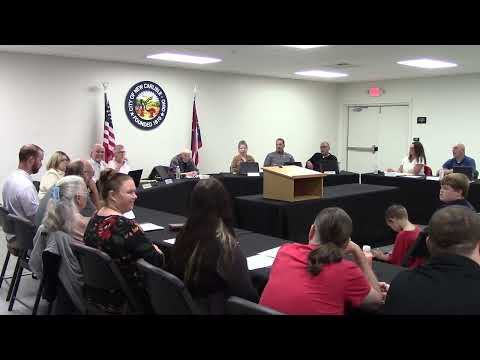
The Newcross City Council swore in members of a new Social Service Commission and approved the group’s initial organization, including electing officers and setting a regular monthly meeting time. Council members and staff told the commission to adopt bylaws, protect client confidentiality and coordinate with city staff on communications and any funds. The new commission’s initial organization matters because it will receive and triage requests for short‑term help for residents — and the council made clear that how the commission handles donations, phone lines and confidentiality will determine what the group can legally and practically deliver. Council convened the swearing‑in of new members and took nominations for officers; commission members elected Michael Barclay as president, Courtney (last name not specified in the record) as vice chair and Miss Tukui as secretary. Council and staff discussed how incoming calls and requests should be routed, whether the commission needs a dedicated telephone line and how to prevent emergency responder phone time from being used for nonemergencies. The city manager and staff said they would work with the commission to obtain a dedicated phone (likely a single cell phone to be assigned to the president initially) and to draft a schedule for on‑call coverage. Council and staff repeatedly emphasized that the commission’s bylaws must be drafted by the commission, then approved by city council before they take effect. Staff provided a sample set of bylaws used by the Parks and Recreation Board as a template and advised the commission it may decide term lengths and whether terms should be staggered. Staff also advised the commission on meeting notice and recordkeeping: meetings are public records, agendas and legal notices must be published, minutes kept and case discussions in public meetings should use case numbers rather than names to preserve privacy. Council directed staff to establish a fund for private donations to support the commission’s work. The city manager said donations discussed by council would be placed in a fund, and staff discussed the possibility of issuing a debit or credit card linked to that fund for emergency, stopgap purchases (food, clothing, or temporary housing assistance) with detailed reporting. Council members emphasized that if taxpayer (budget) dollars were to be used, limits would apply and council approval would be required. On scope, council and several commissioners discussed serving city residents first and using the early months to establish procedures and outcomes (food security, housing support, senior outreach, youth and family services, crisis response). Several speakers encouraged the commission to harness local nonprofits, churches, schools and volunteer groups to expand capacity and avoid overextending the commission’s volunteer resources. The commission set a recurring meeting day and time: the first Thursday of each month at 6:00 p.m., with the first commission meeting scheduled for November 6 at 6:00 p.m. Staff said they will assist with legal advertisement of the meeting while the commission is establishing its own bank account and processes. Councilwoman Grove was named the council liaison and staff said the city manager and designated staff (Brian or the city manager’s office) will be initial points of contact to help the commission stand up its procedures. Discussion versus direction versus decision: the record shows lengthy discussion about preferred processes (routing calls, confidentiality, volunteer assignment, data tracking and grant readiness). Formal decisions recorded in the meeting were (1) swearing in members; (2) election of officers (president, vice chair, secretary); and (3) setting the monthly meeting schedule and first meeting date. Staff accepted direction to set up a donations fund and to work with the commission on a phone solution and legal advertising. No council motion was recorded to appropriate city budget dollars to the commission; council repeatedly said the use of taxpayer funds would require separate approval. Practical next steps identified on record: the commission should (a) draft bylaws and term lengths for council approval; (b) adopt confidentiality procedures (use case numbers in public reports); (c) decide on outcomes and service categories to guide referrals; (d) set an on‑call or assignment schedule for phone coverage; and (e) track statistics and volunteer hours for reporting and grant applications.