
Board hears overview of 2025 legislative changes affecting charter schools, including device rules, background checks and start times
Get AI-powered insights, summaries, and transcripts
Subscribe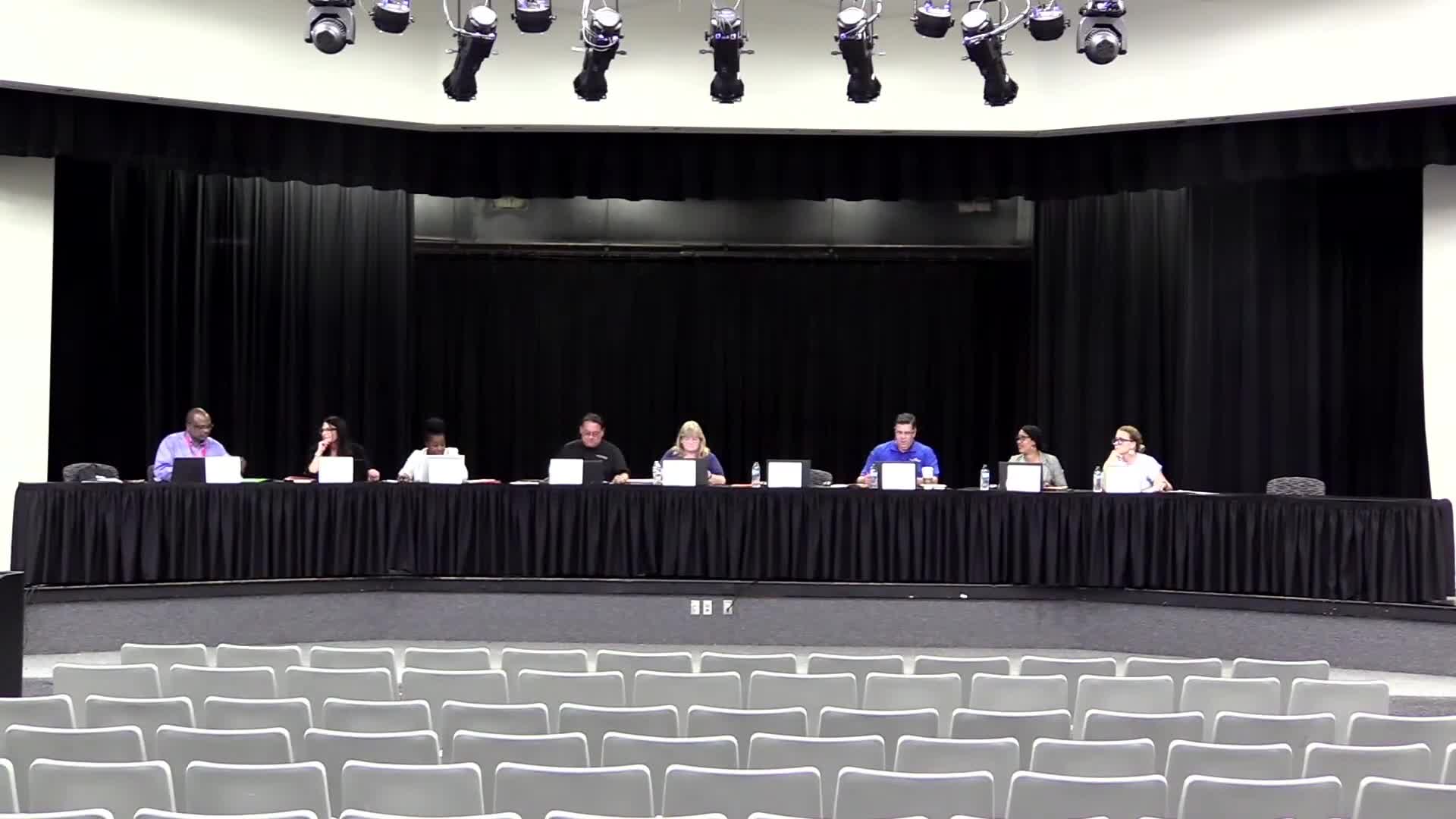
Summary
Legal counsel briefed the board on 2025 state-law changes affecting charter-school policy, including new wireless-device rules, volunteer screening guidance, campus access clarifications and mandatory reporting of arrests for school employees.
The Lake Wales Charter Schools Board of Trustees received a high-level briefing Sept. 22 on 2025 legislative changes that counsel said will require updates to system policies. Mr. Arnold, presenting the update, said the session produced changes that touch multiple areas: student codes of conduct, wireless-device rules, complaint-resolution procedures, volunteer background checks, campus access and safety requirements, school-start-time mandates, criminal-offense reporting and mandatory removal from classroom duties in certain arrest cases, and several charter-specific provisions on building and enrollment. Key points Mr. Arnold summarized: - Student code of conduct: Each charter’s governing board may adopt its own code but must meet state minimums and align with the charter’s mission; policies such as wireless-device rules and complaint-resolution procedures must be included and posted in handbooks and online. - Wireless devices: Elementary and middle-school students may not use wireless devices during school hours; high-school use is permitted for educational purposes. Exceptions exist for documented clinical reasons (IEP/504 or physician note) and for supervised transportation or school-sponsored events. The Florida Department of Education is producing a model policy; counsel said the system drafted a policy for future board consideration. - Complaint resolution and parental rights: Counsel warned that unresolved disputes can potentially lead to lawsuits; new notice requirements require schools to publish complaint procedures in handbooks and on school websites. - Volunteer background checks: Volunteer screening was elevated toward level-2 background checks (felony and specified disqualifying misdemeanors). The legislature allowed charter schools discretion not to screen volunteers, but counsel strongly recommended continuing level-2 checks and noted a state clearinghouse can speed processing versus fingerprinting through sponsoring districts. - Safety and access: Prior strict interpretations requiring certain doors or areas remain locked 24/7 were relaxed. The law now allows gates/access points to be open 30 minutes before and after school when monitored; classrooms must remain locked during instruction. Counsel said these changes remove some cost and operational burdens while preserving security measures. - School start times: Beginning July 1, 2026, the law bars middle schools from starting before 8 a.m. and high schools before 8:30 a.m., but districts and charter schools may opt out. Counsel said districts face transportation logistics and an opt-out deadline (noted as June 1, 2026) if they choose to decline the schedule change. - Criminal-offense reporting and mandatory removal: Employees must self‑report certain arrests within 48 hours; the law now requires immediate removal from classroom or unsupervised student contact for felony or specified misdemeanor arrests while cases proceed, rather than leaving removal to employer discretion. - Charter-specific updates: Counsel said charter schools receive the same treatment as traditional public schools in matters such as concurrency and municipal permitting (local governments cannot impose stricter site or traffic controls on charters than on school districts). Counsel described expanded ability to increase enrollment to school capacity without district permission and noted a statutory change removing a teacher-approval requirement for conversion to charter status, now requiring a majority parental vote (50% plus 1). Trustees asked procedural questions about whether the system should adopt the sponsoring district’s code of conduct or create its own; counsel said schools commonly adopt the district’s policy but may make rules stricter. The board directed administration to prepare policy updates for future meetings that reflect the statutory changes. No formal vote was taken on policy language at the Sept. 22 meeting; counsel said some items (model wireless-device policy and a criminal-reporting policy) will be brought forward for adoption in coming meetings.