
Trustees probe special‑education placements as families, district adjust after rezoning
Get AI-powered insights, summaries, and transcripts
Subscribe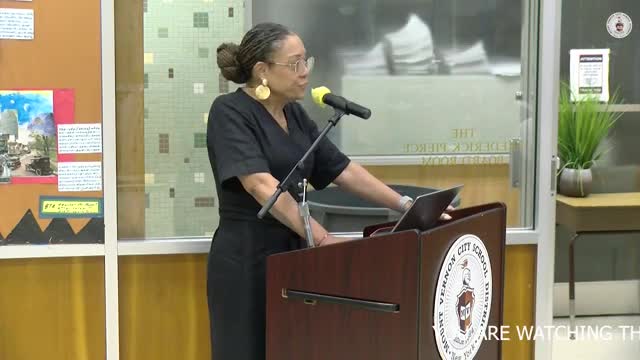
Summary
Board members pressed administration about placement types, class ratios and reports that some families revoked IEP services to seek transfers; administrators said the district aims to reduce most‑restrictive placements and expand integrated co‑teaching options
Trustees used the Sept. 16 work session to press the district on special‑education configurations after Assistant Superintendent LaWanne White and other administrators described program changes tied to the summer rezoning.
District summary and data: White recapped special‑education class inventories for K‑8: 27 sections of 8:1+2 classes, 22 sections of 12:1+2, 14 sections of 15:1+1, and five sections of 15:1. White described the 8:1+2 and 12:1+2 settings as more restrictive and said the district’s goal is to “reduce our most restrictive special education placements or settings” toward less‑restrictive placements this school year; she said the district is aiming for roughly a 3% decrease but would like a larger reduction.
Trustee questions and administration response: Trustees asked for the percentage of students served in general education with support and in integrated co‑teaching (ICT) settings; White said she did not have those percentages available at the work session but said the district believes ICT placement rates are relatively low. Dr. Doggett and other administrators argued ICT is usually more advantageous than large self‑contained 15:1 settings, because ICT typically pairs two teachers and can serve twelve or thirteen students with disabilities instead of placing 15 students with a single classroom teacher.
Concerns raised by administrators: Superintendent Strickland and cabinet members said they had seen families revoke IEP services in some cases to pursue school transfers; White and Strickland called that practice “concerning” and a red flag because relinquishing services can harm a child’s progress. Strickland and trustees discussed possible “overclassification” (too many students placed in restrictive settings) as a systemic concern to address through review and professional development.
Operational measures: White said all students with IEPs had been placed for the start of school and emphasized ongoing work on discharges and accurate enrollment records. She proposed cross‑training front‑office and school support staff (social workers, guidance counselors, registration staff and McKinney‑Vento liaisons) so more staff can correctly triage special‑education and McKinney‑Vento needs and reduce bottlenecks.
Why it matters: Trustees and administrators linked special‑education placement patterns to classroom capacity, staffing shortages and transport decisions during the rezoning. Trustee Mitchell said the district must move students to least‑restrictive settings where appropriate and asked the administration to examine both classification practices and service delivery models.
Ending: Trustees requested follow‑up data (percentages in ICT and general‑education with supports, school‑level placement counts) and said they expect the administration to bring refined proposals for placement changes and staff training to future board meetings.