
Board denies CE waivers but grants time-limited extensions for several licensees
Get AI-powered insights, summaries, and transcripts
Subscribe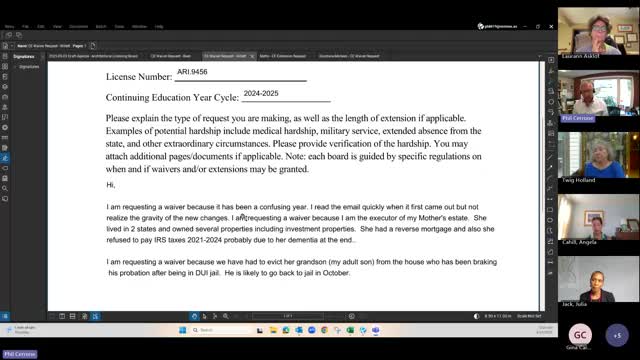
Summary
The Connecticut board declined requests for full continuing-education waivers in multiple cases but approved time-limited extensions—typically six months or deadlines through Dec. 31—for licensees who cited hardship or other reasons; staff will handle late fees and notify applicants of specific deadlines.
The Connecticut Architectural Licensing Board on Sept. 23 reviewed several requests from licensees seeking waivers or extensions of the state continuing-education requirement and generally denied full waivers while granting limited deadline extensions.
Board members said the state's statutes allow medical-hardship waivers but that the documented circumstances in several requests did not meet board expectations for a full waiver. Instead, members favored time-limited extensions, typically six months measured from the license expiration date, and in several cases set a Dec. 31 deadline for completion.
Why it matters: Continuing-education compliance is a statutory requirement for license renewal. Extensions affect whether a license remains active, whether late fees apply, and whether a licensee may represent themselves as licensed. The board emphasized that applicants who are still practicing or consulting generally must maintain an active license and complete CEs unless they meet statutory waiver criteria.
Case details and board direction The board considered multiple individual requests. In one case involving a licensee who said personal circumstances left CE work incomplete, the board declined a full waiver and approved a six-month extension; members specified that the extension would be counted from the license expiration (the board referenced a July 31 expiration in discussion) and recommended a Dec. 31 deadline be used in the notification letter. In another case involving maternity leave, members again favored a six-month extension rather than a waiver and asked staff to send a clear letter with a deadline.
For an applicant who had been living abroad and cited difficulty accessing CEUs, board members expressed skepticism that online options were unavailable and asked the applicant to document barriers; members signaled they would be inclined to grant only a time-limited extension unless the applicant showed that technical or access barriers made online courses infeasible.
Staff responsibilities and fees Staff told the board that applicants who had already let licenses lapse would face late fees when they renew; board members said late fees and any additional fines are processed by staff according to existing fee schedules. The board asked staff to include specific deadline dates in extension letters and to use Dec. 31 as a default end date for several of the extensions considered at the Sept. 23 meeting.
What the record shows The meeting transcript records board consensus to deny full waivers in several cases and to grant time-limited extensions (six months from expiration or Dec. 31) instead. The board did not adopt a blanket policy to change waiver criteria; actions were decided on a case-by-case basis and directed staff to issue letters with firm deadlines and applicable late fees.