
Dozens of Mesa residents urge council to end 287(g) collaboration with ICE
Get AI-powered insights, summaries, and transcripts
Subscribe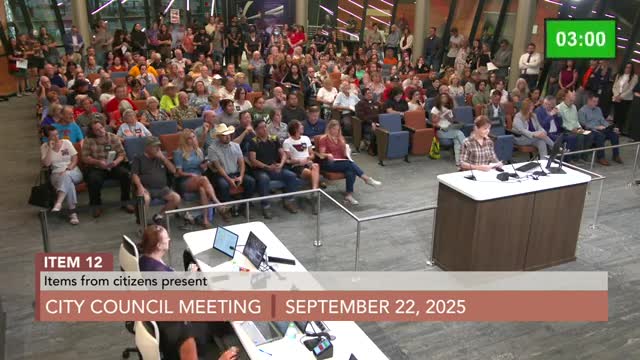
Summary
At the Sept. 22 meeting residents told the Mesa City Council that the city's 287(g) agreement with federal immigration authorities undermines trust in police and discourages crime reporting; city clerk reported 113 blue cards in opposition.
Dozens of Mesa residents used the public-comment period at the Sept. 22 Mesa City Council meeting to urge the council to end the city's 287(g) agreement between local law enforcement and federal immigration authorities.
Speakers warned that expanded cooperation with Immigration and Customs Enforcement (ICE) would chill community trust and reduce reporting of crimes. City Clerk Holly read into the record that 113 blue cards were filed in opposition to the agreement.
The concern was described in similar terms by multiple people who spoke. "An ominous storm is brewing if Mesa Police should expand to the task force or hybrid models," said Betsy Soderquist, a Mesa resident, summarizing four models of 287(g) cooperation she described to the council, and citing a national funding figure she said came from the Brennan Center for Justice. Alyssa Lamontagne Owens, a naturalized U.S. citizen and Mesa resident, said cooperation with ICE has led some community members to avoid contacting police and recounted reports of racial profiling that have reduced public safety cooperation. "If you look at me and say, 'Really, her?' then you understand what the problem is," Owens said. Another speaker, Adela, described children in her neighborhood living in fear of family separation and asked the council to cancel the agreement so residents would feel safer contacting police.
Speakers distinguished jail-based enforcement of immigration holds from the task force and hybrid models that they said allow deputized officers to act on civil immigration matters during routine policing. Betsy Soderquist told the council the jail-enforcement model is what the Mesa Police Department has used since 2009 and said she does not object to removal proceedings for people charged with violent crimes, but that the task force and hybrid approaches risk expanding civil immigration enforcement without criminal charges.
The council did not take formal action on the agreement during the meeting. Mayor and staff earlier explained a procedural change in public comment: when many blue cards are submitted the clerk will tally the numbers for and against an item and read totals into the record, with a complete list of names posted online the following day. The tally read by City Clerk Holly and the comments in the meeting together formed the record of public concern.
Why it matters: speakers said the fear of immigration enforcement reduces cooperation with police, which they argued could leave violent offenders less likely to be reported and investigated. The council did not vote on the 287(g) agreement at the Sept. 22 meeting; the public-comment remarks were entered into the record for council consideration.
Council members and staff may consider the comments as the matter moves forward; no ordinance, resolution, or motion on 287(g) was before the council at the meeting.