
Westville schools project $20 million shortfall; board approves list of possible cuts if income tax fails
Get AI-powered insights, summaries, and transcripts
Subscribe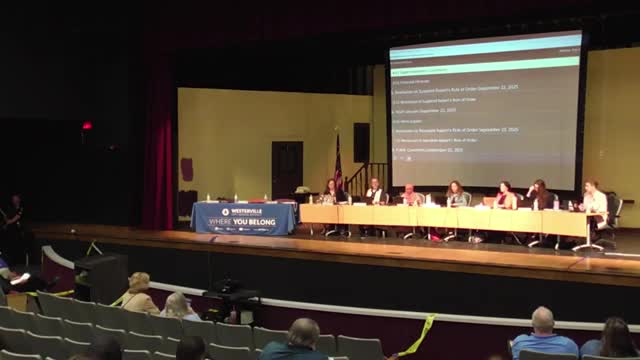
Summary
Westerville City Schools officials told the board and the public Tuesday that the district faces a multi‑year budget gap and approved a list of potential reductions to close about $20 million if voters do not approve a proposed 0.75% earned income tax on Nov. 4.
Westerville City Schools officials told the board and the public Tuesday that the district faces a multi‑year budget gap and approved a list of potential reductions to close about $20 million if voters do not approve a proposed 0.75% earned income tax on Nov. 4.
The board meeting on Sept. 22 included a detailed financial forecast presentation by Nicole Marshall and a work‑session review of proposed reductions by district chiefs. "This forecast is developed based on the best information that we have available to us today," Marshall said as she laid out revenue and expense projections that show growing deficits through fiscal 2030.
The forecast presentation said the district’s state funding share has fallen sharply — from roughly 43% in 2021 to about 18% in the most recent calculation — and that federal program funding the district uses (about $8 million annually) could be reduced or reallocated. Marshall told the board the district is projecting deficits of roughly $8.3 million in fiscal 2025, about $12 million in 2026 and $18 million the following year unless revenue or expense assumptions change.
Why it matters: The board approved a resolution authorizing a package of possible reductions to be implemented in the 2026–27 school year if the Nov. 4 ballot question fails. District leaders said the proposed cuts were developed by first identifying legal and graduation requirements, then looking at programs and services the district provides beyond those requirements.
What the district proposed: The package presented Tuesday and approved by the board includes a mix of revenue changes and expense reductions that together are intended to close the projected shortfall if the levy fails. - Change pay‑to‑participate fees: a proposed increase to $350 per sport at the middle school level (currently $90 first sport) and $500 per sport at the high school level (currently $180 first sport), with no family cap and no second/third‑sport discounts. Proposed club/activity fees were $25 (middle) and $50 (high). The district estimates the fee changes could reduce the deficit by about $1.3 million. - Transportation changes: increase the district’s non‑transport zones and lengthen distances between stops. District staff estimated a minimum reduction of 14 bus routes, with the exact effect depending on other implemented measures. - Staffing and program reductions: plans call for a range of personnel reductions if needed, including up to about 10 additional administrative positions, up to 44 elementary specialist positions (art, music, physical education and library media specialists), up to 31 middle‑school positions (including elimination of sixth‑grade teaming and some electives), up to 19 high‑school core/elective positions (affecting AP, CCP and other electives), and up to 20 positions if the district consolidates two elementary magnet sites. The presentations noted the district already absorbed over 30 positions for an annual saving of about $3.3 million. - Other measures under consideration: eliminating or significantly cutting summer school, eliminating tuition‑based all‑day kindergarten, reducing contracted services and overtime, raising facility rental and student fees, and reducing technology purchases and other nonrequired expenditures.
District leaders stressed sequencing and legal limits. "We started with what are the legal requirements," Chief Academic Officer Mark Cooper said during the work session, noting that some high‑school courses and special‑education services are legally required and therefore harder to reduce. Chief Operations Officer Carrie Dennis identified operational impacts, and Chief Personnel and Policy Officer Scott Reeves said some reductions would be phased to protect students currently enrolled in multi‑year programs.
Public comments: More than two dozen speakers during the public comment period urged passage of the proposed tax, saying cuts would hurt students. Westerville North junior Paige Staman, speaking for a group of students, told the board, "These programs don't just occupy our time, they shape our futures." Several parents and community members described how music, theater, clubs and athletics provide social supports and college pathways. Opponents who spoke during public comment questioned past district spending and forecast assumptions and urged more community discussion before cuts.
Board action and next steps: The board voted to approve the list of proposed reductions "pending outcome of 11/04/2025 ballot issue," a framework the administration said it needed in order to plan and meet state filing deadlines if revenue does not materialize. The board did not approve personnel layoffs on Tuesday; the action was to adopt a reduction framework that staff will refine if needed. The district noted that some changes could be realized through attrition and that many reductions would be scheduled to take effect at the start of the 2026–27 school year to avoid mid‑year disruptions.
Budget context and numbers cited at the meeting: Westerville reported roughly 14,600 students and a $229 million operating budget. The proposed levy was estimated to generate about $24.3 million annually. Marshall and the district’s finance staff also flagged an expected 13.8% increase in medical insurance premiums for staff, and they noted uncertainty about homestead rollback reimbursements, state property‑tax reform work groups and pending legislation that could affect local revenue calculations.
What the district said about timing: If the ballot question passes in November, officials said tax collections and the timing of related budget relief mean full effects would not be realized immediately; the district would phase implementation of spending plans. If the question fails, the board’s approved list provides the administration a roadmap to plan reductions for the following school year.
The board scheduled follow‑up work and public meetings; Superintendent Sandberg and the chief officers said they will return to the board with refined implementation plans and cost estimates as more details become available and as attrition and other variables are known.
Ending note: With early voting starting weeks before Election Day, district leaders and many public speakers urged residents to use the intervening weeks to review the forecast materials and the possible impacts of a failed levy on classroom programming, athletic and arts participation, transportation and student services.