Get Full Government Meeting Transcripts, Videos, & Alerts Forever!
Get email alerts on the Micromobility Ebikes topic
No spam. Unsubscribe anytime.
South Lyon debates e-bike rules, including 10 mph trail limit and juvenile penalties
Summary
City Manager Paul Zelnick opened the council’s discussion of a proposed e-bike ordinance Sept. 22, saying staff and the city attorney prepared the draft to respond to a large increase in electric bicycle and scooter users and related safety concerns.
City Manager Paul Zelnick opened the council’s discussion of a proposed e-bike ordinance Sept. 22, saying staff and the city attorney prepared the draft to respond to a large increase in electric bicycle and scooter users and related safety concerns. The proposal would define Class 1, 2 and 3 electric bicycles and electric skateboards, set a 10-mile-per-hour limit on nonmotorized trails, prohibit electric bikes on downtown sidewalks and make certain violations misdemeanors. The council did not vote; members asked staff to revise the ordinance and return for further review.
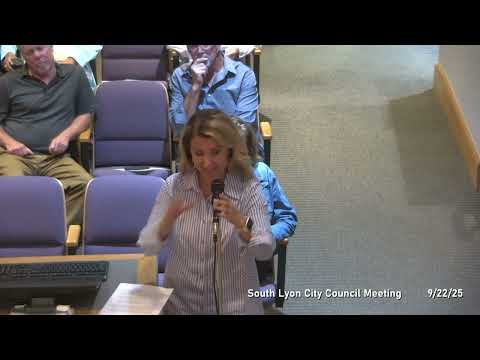
The debate drew multiple public comments both for and against strict limits. Denise Simeon, a resident and parks commission member, urged a speed limit and signs asking riders to give audible warnings when passing, saying a rider on an e-bike zipped past her without warning and “I give my strong support for a speed limit on the trail and also throughout town.”
Several other residents said e-bikes have expanded mobility and access. Dave Richter, who said he has ridden an e-bike about 12,000 miles on local and out-of-state trails, warned against overly broad restrictions that would reduce safe riding opportunities for people who rely on pedal-assist devices. “If you start taking away e-bikes on the trail … I wouldn’t have the capability to ride a bike,” he said. Erica Wilde, a parent, said misdemeanor penalties as drafted could criminalize typical youth activity: “My 14 year old straight-A student in jail. Is that not ridiculous?”
Council members focused on several recurring points: the 10 mph limit on linear trails, where staff said other parks and communities use similar limits; whether downtown sidewalks should remain pedestrian-only; how to handle motorized off-road “dirt bikes” that lack pedals; equipment definitions (the draft references classes of e-bikes and wattage caps for electric skateboards); and whether failure to wear helmets or certain juvenile violations should be punishable as misdemeanors.
Councilmember Dilke said she supports creating a citizen advisory group to help shape rules and asked staff to reconsider punitive elements. Councilmember Hanson voiced safety concerns and defended a misdemeanor for some violations, telling colleagues that helmet enforcement and age limits could prevent severe injuries. “A class 3 electric bicycle shall not be operated by an individual less than 14 years of age,” City Attorney Hamami read from state law during council discussion, citing the Michigan statute cited in staff materials.
Police Chief Unruh and other staff said current practice has emphasized education and that the city has issued few formal citations to date. Staff told council that the Michigan Vehicle Code already restricts electric-bicycle use on sidewalks and that the local ordinance draft repeats some state requirements to make them easier for residents to find in one place.
Council members asked staff to clarify or add the following in the next draft: the ordinance’s relationship to the Michigan Vehicle Code, a clear definition and treatment of throttle-only electric vehicles and off-road electric dirt bikes, whether wattage caps are enforceable, the proposed juvenile age cutoffs and the proposed penalty structure, and signage and education plans. Councilmember Kurzweil and others asked staff to solicit input from teen riders and local retailers before returning the ordinance for adoption.
The council did not take a formal vote on the ordinance Sept. 22. Staff and the city attorney were directed to fold public input into a revised draft and return it to council for further consideration at a future meeting.