Get Full Government Meeting Transcripts, Videos, & Alerts Forever!
Get email alerts on the Housing Pilot Pilot Ordinance topic
No spam. Unsubscribe anytime.
Roseville council tables proposed PILOT ordinance after questions on occupancy, terms and HUD/MSHDA rules
Summary
After public comment and a presentation on a revised payment-in-lieu-of-taxes (PILOT) ordinance for an affordable housing sale, Roseville City Council voted unanimously to table the item while staff returns with occupancy scenarios and clarification of program constraints tied to HUD and MSHDA rules.
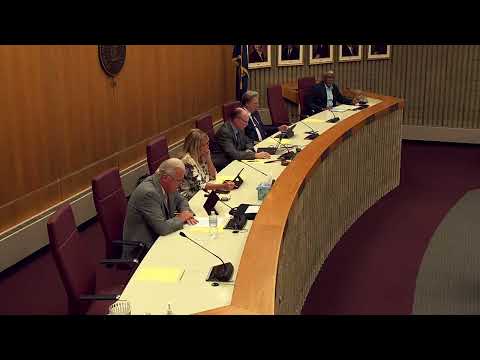
The Roseville City Council on Sept. 23 tabled consideration of a proposed payment-in-lieu-of-taxes (PILOT) ordinance for a planned low-income housing purchase after council members pressed staff for more detail on occupancy assumptions, timing and limits set by housing authorities.
The item had been the subject of public comment and multiple prior continuations; the council voted to table the ordinance following a presentation from the project representative and questions from council members. The motion to table, made by Councilman Knox and supported by Councilman Leticia, carried unanimously.
The ordinance as revised showed an 8.77% PILOT rate for the first 15 years, said the presenter, who told the council that anticipated acquisition and occupancy timing had shifted and year one of payments was likely to be 2027. The presenter said the 8.77% figure was calculated using a 97% occupancy assumption and a city assessor’s inputs.
Why it matters: A PILOT agreement changes the property tax revenue the city would otherwise collect and can be a condition of financing or sale for affordable housing developers. Council members said they needed clearer sensitivity figures showing the city’s revenue under lower occupancy scenarios and any limits imposed by program rules before committing to terms.
Council members asked staff to return with alternative occupancy guarantees to test revenue outcomes and to report whether a guaranteed occupancy level (for example, 90–95%) could be built into the contract. The presenter and staff told the council they could ask the potential buyer whether they would accept a lower guaranteed occupancy threshold, but also cautioned that federal and state housing program rules govern rents and other parameters.
City staff and the city attorney referenced program constraints. The project representative said HUD market-based rents and Section 8 rules determine tenant rents; the city attorney said there are limits set by the state housing authority (MSHDA) that affect term renegotiation, and that the council could not unilaterally shorten certain term requirements below program minimums without running afoul of those requirements.
Public commenters urged greater clarity in the ordinance. Resident Monica Troniak told council members the term “low income” in the draft ordinance was ambiguous and recommended a clearer definition tied to program eligibility. Troniak also urged the council to consider how HUD rent-setting and waiting lists for existing complexes affect tenants.
After extended questions about vacancy impacts (staff noted an example where a 3% vacancy on a roughly $2.6 million gross-rent base equated to about $80,000 in foregone rent under current numbers) and whether the city could require guaranteed occupancy levels in contract language, Councilman Knox moved to table the item so staff could return with numbers and possible negotiated concessions. Councilman Leticia seconded the motion; the motion passed.
What happens next: Council asked staff to request occupancy-concession scenarios from the prospective buyer and to provide sensitivity analyses — including revenue impacts if occupancy fell to 90% or 80% — and to report back at a subsequent meeting. No contract or PILOT agreement was approved at the Sept. 23 meeting.