Get Full Government Meeting Transcripts, Videos, & Alerts Forever!
Get email alerts on the Economic Development Epicenter topic
No spam. Unsubscribe anytime.
Fort Bend County proposes $161 million county-backed conference center and garages, asks Rosenberg to assign hotel tax for debt service
Summary
Fort Bend County officials on Tuesday asked the Rosenberg City Council to consider assigning the city’s future hotel-occupancy tax revenue from a single new hotel to help pay county-issued debt for a proposed conference center and two parking garages at the Epicenter complex.
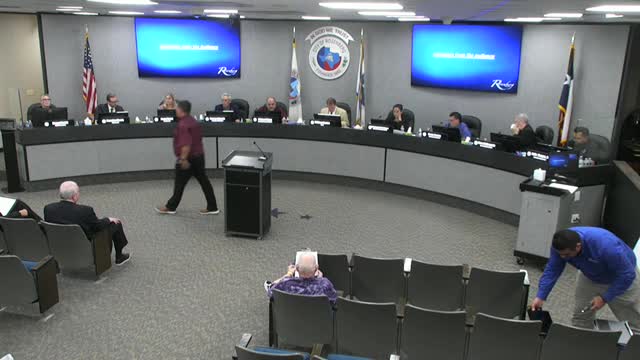
Fort Bend County officials on Tuesday asked the Rosenberg City Council to consider assigning the city’s future hotel-occupancy tax revenue from a single new hotel to help pay county-issued debt for a proposed conference center and two parking garages at the Epicenter complex. County and consulting attorneys presented preliminary project terms and answered council questions during a workshop meeting.
The project proposal would add a 218-room full-service hotel, a 70,000-square-foot convention center (about 40,000 square feet of conference space and a grand ballroom) and two parking garages — a west garage with roughly 1,500 spaces and an east garage with about 1,100 spaces — adjacent to the existing Epicenter complex, presenters said.
Carlos Guzman, Director of Opportunity and Development for Fort Bend County, said the county is pitching the expansion to capture larger events and more out‑of‑town visitors. “Fort Bend County is experiencing extremely, a lot of growth right now. We're just shy of 1,000,000 residents, and we expect to double in population in about 20 years,” Guzman said.
Why it matters: county officials and their consultants said the Epicenter is operating ahead of expectations and that the expansion could attract events that require on‑site, full‑service hotel capacity. The county's plan would use state-authorized hotel- and sales-tax financing that, under state law, can be dedicated to hotel/convention center projects for a limited term.
What the county is offering and asking: consultant Steve Robinson, attorney with Allen Boone Humphries Robinson (ABHR), outlined the proposed public-private structure. Robinson said the county would finance the parking garages and the convention center — a proposed county contribution of about $161,000,000 total, which he broke down as roughly $43,000,000 for the west garage and about $117,000,000 for the conference center and east garage. The private developer would build and own the hotel; estimated hotel construction cost is roughly $75,000,000.
Robinson said the county would rebate its own 2% hotel-occupancy tax receipts to support debt service and that the county would ask the city to commit only the new hotel-occupancy tax revenue generated by the single new hotel (not existing hotel taxes, sales taxes, property taxes or any upfront city cash). “What we are asking for from the city is that as to this hotel only, we are asking the city for the new hotel-occupancy taxes that will be generated from this hotel,” Robinson said. He added that state sales‑tax and hotel‑occupancy tax incentives have a 10‑year window under state law, after which those state revenues would revert back to the state.
Liability and ownership: Robinson and county staff said the structure would require the city to take title to the site during the tax-exempt financing period in order to access the state program; the county would then lease the property from the city and assume operations and liabilities during the leaseback term. Council members asked whether the leaseback would include indemnities; presenters confirmed the county would assume responsibility and carry liability protections in the lease terms.
Council reaction and next steps: council members asked several clarifying questions about local fiscal risk, timing and public benefits. Councilmember Jessica (last name not specified in the transcript) pressed that the arrangement should not increase tax obligations for Rosenberg residents; presenters replied the plan targets revenues from out‑of‑town visitors and that any additional sales or property tax gains would support the city general fund. No formal action or vote was taken; the council directed staff to place the item on a future agenda for public input and further consideration.
What remains unresolved: presenters said some project specifics — including final ownership after the 10‑year state revenue period, developer selection, and detailed maintenance obligations — will be negotiated in subsequent agreements. The county’s funding model, as described, depends on state enabling legislation and on dedicating only the new hotel’s city hotel‑occupancy tax to county debt service.
Background: county officials said Phase 1 of the Epicenter has exceeded early revenue projections and cited a recent major concert that produced more than $100,000 in net profit in a single night at the facility. County staff said the proposed expansion aims to keep the Epicenter competitive for larger regional and national events.
End note: the council received the presentation and asked staff to schedule public input and a future council agenda item for formal consideration; no binding commitments were made at the workshop.