
Resident raises code, setback and nuisance concerns over parking strip near Oneida; council and staff outline limits
Get AI-powered insights, summaries, and transcripts
Subscribe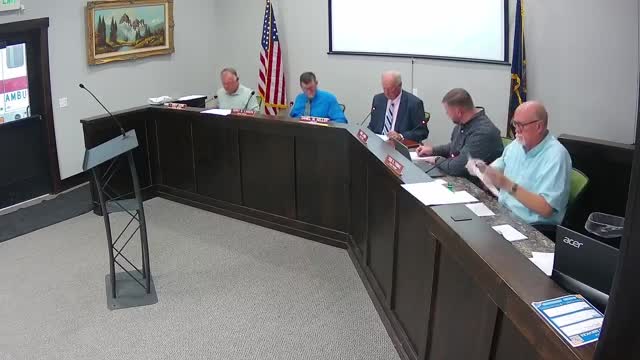
Summary
Helen Jensen told the council she filed a complaint about a commercial building converted to a residence and questioned setback, nuisance and enforcement issues; city attorney and staff said the parking strip is likely public right-of-way and that longstanding use may qualify as a legal nonconforming use.
A Preston resident, Helen Jensen, spent her allotted public-comment time asking the council for clarification after an earlier complaint about a neighboring property that she said had been converted from commercial use to a private residence and that an accessory building had been placed inches from her property line.
Jensen read portions of her written complaint and said she did not question the city’s rezoning authority but rather asked how the building conversion and setback issues were allowed to proceed. She told the council she had cited municipal nuisance code and Idaho statutes in her complaint and that other neighbors had provided written statements of concern; she later handed two copies of Ordinance 019-1 to the council for consideration.
City Attorney Lyle Fuller and City Development Director Sean Alverson briefed the council about both the parcel’s right-of-way and the legal concept of a ‘‘legal nonconforming use’’ (commonly called a grandfathered use). Fuller said survey work suggested the strip immediately east of the 102 West Oneida property is likely part of the public right-of-way and noted that long-standing parking on the strip does not convert public land to private property. He said the city would likely view the parking there as a longstanding or grandfathered use because the building footprint limits where vehicles can park.
Fuller warned that enforcing a prohibition against parking there could present legal difficulties: a citation or court case would require proving beyond a reasonable doubt in court whether enforcement is appropriate, and the historic use could complicate enforcement. Chief McCammon, the police chief, agreed that the department had not issued citations previously and described the location as having historically consistent parking; he said removing that parking now could leave no feasible place for occupants to park, particularly in winter when on-street restrictions apply.
Alverson reminded the council of an August 13 memo clarifying that the county assessor’s property classification for taxation does not determine zoning compliance; he said assessor classification is separate from the city’s zoning authority.
Jensen asked the council to consider revising the nuisance code to provide clearer, more objective definitions; she said she found the existing language too general and therefore difficult to challenge. Council members acknowledged the tension between property rights and municipal codes and said they would consider the points raised.
No formal enforcement action, vote or change to code language was taken at the meeting; Jensen was invited to meet with staff afterward to continue the discussion.