
Panel reviews stop ruled discriminatory after expert-statistics and officer testimony clashed
Get AI-powered insights, summaries, and transcripts
Subscribe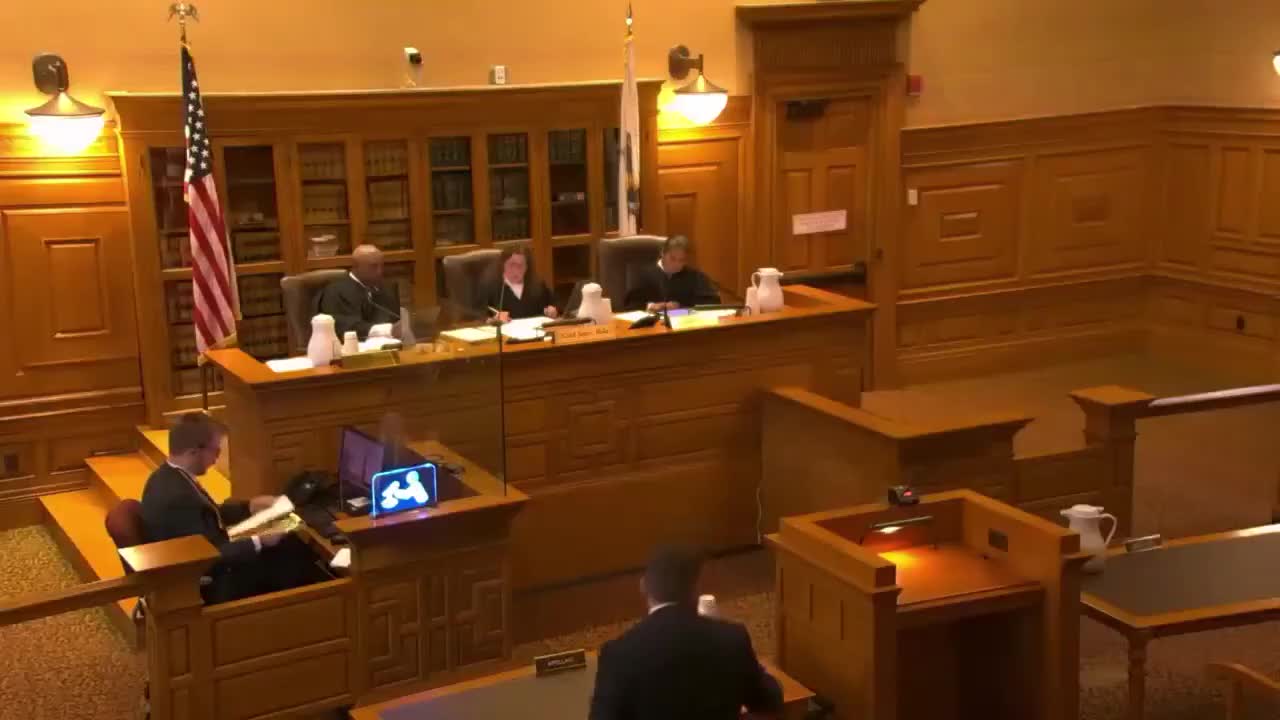
Summary
BOSTON ' The appeals court heard argument over a trial judge's decision to credit statistical evidence of biased traffic enforcement despite officer testimony that he could not see the driver; the panel took the case under advisement.
BOSTON — The Massachusetts Appeals Court heard argument in Commonwealth v. Jonathan Velez over whether a motion judge properly granted relief after finding a traffic stop was motivated, at least in part, by racial discrimination.
The dispute arose after an evidentiary hearing in which a statistical expert testified—according to the judge's written findings—that Officer Graham pulled Hispanic drivers at a higher rate than his peers. The motion judge also credited the officer's testimony that he "could not see the driver" prior to the stop. The Commonwealth argued the judge erred by crediting statistics despite the officer's testimony and by failing to apply the two-step Long framework properly.
"It's simply not possible for a stop to have been made based on a racially discriminatory reason if the officer didn't know what the race of the driver was," the Commonwealth's attorney argued, saying the judge's process effectively collapsed the initial burden on a defendant to show a reasonable inference of discrimination before an evidentiary hearing.
Defense counsel responded that implicit-bias evidence and undisputed facts about two separate opportunities for the officer to view the driver supported the judge's decision to credit the statistical analysis and to find the Commonwealth had not rebutted the inference of discrimination. The defense emphasized that a judge may credit aspects of both the officer's testimony and the expert's analysis and then weigh them; the motion judge found the totality favored the defendant.
Why this matters: the appeals court must resolve whether the trial judge applied Long's two-step framework correctly and whether the record supports crediting statistical evidence when the officer testified he did not see the driver. The case raises questions about how courts evaluate statistical proof of discriminatory enforcement when an officer's testimony appears to negate knowledge of the driver's race.
During argument the panel asked whether the judge's treatment of the expert was internally consistent and whether undisputed factual opportunities to view the driver could support an inference of discrimination despite the officer's denial of seeing the driver. The Commonwealth said the motion judge's findings were an abuse of discretion; the defense said the decision fell within reasonable alternatives.
The court took the case under advisement.
Speakers: Raesler (Josh) Cone for the defendant; Michael Locke and others for the Commonwealth; Chief Justice Blake and the panel presiding. The motion judge's written findings credited both the expert and the officer, but also recorded the judge's "serious reservations" about parts of the expert's methodology.