
Historian links Charlie Thomas’s experience to Branch Rickey’s pledge that helped lead to Jackie Robinson’s debut
Get AI-powered insights, summaries, and transcripts
Subscribe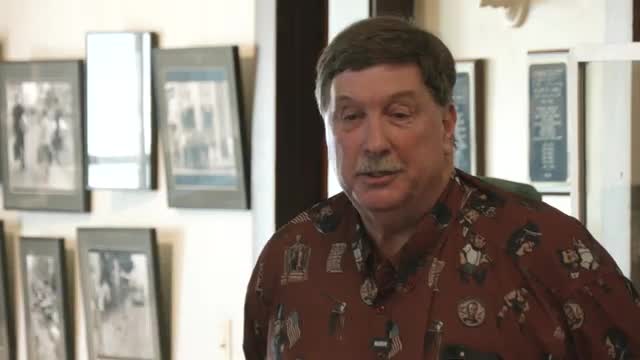
Summary
Peter Koltes recounted how a 1904 hotel incident involving Charlie Thomas and Branch Rickey shaped Rickey’s commitment to integrate baseball decades later, culminating in Jackie Robinson’s 1947 debut.
Peter Koltes, president of Muskingum County history, told an audience that Charles “Charlie” Thomas, a Black athlete from Zanesville, and Branch Rickey, then a coach at Ohio Wesleyan University, formed a friendship after an incident in South Bend around 1903–1904 that Koltes said influenced Rickey’s later decision to integrate Major League Baseball.
Koltes recounted that during a 1904 trip to South Bend, the hotel manager would not allow Thomas upstairs because of his race. Koltes said Rickey intervened, convinced the manager to permit Thomas upstairs, and later had a cot brought into Rickey’s room so Thomas could stay there. Koltes described Thomas as a 220-pound athlete who reacted to the humiliation by staring at his hands and attempting to “wipe the blackness away.” Koltes said Rickey told Thomas, “the day will come that they won't have to be white.”
Koltes said the episode left “an indelible impression” on Rickey and that Rickey later recalled it. Koltes linked that promise to Rickey’s actions as Brooklyn Dodgers general manager: nearly 45 years later, on April 15, 1947, Jackie Robinson broke baseball’s color line.
Koltes summarized Thomas’s life after Ohio Wesleyan: Thomas played college football and baseball, later enrolled in dental school, moved to St. Louis in 1909 and then to Albuquerque in 1920, where Koltes said Thomas practiced dentistry until retiring in 1960 and died in 1971. Koltes said Branch Rickey died in 1965 in Columbia, Missouri.
Koltes asserted that Thomas and Rickey maintained contact over the years; he said Thomas visited Rickey at Sportsman's Park in St. Louis and that Rickey repeated the South Bend story to Jackie Robinson when Robinson questioned Rickey’s motive for enduring hostility in integrating baseball.
Koltes used this local connection to frame a broader point about how personal encounters can shape national change. He said, “Without Charlie Thomas, Jackie Robinson would not have happened,” citing the anecdote as the impetus for Rickey’s later decision to sign Robinson in 1947.
Koltes concluded his presentation by noting that the episode is recounted in secondary sources such as magazine articles and documentary histories; he advised care in interpreting oral or anecdotal links between local figures and national events when primary documentation is limited.