Katy ISD outlines MTSS, expanded pre-K, and support programs including Pregnancy Education & Parenting
Loading...
Summary
District staff presented a detailed update on intervention programs — MTSS tiers, accelerated instruction rules, pre-K expansion under recent state eligibility, supports for students in foster care, and the Pregnancy Education & Parenting (PEP) program — and trustees asked clarifying questions about implementation and access.
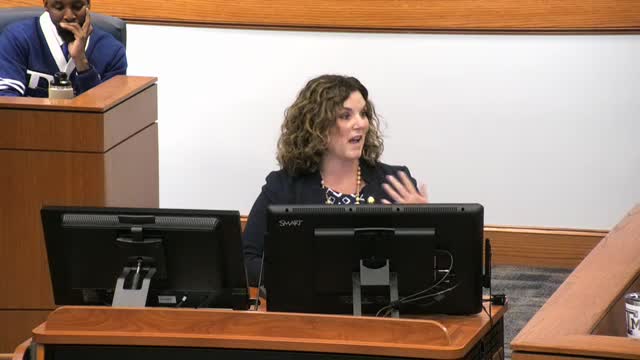
Katy ISD’s director of intervention programs, Heather DeVries, presented an academic update Monday detailing the district’s multilevel student supports from pre-kindergarten through graduation. The presentation covered the district’s MTSS (Multi-Tiered System of Supports) framework, accelerated-instruction requirements from recent state legislation, pre-kindergarten expansion and enrollment, supports for students in foster care, and the Pregnancy Education & Parenting (PEP) program.
DeVries described MTSS as a three-tiered model: Tier 1 supports all students in the general-education classroom; Tier 2 provides supplemental small-group supports; and Tier 3 offers intensive, often pull-out services. She said campuses designate an MTSS coordinator, use multiple data points for decisions, and are required by TEA to document interventions and progress monitoring. DeVries explained state law changes (described in the presentation as House Bill 4545 and House Bill 1416) that clarified accelerated-instruction hours and teacher assignment rules: students may receive compliance hours through a teacher designated as a TIA (teacher of accelerated instruction) or receive 15/30 hours in a small-group setting limited to two subjects.
On pre-kindergarten, staff said a newly added statutory eligibility expanded seats by eight classrooms districtwide, noting Katy ISD now enrolls more than 2,600 pre-K students with 105 monolingual and 40 bilingual classrooms. DeVries said district outreach includes library presentations and bilingual webinars to help families enroll. The district also described supports for students in foster care, referencing TEA guidance and the department’s responsibilities to remove enrollment barriers and inform students about postsecondary opportunities available free at state schools to students who were ever in foster care.
DeVries described the PEP program, established in 1991, which provides three facilitators across high schools and supports pregnant and parenting teens with counseling, childcare coordination, transportation assistance, job readiness and homebound instruction if needed. She noted one PEP facilitator previously had been a PEP student. Trustees asked detailed questions about dyslexia identification, intervention intensity and how intervention scheduling becomes more difficult at higher grade levels when graduation requirements and electives limit schedule flexibility.
Trustees praised PEP and asked operational questions about Project Tike (early childhood services for students with specified disabilities) and how the district intends to staff new pre-K classrooms. Staff said Project Tike serves around 75 direct-service students and that the pre-K additions were placed to match enrollment trends. DeVries said the goal across MTSS and intervention programs is early identification, evidence-based intervention, and monitoring so students graduate with functional reading and math skills.