Get Full Government Meeting Transcripts, Videos, & Alerts Forever!
Get email alerts on the Cpcs Unionization topic
No spam. Unsubscribe anytime.
Public defenders and SEIU urge committee to allow CPCS employees to seek collective bargaining rights
Summary
Legal staff and union representatives from the Committee for Public Counsel Services (CPCS) testified in favor of S.1873, which would designate CPCS as an employer for Chapter 150E and give CPCS employees the option to pursue collective bargaining.
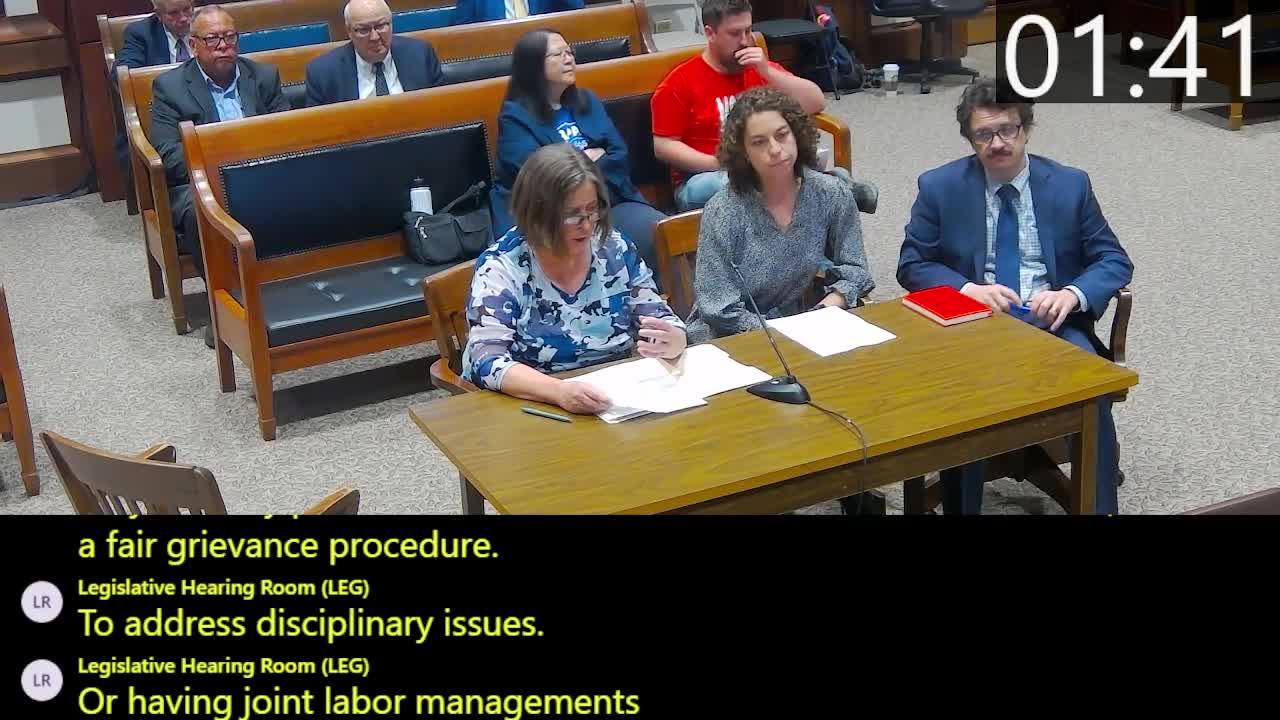
SEIU, CPCS attorneys and staff told the Joint Committee on Public Service that employees of the Committee for Public Counsel Services should have the same right to decide whether to collectively bargain as other state employees. Maureen Madaris of SEIU Local 888 and several CPCS attorneys testified in favor of S.1873.
Madaris said the bill “simply gives CPCS employees the same opportunity that the majority of Massachusetts state employees already have” and that it does not itself impose a fiscal impact or compel bargaining; it only changes employer designation in statute. Trial attorneys Becky Wasserman (youth advocacy division) and James Vita (Fall River) described attrition and morale problems at CPCS and said arbitration, a fair grievance process and joint labor‑management discussions would improve retention and workplace fairness.
The nut graf: witnesses argued that CPCS provides constitutionally mandated services and that collective bargaining would not impede the agency’s mission; instead, they said it would stabilize staffing and improve retention of lawyers, social workers, investigators and administrative personnel who are essential to client representation.
Madaris and the CPCS witnesses asked the committee to report S.1873 favorably so employees have the opportunity to organize and bargain if they choose. No management or executive‑branch testimony in opposition appeared in the hearing record provided.
Ending: Committee members asked questions; no vote or committee action was recorded during the hearing.