Get Full Government Meeting Transcripts, Videos, & Alerts Forever!
Get email alerts on the Regional Public Health Funding topic
No spam. Unsubscribe anytime.
Regional health district seeks legislative fix for retirement contribution liability
Summary
Officials from the Neshoba Associated Boards of Health urged the committee to pass H.2960 to change employer contribution calculations and provide relief for back payments to preserve a 15‑town shared public health district serving North Central Massachusetts.
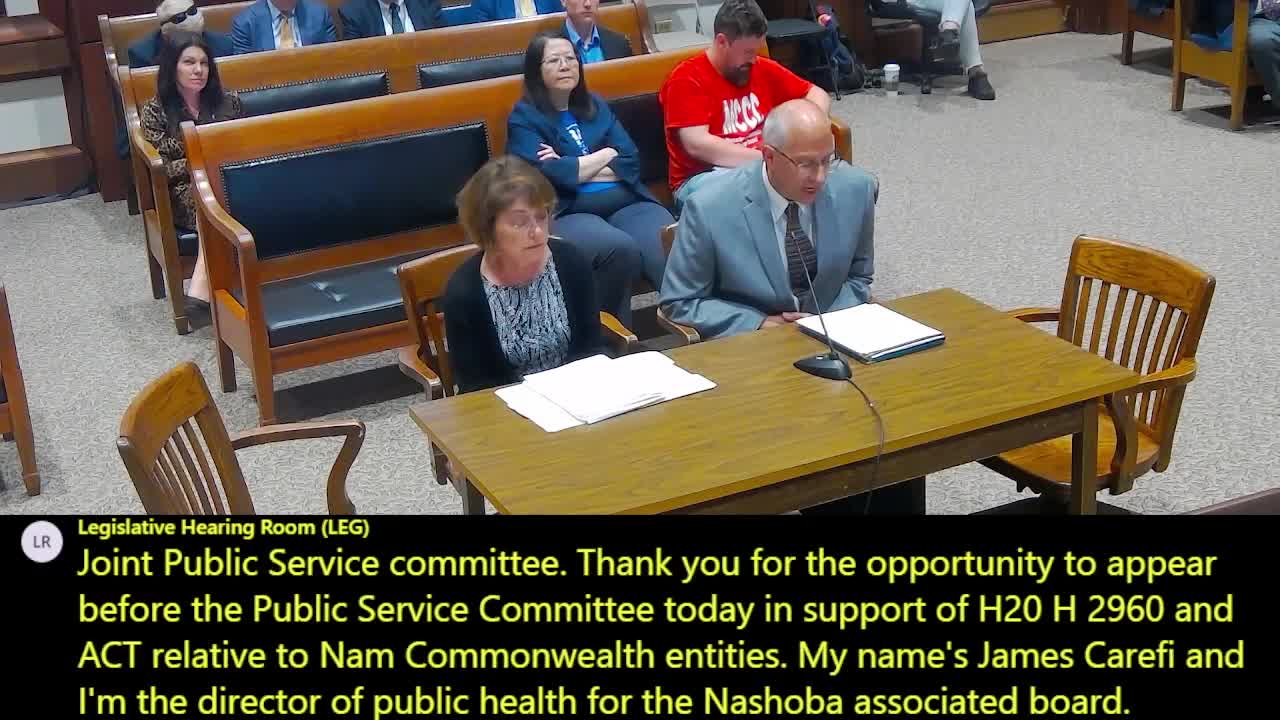
James Kareffe, director of public health for the Neshoba Associated Boards of Health, and Teresa (CFO) testified in support of H.2960, an act relative to non‑commonwealth entities that would change how certain regional public health districts contribute to the Massachusetts State Employee Retirement System and provide relief for past employer contributions owed to the system.
Kareffe told the committee that Neshoba serves 15 communities and has provided consolidated public health services since 1931; the district’s member populations range from about 3,000 to 14,000. The district’s services include environmental inspections, communicable disease investigations, immunization clinics and nursing services, the witnesses said. The district was admitted into the state retirement system in 1967, the CFO said, and decades later a retirement‑board audit identified employer contribution liabilities dating back to 2012 and earlier.
The nut graf: Neshoba officials said their current liability is approximately $7 million while their operating budget is approximately $1.8 million annually and assessments from member towns total about $600,000; they said the magnitude of back payments threatens the district’s viability and the continued provision of shared public‑health services.
Teresa, the CFO, described two types of relief in H.2960: (1) change the contribution method to calculate current employer share using current staff salaries at a retirement‑actuary‑set rate so the district can budget reliably; (2) provide statutory authority for the retirement board to offer additional relief or payment arrangements for back payments. She said auditors had warned that without legislative action the agency could be deemed not a going concern.
Representative (name in transcript: Scarsdale) and other panels noted the recent hospital closure in the region (Heywood / Nashoba Valley context) that has increased pressure on first responders and public health services and said passing H.2960 would help stabilize regional public health capacity.
Ending: Witnesses asked the committee to report H.2960 favorably and work with the retirement board and Treasury to craft repayment terms; no committee vote was recorded during the hearing.