Lifetime Citizen Portal Access — AI Briefings, Alerts & Unlimited Follows
Massachusetts officials urge early preparation for 2030 Census, highlight LUCA and block-boundary review
Loading...
Summary
State and academic officials told a Senate hearing Sept. 22 that Massachusetts must start outreach and technical preparations now for the 2030 Census, focusing first on the Local Update of Census Addresses (LUCA) and the Block Boundary Suggestion Project to ensure an accurate master address list.
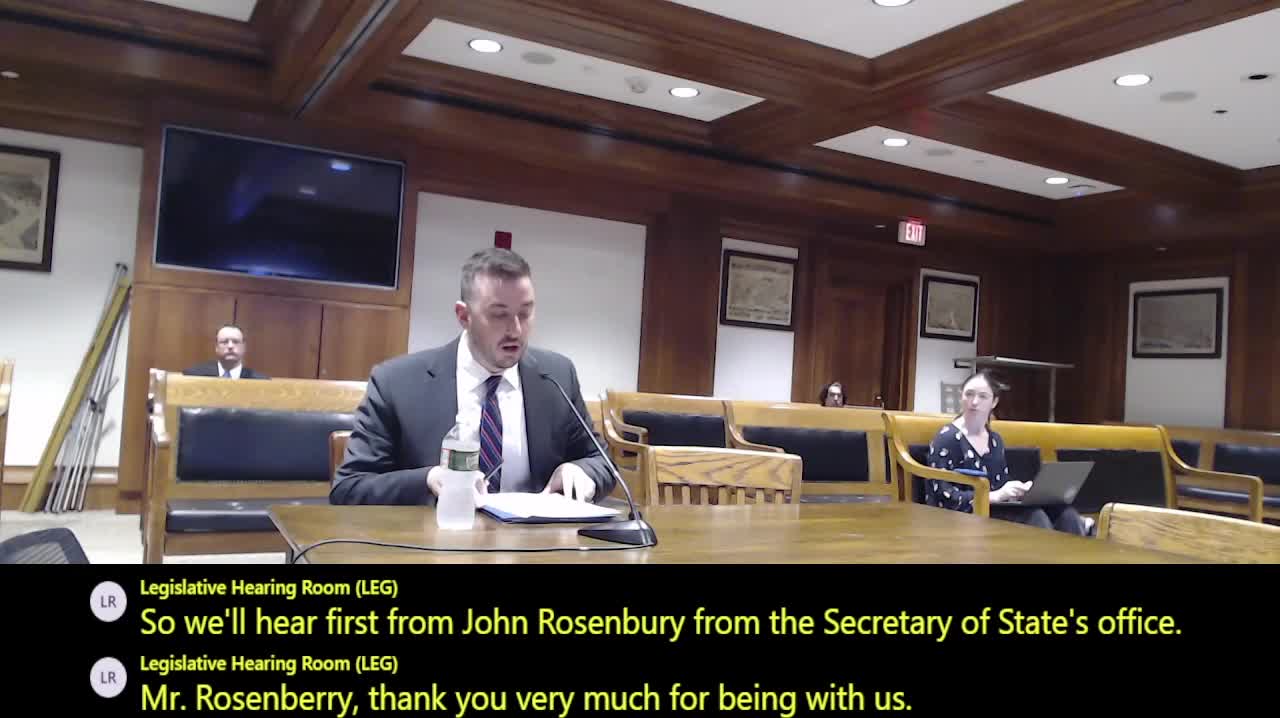
State and local officials told the Senate Committee on the Census on Sept. 22 that Massachusetts should start preparing now for the 2030 Census, beginning with the Local Update of Census Addresses (LUCA) and the Block Boundary Suggestion Project to ensure an accurate master address list and better enumeration in 2030. "The block boundary suggestion project is an opportunity for every city or town to review their block boundaries," John Rosenberry of the Secretary of the Commonwealth's office said. "These are the smallest foundational geographic shapes within a city or town that are used as the building blocks for census tracts... They all start at the block boundary suggestion phase." The Local Update of Census Addresses program, known as LUCA, gives eligible governments a confidential, limited window to compare the Census Bureau's Master Address File with local address lists and suggest additions, deletions or corrections. Susan Strait, program manager at the UMass Donahue Institute, described LUCA as "an opportunity for states, tribes, and local governments to review and improve the Census Bureau's master address list prior to the actual census count." Why it matters: the decennial census determines federal funding formulas and congressional apportionment, and the 2020 experience showed small differences can have measurable effects. Officials said Massachusetts received an improved count in 2020 but stressed gaps remain in some places. Susan Strait noted that the Census Bureau will not automatically circulate address-level data widely: LUCA reviewers sign Title 13 confidentiality agreements and have a 180-day review window after they receive the bureau's materials. She outlined a likely LUCA timeline: invitations to highest elected officials in early 2027 through mid‑2027, the 180‑day review period from mid‑2027 into early‑2028, and feedback with appeals available in early 2029. Rosenberry said the Block Boundary Suggestion Project (BBSP) typically begins in December (based on prior cycles) and runs about six months; BBSP submissions come through the Secretary of the Commonwealth's office, which acts as the state's designee to the Census Bureau. What state offices will do: the Secretary of the Commonwealth's census division will receive BBSP submissions and help municipalities that lack technical capacity. UMass Donahue Institute (UMDI) said it is assembling a statewide address list by matching MassGIS address points, standardizing assessor use codes, and geocoding known group‑quarters so it can perform a statewide comparison against Census block counts. Rosenberry described outreach already under way, including a late‑summer briefing held in Pittsfield focused on Berkshire County. Officials urged legislators to raise local awareness: "Talk to your city and town clerks. They maintain the voter list. That's gonna be a huge component in correcting any counts that we see," Rosenberry said. Susan Strait added that LUCA reviewers are usually designees of the highest elected official (mayor, board of selectmen, governor for the state), and that reviewers must complete a confidentiality process before accessing Title 13 material. The hearing speakers emphasized sequencing and coordination: block boundary review and address review are separate steps but related, and both require local engagement and some technical capacity. Officials said they will provide trainings and tools for municipalities, and UMDI and the Secretary of the Commonwealth will offer statewide support and perform a supplemental statewide review for communities that do not enroll or that drop out. Ending: committee members said they will hold further hearings and work with state offices to make training and outreach broadly available across Massachusetts.