
Provo school board reviews broad policy updates on public notice, recordings and meeting procedures
Get AI-powered insights, summaries, and transcripts
Subscribe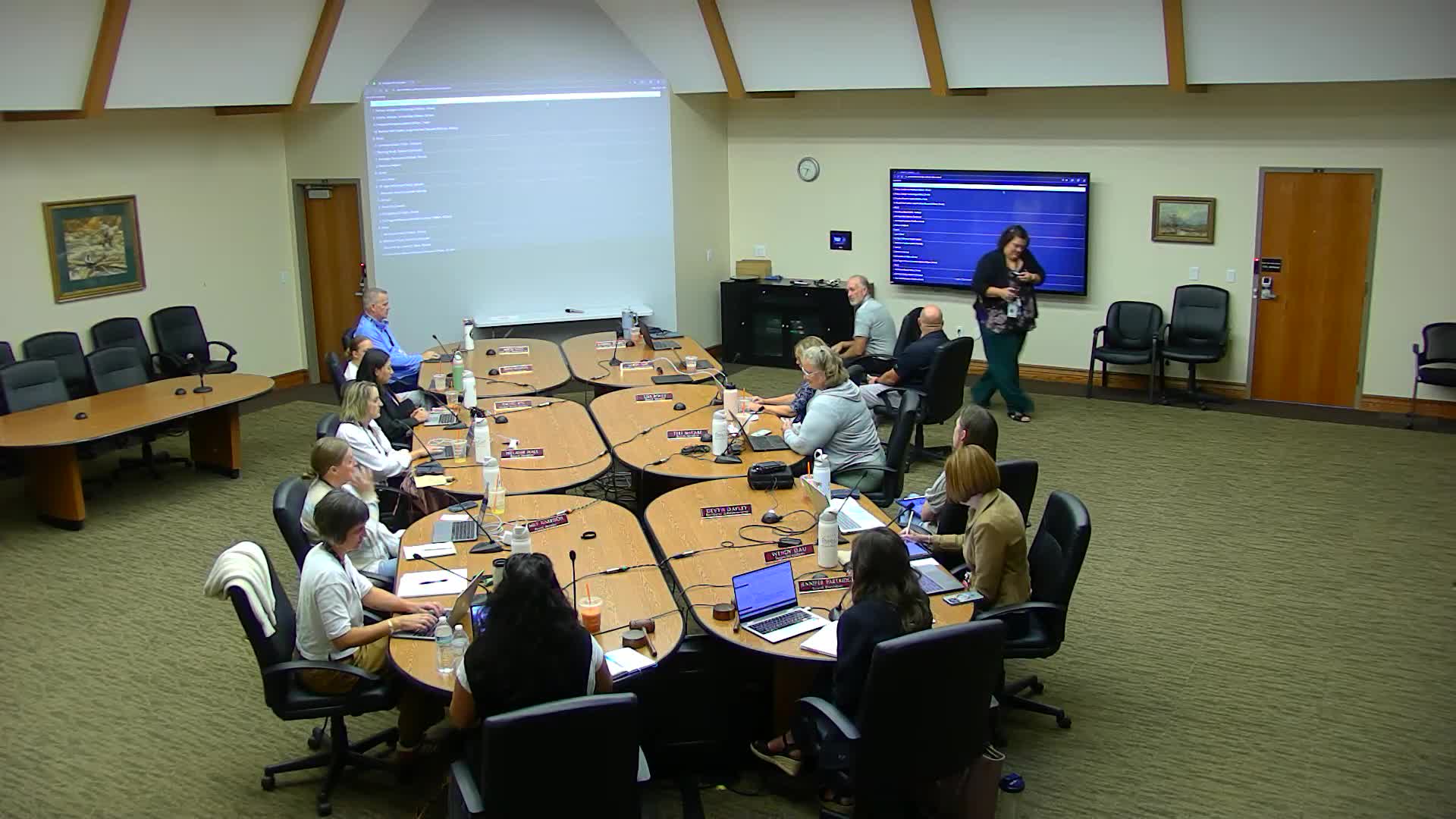
Summary
Board members took first and second readings of multiple policies covering leadership duties, public notice, hearings, electronic meetings, minutes and a code of ethics; policy committee will refine language and procedures for public clarity and legal compliance.
The Provo City School Board spent a large portion of its Sept. 19 study session reviewing multiple policy updates governing board leadership, meeting notice and recordings, closed sessions and a code of ethics. Board President Jennifer Partridge and superintendent staff led the review of second and first readings for multiple numbered policies. The board discussed updating language to align with state law and to clarify procedures the public uses to find notices and hearings. Among items discussed were updates to policies listed by staff as “policy 11 o 7,” “11 o 8,” “11 o 9” (board leadership and officers), and a set of policies beginning with “14” that address meeting and hearing notice, recordings and minutes, closed meetings, meeting locations, electronic meetings, community involvement committees and a code of ethics (State Board of Education model language). Deputy Superintendent Jason Cox and business administrator Devin Daley participated in policy discussions and fielded technical questions about compliance. Board members suggested moving detailed operational steps (for example, how to give notice for a particular type of hearing) into separate procedures so the policy text remains stable while procedures can update more frequently as state law and technology change. On public hearings, the board discussed newly required language for truth-in-taxation and bond/lease-revenue-bond notices; staff said some of that language was drawn directly from new state statute and would need careful drafting and linkage to procedures. Board members pressed to simplify statutory phrasing so notices are clear to the public. The board also discussed requirements for electronic meetings, including who can request remote participation and whether proxy voting should be allowed; staff said state law allows proxy votes but many boards avoid that practice. On minutes and recordings, staff noted that recordings can be used to prepare minutes and that hearing recordings for certain bond hearings must be made publicly available. Policy 1600 — code of ethics — includes model language adopted by the State Board of Education in 2013, the board heard. Board members said reviewing the code annually or at the January meeting could be useful. No policy votes were taken at the study session; staff said specific wording changes will be returned to policy committee and then presented for business meeting votes at a later date.