Get Full Government Meeting Transcripts, Videos, & Alerts Forever!
Get email alerts on the School Consolidation topic
No spam. Unsubscribe anytime.
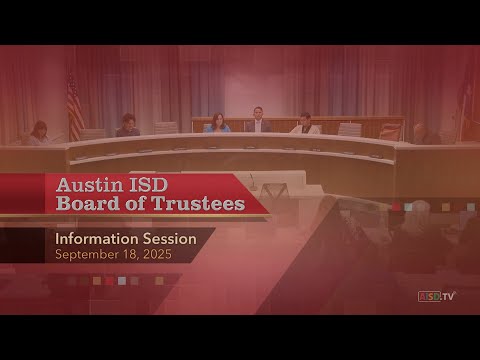
Austin ISD public testimony urges pause on school consolidations; parents press to save Wynn Montessori, Becker dual‑language program
Summary
Dozens of parents and community members spoke at an Austin ISD information session to press trustees to halt planned campus closures and consolidations, seek more academic supports for low‑performing campuses, and ask the board to preserve two programs: Wynn Montessori and Becker Elementary's dual‑language program. Several speakers also raised the
Dozens of parents, teachers and alumni used the board’s public‑comment period Thursday to urge the Austin Independent School District to pause planned consolidations and closures and to protect specific campuses and programs, including Wynn Montessori and Becker Elementary’s dual‑language program.
Speakers said the district’s timeline for facility changes is too short, that consolidation would disrupt ongoing academic turnarounds and that some campuses already showing progress—Wynn in particular—need multi‑year stability rather than staff replacements. Several callers also raised concerns about transparency, data availability and the pace of turnaround work required by the Texas Education Agency.
Lauren Smith, AVID site coordinator at Betichuk Middle School, described staffing losses and administrative vacancies that, she said, played a role in a campus earning a low state accountability rating in a previous year. “Please avoid these choices moving forward. Our students deserve better,” Smith said.
Multiple speakers asked the board to impose a moratorium on consolidation and closure decisions, and to prioritize an “academic first” approach: focus district resources on leadership, teacher supports, curriculum and family engagement before making facility changes. “TEA requires investments in teachers, leadership, curriculum and families, not buildings,” said one commenter.
Families from Wynn Montessori repeatedly asked trustees to request extensions of turnaround timelines and to preserve school leadership and staff. “Wynn has a 200‑student wait list and over 400 transfer requests,” Whitney Hazelmeier told the board. “Stability, not disruption, is what our children need.” Several speakers said the school combines Montessori and dual‑language instruction in an underserved neighborhood and said they had seen sustained gains under the current principal.
Becker Elementary’s dual‑language program also drew sustained public support. Multiple families described choosing homes to attend Becker and said that dismantling the program or moving it would break community ties and create enrollment disruptions. “Becker is a model campus that should be replicated, not closed,” said a caller who identified herself as a Becker parent.
Other comments asked the board to keep or invest in Yellow Jackets Stadium and to honor bond‑fund promises for that facility, noting the stadium’s importance to East Austin alumni and community groups. Former trustee Leticia Anderson and others criticized the pace and tone of district communications about consolidations and said families need more data on the educational and social impacts of closures.
Board members and staff replied during the information session with two themes: (1) the rubric and demographic work behind the consolidation process are still being refined, and (2) the district is working with the Texas Education Agency (TEA) on turnaround strategies and will post milestone documents when they are ready. Superintendent Segura and staff said the posted rubric was a starting point and that deeper demographic and boundary analysis was under way with a demographer. Trustees asked the administration to post more of the underlying data and to provide a clear description of what the TEA will or will not approve in turnaround plans.
Trustees did not vote on any consolidation items during the information session; several said they will require additional site‑level and program‑level detail before any final decisions. The board also heard dozens of recorded telephone comments after in‑person testimony concluded.
The public‑comment period lasted roughly 72 minutes and included 11 in‑person speakers and about 49 recorded messages, according to district staff. Many callers asked that the district slow the timeline so that academic work—the “how” of improving student outcomes—can guide any decisions about buildings and boundaries.
Trustees and staff repeatedly emphasized the limits of the public‑comment format: Texas open‑meetings law restricts the board’s ability to debate or decide policy during the public‑comment segment. Separately, several speakers asked the district to publish the fuller set of data it is using in the consolidation process and to explain how potential savings would be reallocated to classrooms.
The board’s next step is a publicly posted draft consolidation plan scheduled for release on Oct. 3, followed by additional community feedback and a final vote planned for a later meeting, according to district staff. In the interim, several community groups said they will continue to press for a moratorium on closures and for stronger academic plans and community engagement on any proposed changes.