Get Full Government Meeting Transcripts, Videos, & Alerts Forever!
Get email alerts on the Tax Increment Finance topic
No spam. Unsubscribe anytime.
Cross Plains board accepts 2024 TID No. 3 annual report; staff says district can close in 2027 if no new expenditures
Summary
The Village of Cross Plains Joint Review Board voted to accept the 2024 annual report for Tax Incremental District (TID) No. 3 and heard a staff overview showing about $58.9 million in incremental value and a projected 2027 closure if no further expenditures are undertaken.
The Village of Cross Plains Joint Review Board on Sept. 17 accepted the 2024 annual report for Tax Incremental District No. 3 and heard staff projections that the district can be closed in 2027 if the village undertakes no further expenditures.
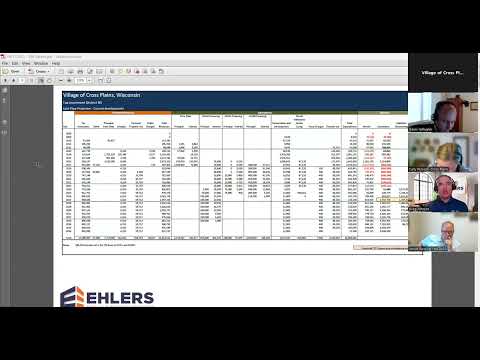
Greg, a staff member, said, “the incremental value in this district as of 01/01/2025 is $58,907,300.” He told the board the fund balance at the end of 2024 was approximately $52,700 and that the district’s final year of increment collection, if needed, is 2036.
The report presented maps and a history of the TID’s incremental value since its creation in February 2008 and amendments in 2011 and 2013. Greg outlined revenue sources that feed the TID, identifying tax increment as the primary revenue with additional intergovernmental aids and personal property aid payments. On the expenditure side, he said the district remains responsible for existing debt service from bonds issued in 2014–2016, ongoing development incentive payments and the TID’s share of safe drinking water and clean water fund loan debt service.
Board members asked questions about timing and fiscal effects. Adam Gallagher, a Dane County representative on the board, asked how closure would affect the village’s levy limits and whether leaving the TID open through 2028 would increase distributable funds. Gallagher asked, “If we would leave it open through 2028, then we would be about 1,400,000?”
Greg explained the Department of Revenue (DOR) process for calculating the one‑time levy limit adjustment that follows a TID closure. He summarized the DOR method: the incremental value at closure is divided by the village’s equalized value at closure to produce a percentage; half of that percentage is available as an allowable levy adjustment for the year after closure (the village’s 2028 budget). He cautioned that the final payout to taxing jurisdictions would be determined by a final TID audit conducted with the DOR and that the numbers presented in the packet were estimates.
On timing, Greg said that if the existing incremental value holds and the village does not undertake further expenditures, projected increment collections should produce a cumulative balance sufficient to pay outstanding debt service and allow the village to close the district in 2027. He also noted the district’s expenditure period runs through 2030, which means the village could legally incur additional costs until then; if no additional costs are authorized, statutory guidance requires the district be closed so the incremental value returns to the tax rolls.
The board took formal action to approve the meeting minutes from Sept. 18, 2024, and then voted to accept the 2024 annual report for TID No. 3. The record shows the motions carried by voice vote. The board then adjourned.
Why it matters: closing a TID returns incremental taxable value to all taxing jurisdictions and can provide the village a one‑time levy limit adjustment in the budget year following closure. The board’s packet identifies a remaining developer incentive payment for the Milestone senior living project as one of the district’s obligations; the exact final distribution amounts will be set by the DOR audit at closure.
No staff direction or follow‑up tasks beyond the statutory closing/audit process were recorded in the meeting minutes.