Get Full Government Meeting Transcripts, Videos, & Alerts Forever!
Get email alerts on the Student Outcomes topic
No spam. Unsubscribe anytime.
Board retreat spotlights reading, fourth-grade benchmark and a 100% graduation ambition
Summary
Consultant Vince Adams urged the Dallas School Board to adopt measurable goals focused on early reading and graduation; members discussed using dashboards, assessment literacy and disaggregated data to track progress toward those goals.
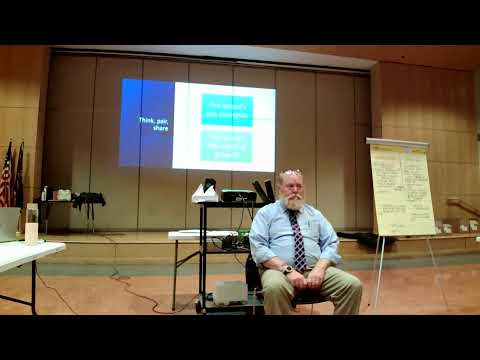
At the board training retreat, consultant Vince Adams urged board members to center measurable student outcomes in their governance work, emphasizing early reading benchmarks and a district-level graduation standard.
Adams described reading by fourth grade as a critical predictor of long-term outcomes. “Well, we can predict at least by percentages that a kid cannot read by fourth grade, they're in trouble,” he said, arguing that boards should treat reading as a priority for K–8 instruction and measurement.
Adams asked the board whether it would accept any non‑graduation rate for students and pressed for a high bar. “You guys define what success is,” he told the members. “You define what's possible for your kids? First and foremost, you define success for this district.” He said setting a high expectation — including targets tied to credentials and post‑secondary readiness — shapes district priorities and resource allocation.
Why it matters: The board’s stated priorities determine budget choices, staffing, curriculum adoptions and public messaging. Members debated what constitutes success (diploma, GED, five‑year completion) and whether to accept exceptions for students experiencing trauma; the trainer said the district’s accountability system uses cohorts and four‑year graduation metrics, and that GEDs and extended timelines are not equivalent to the four‑year cohort metric used for state accountability.
Board members asked staff for concrete metrics and dashboards. Several members requested training on assessment literacy (interim assessments and how to interpret growth measures) and asked for school‑level metrics that can be aggregated for board oversight. The trainer recommended dashboards that track disaggregated outcomes so the board can monitor progress and support targeted interventions.
Ending: The board committed to follow-up briefings from staff on measures and dashboard proposals and agreed to include reading and graduation metrics among the topics for planned work sessions.