Get Full Government Meeting Transcripts, Videos, & Alerts Forever!
Get email alerts on the Conditional Use Permits topic
No spam. Unsubscribe anytime.
Peoria holds workshop on conditional use permits; staff outlines review criteria, neighborhood meeting and appeal process
Summary
Planning staff led an extended development workshop Sept. 18 explaining how conditional use permits (CUPs) differ from rezones, what findings staff applies, how neighborhood meetings and notice work, and how appeals are handled (appeals to City Council within 15 days and a $500 filing fee).
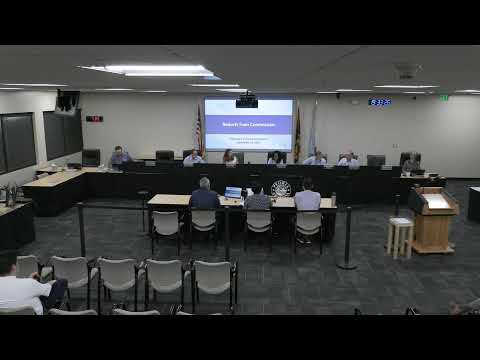
Peoria planning staff held a development-workshop segment during the Sept. 18 Planning and Zoning Commission meeting to explain conditional use permits, the city’s review criteria and the process for public notice, neighborhood meetings and appeals. Staff presenters Planning Director Hawkes, Lori Deaver and other planning staff described the permit pathway and answered commissioners’ questions.
Staff said conditional use permits (CUPs) are allowed uses under a zoning designation that may still require additional scrutiny because of physical or operational characteristics at a particular site. The purpose of the CUP process, staff said, is to mitigate potential adverse impacts — for example, traffic queuing at a drive-through, noise from an auto-repair facility, or drop-off queuing at a daycare — by applying site-specific conditions of approval.
Staff outlined the typical procedural steps: pre-application conferences for applicants, an administrative review cycle with a typical target of about 35 days per review, mailed notice of application to property owners within the statutory radius, a required neighborhood meeting if opposition arises within the notice period, posting of a notice of hearing and then the Planning & Zoning Commission public hearing. Staff said commission’s role is a “quality control” check to confirm staff has mitigated impacts to the maximum extent practical; commissioners retain the authority to approve, approve with changes, continue for information, or deny.
Staff emphasized that conditions of approval must be grounded in applicable city regulations, capable of being enforced by the city, and be the minimum action necessary to mitigate impacts; conditions that are arbitrary, capricious or outside the city’s legal authority risk successful appeals. Staff said the city’s code gives a range of remedies for noncompliance, including education, revocation, suspension or modification of an approval, but that code-enforcement actions to bring operators into compliance have been effective in the past.
On appeals, staff said either the property owner or any property owner within the 600-foot notice radius may file a written appeal to City Council within 15 days of the commission decision; the filing fee is $500. The zoning administrator first reviews an appeal for validity and forwards valid appeals to council. Staff described common invalid appeal grounds (for example, contesting zoning that was already decided) and valid grounds (for example, a condition imposed without legal authority or an arbitrary denial). Staff said appeals are rare; in staff’s experience, council has typically concurred with commission findings.
Staff closed by urging commissioners to avoid telegraphing final positions before public comment, to use factual and quantitative conditions where possible, and to use the city attorney for legal questions during hearings as needed. No formal action was taken; the session was educational and intended to help commission members and the public understand how CUPs are applied and enforced.