Audit and Risk Committee interviews two firms to succeed CalHFA auditor
Summary
On Sept. 18 the Audit and Risk Management Committee interviewed Eide Bailly and MGO as part of its search for a successor auditor for the California Housing Finance Agency; committee will forward a recommendation to the full board for contract negotiations ahead of a December 2025 contract expiration.
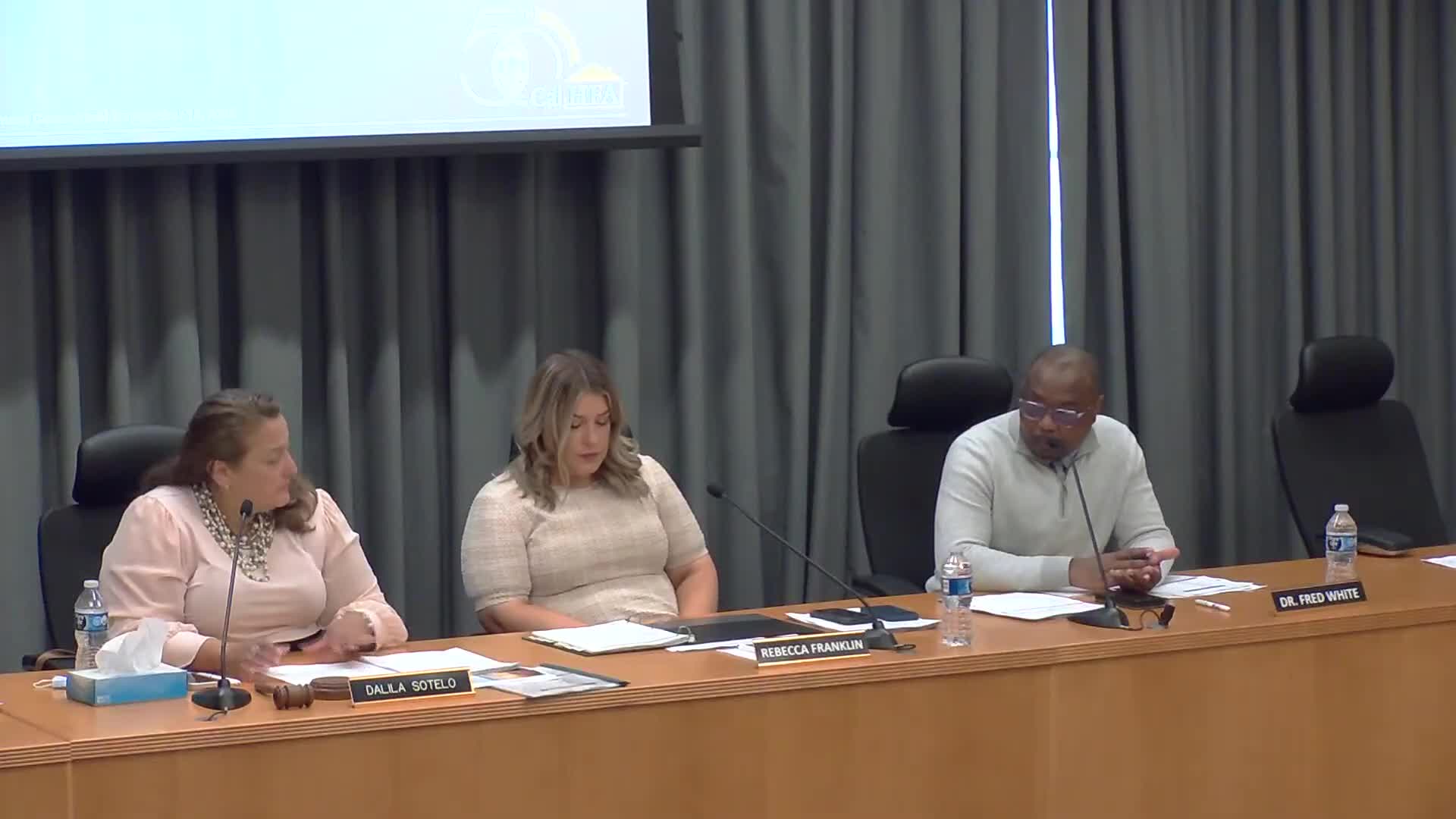
SACRAMENTO — The Audit and Risk Management Committee on Thursday interviewed two audit firms as part of its selection process for a successor to the California Housing Finance Agency’s independent auditor, whose current contract expires in December 2025. The committee heard 3–5 minute introductions and a structured eight-question interview of Eide Bailly and MGO (Macias Gini & O’Connell), then completed scoring to prepare a recommendation to the full board.
The interviews matter because the successor auditor will be responsible for auditing financial statements and federal awards that involve GASB reporting, U.S. Department of Housing and Urban Development (HUD) requirements and the Uniform Guidance for federal grants. Chair Sotelo told the committee that, if the board approves the committee’s selection, "we will be authorizing staff to enter into contract negotiations, and, the transition won't happen until 2026 if those negotiations are successful." The committee said it will present its recommendation to the board at the next meeting.
Both firms emphasized transition planning and continuity. Kevin Smith, audit partner at Eide Bailly, said the firm’s priority in a successor engagement is a low-impact, well-communicated handoff: "We understand how important smooth transitions are, especially for bringing on a new audit firm. So our goal is really to make sure that that transition is as seamless and low impact to your team as possible." Eide Bailly described using predecessor work papers and an established prepared-by-client (PBC) list as a starting point and conducting regular check-ins during the audit.
Eide Bailly’s team told the committee the firm is a nationally ranked accounting firm with a broad government practice; the presenters cited a top-20 national ranking, about 50 offices in 17 states and more than 3,500 staff, with roughly 300 serving government entities. They said their audit approach for housing finance agencies is a hybrid of governmental-audit practices and financial-institution techniques because housing agencies issue loans and hold collateral, and therefore present loan-related risks such as allowance for loan losses and other significant estimates.
MGO’s presenters stressed local government experience and continuity. Annie Louie, proposed engagement partner for MGO, said the firm was founded to serve government and that the firm’s government practice remains a core focus. MGO described a staffing model that pairs junior auditors with seasoned managers, mandatory continuing training on GASB and federal guidance, and centralized audit tools to retain institutional knowledge.
Both firms addressed specific topics the committee prioritized: audit planning and risk assessment; handling differences of opinion with management; partner involvement and year-round communication; staff consistency and training on HUD, GASB and Uniform Guidance; and technology and data security. Eide Bailly described using Suralink (a secure document portal) to manage requests and track status; MGO said it uses Citrix ShareFile for secure file exchange and noted analytics tools such as CaseWare IDEA and automation tools (DataSnipper) to improve efficiency. Both firms said they redact personally identifying data from working papers when practical and require security training for staff.
On audit technique, both firms said they apply a risk-based approach that focuses testing on significant estimates and loan-related accounts, recognition of federal revenues and single-audit requirements. They described materiality as a risk-informed calculation based on revenues and assets and said the first year of a successor engagement carries an elevated risk that is addressed by review of prior-year work papers and attention to beginning balances.
Committee members also reviewed the committee charter during the meeting and reported no recommended changes. The committee approved the meeting minutes at the start of the session. No final auditor selection was made at the committee meeting; committee members completed scoring and plan to report a recommendation to the full board at the board meeting later the same day, at which the board would, if it approves, authorize staff to begin contract negotiations.
The committee adjourned early after public comment produced no speakers. Staff told the committee they are awaiting the outcome of a separate Department of Technology check-in audit which may affect scheduling for a possible December committee meeting.