Panel details tritium safety practices and says public engagement is key to siting fusion facilities
Summary
Industry and lab witnesses described existing tritium expertise at national labs, international working groups, and collaborative safety practices; they told the committee that open engagement with host communities and leveraging lab expertise will be important for siting and operating pilot plants.
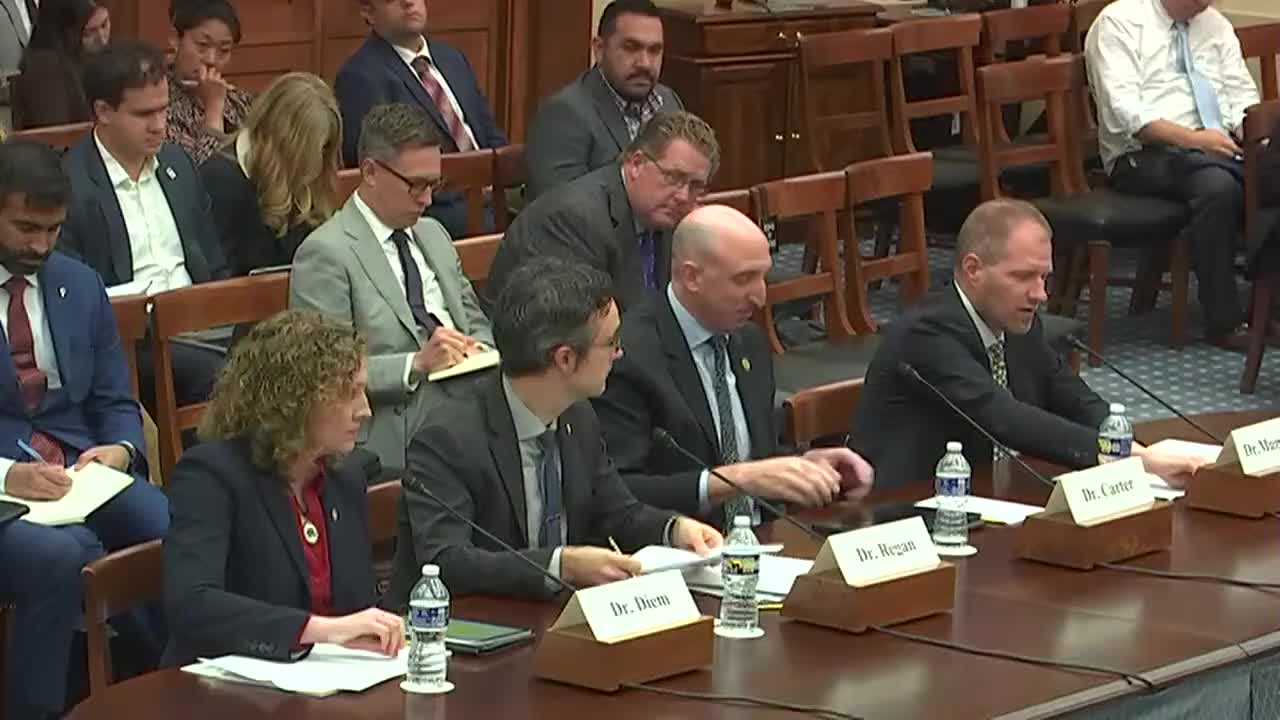
When members asked about safety and public acceptance for tritium handling, industry and national‑lab witnesses described active, open collaboration on fuel‑cycle safety and public outreach. "The industry has a pretty consensus view that in issues related to safety and public acceptance, we should be very open and collaborative with each other," said Will Regan. He and other witnesses described an international tritium working group convened by DOE that shares best practices, tours facilities and coordinates technical approaches.
Bob Mumgaard and other witnesses cited Savannah River National Laboratory and Oak Ridge National Laboratory as repositories of experience in tritium handling and fuel‑cycle techniques; Mumgaard said Savannah River is a natural partner for fuel‑cycle work and that the lab network is already engaged in collaborative efforts called "fire collaboratives" to study fuel‑cycle issues. Dr. Mumgaard said industry collaboration with labs has enabled siting dialogues where companies take a "listening mindset" with host communities.
Why it matters: tritium is an isotope used in many fusion fuel cycles and must be managed at the design, licensing and operations stages. Witnesses argued that early, transparent community engagement and leveraging national‑lab expertise would reduce public concern and accelerate licensing.
No legislative decision was made during the hearing; members requested follow‑up technical details about fuel‑cycle demonstration plans.