
District staff outline changes to intradistrict transfer process and share transfer and withdrawal data
Get AI-powered insights, summaries, and transcripts
Subscribe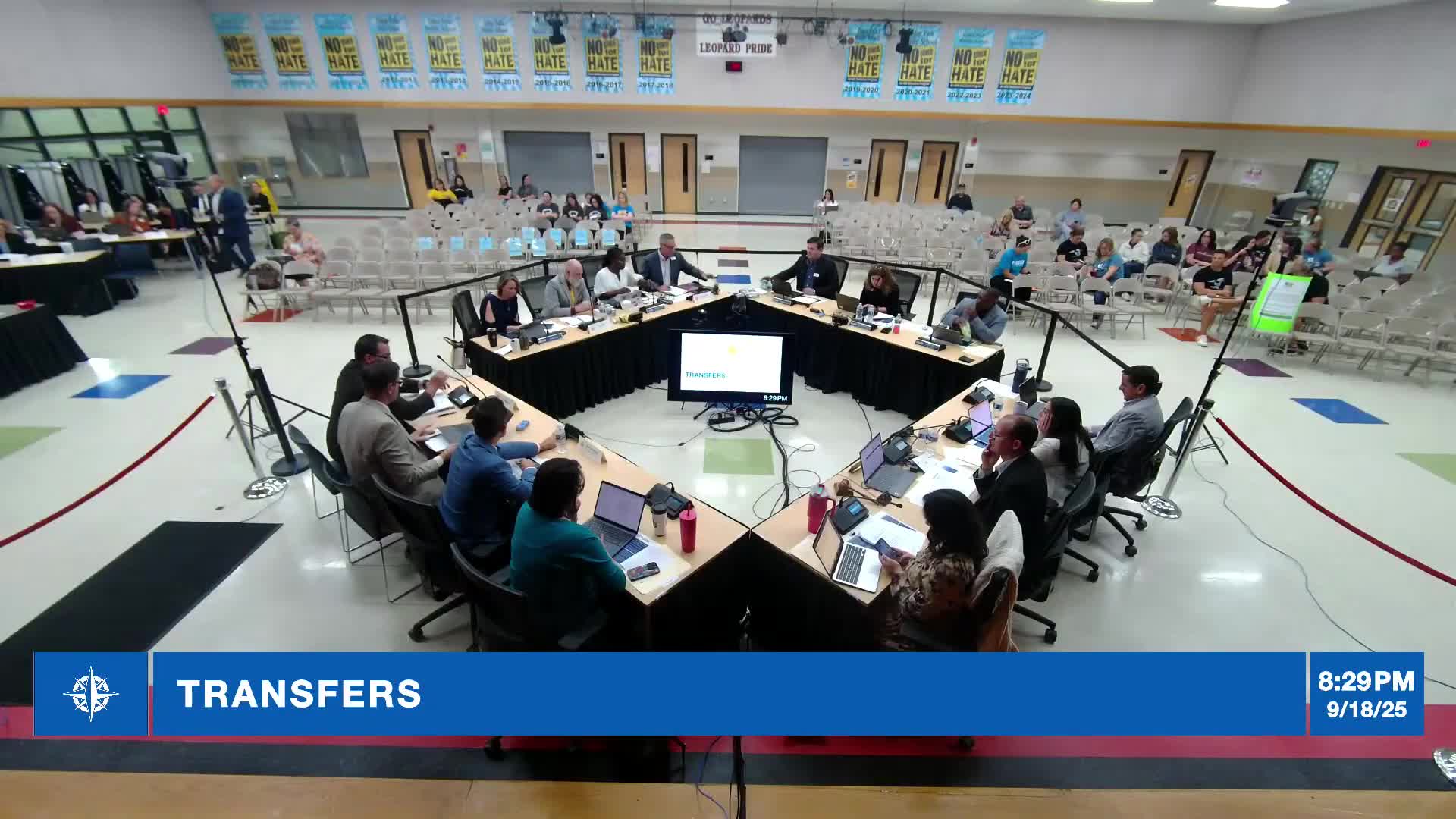
Summary
District staff described process improvements for intradistrict transfers, explained moratorium rules by grade level, moved pre‑K/kindergarten timelines, and presented two years of transfer and withdrawal statistics.
District staff gave trustees a detailed briefing on Wednesday on changes to the Leander ISD intradistrict transfer process, the timeline for transfer windows, and recent transfer and withdrawal data covering the last two school years.
Staff said the district created a single email address for transfer requests, separated employee requests from parent requests, moved the pre‑K/kindergarten window to May (after the April 1 new‑to‑district enrollment date), and—for elementary schools—shifted moratoria from whole‑campus functional capacity to grade‑level capacity to better align transfers with staffing and class size.
The presenter said the district also created an appeals committee of principals and assistant principals to hear transfer petitions outside the regular windows and centralized denial notices to district offices to improve consistency. Staff told trustees they plan a future improvement: determining transfer restrictions prior to staffing decisions so that transfer demand can be included when schools are staffed.
Staff reviewed a two‑year data set of transfer requests. For the 2024–25 year the district recorded roughly 6,17 parent‑choice requests (numbers altered by large secondary rezoning windows that year), multiple program transfers (dual‑language, IB), and several employee and peace‑officer/military‑related transfers. For 2025–26 staff reported March and May windows for parent choice, with the majority of denials attributable to capacity limits.
Staff also presented withdrawal reasons tracked for the first time last year, including moves to charter schools, private schools, homeschooling, other Texas ISDs and unknown/leavers. Staff said last year the district tracked charter withdrawals specifically and listed charter destinations, including IDEA, Harmony, Founders, BASIS and Valor.
Trustees asked staff for richer coded data to explain transfer motivations and heat maps showing where charter enrollments cluster within the district so the board can evaluate local patterns. Trustee questions focused on whether net transfer patterns at elementary level are driven by programmatic pulls such as pre‑K or dual‑language offerings, and on whether withdrawal patterns suggest pupils are leaving to nearby districts or charters.
Staff said they can produce more granular analyses, incorporate reasons into a future transfer platform, and expand the historical range of data on withdrawals. Board members asked staff to provide metrics and timelines tied to any policy changes so the board can monitor effects on staffing and budget planning.
No transfer policy changes were adopted at the presentation; staff will return with proposed regulations and further analyses.