
House subcommittee hears military case to extend large training land withdrawals in Alaska, Texas and California
Get AI-powered insights, summaries, and transcripts
Subscribe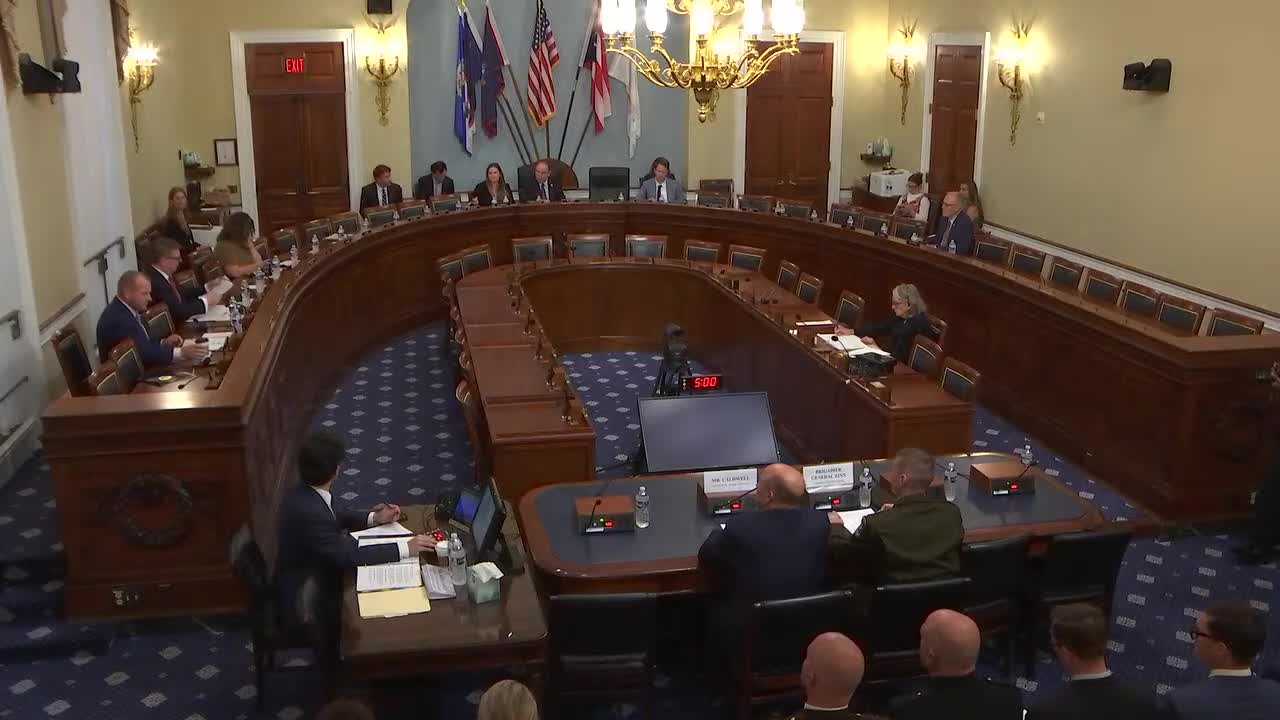
Summary
Witnesses, including an Army general and Representative Don Begich, urged the subcommittee to extend current military land withdrawals covering about 1.6 million acres so training in Arctic, desert and mechanized environments can continue; lawmakers pressed the National Park Service on coordination and NEPA work but no vote was taken.
Chairman Bruce Tiffany opened a House Natural Resources Subcommittee on Federal Lands hearing saying members would consider bills that include an extension of military land withdrawals used for Army training. Rep. Don Begich (R‑Alaska) and Brig. Gen. Dave Zinn, director of training for the Army staff, told the panel the withdrawals are essential to readiness and regional deterrence.
The subcommittee heard that the Army needs large, realistic training areas to prepare soldiers for Arctic and mechanized operations. "These lands are absolutely critical to the training and readiness of the army," Brig. Gen. Zinn said, noting the three withdrawn locations together provide roughly 1.6 million acres of training land. He said the Alaska withdrawn lands (in the vicinity of Fort Wainwright and Fort Greeley) provide unique cold‑weather training that “cannot be replicated elsewhere,” McGregor Range at Fort Bliss supports mechanized and Patriot missile live‑fire training, and Fort Irwin’s National Training Center provides extended operating distances for armored units.
Representative Begich described HR 5131, the Alaska Military Lands Withdraw Extension Act, as a "simple, but essential" bill that would extend existing withdrawals in Alaska through 2051 and said the lands support the 11th Airborne Division’s Arctic training. In testimony, Zinn said the Army completed NEPA analyses for the three withdrawal areas and that process took roughly two years; he said the Army coordinated with tribes, local governments, hunters and conservation groups and that public access is permitted when training areas are not actively in use.
The Department of the Interior (represented by Mike Caldwell, Associate Director, National Park Service) described the coordination role the agency plays when military and civilian uses overlap and called the nomenclature issue in the bill a naming matter the department could clarify without affecting operations. Caldwell recommended technical amendments to other bills on the agenda to protect park interpretive missions.
No formal action or vote on the withdrawal bills was recorded at the hearing; witnesses were asked to follow up with written information. Several members questioned witnesses about environmental review, community input, and public access. Zinn said failure to extend the withdrawals would "harm the army's ability to prepare soldiers to operate and fight effectively in all conditions."
The hearing record remains open for follow‑up questions and written responses; the subcommittee did not adopt or report the bills at the session.
Details for lawmakers: the Army presented the withdrawals as vital for Arctic airborne readiness, mechanized live‑fire training and large maneuver exercises; the Army stated NEPA reviews were completed and described public‑use windows when training is not occurring. The Interior representative requested technical map clarifications for one bill and offered to work with sponsors on language to protect park mission and resources.