Get Full Government Meeting Transcripts, Videos, & Alerts Forever!
Get email alerts on the K 12 Education Reading Intervention topic
No spam. Unsubscribe anytime.
East Chicago district pilot of Sylvan tutoring yields 43% iRead pass rate among participants, trustees weigh next steps
Summary
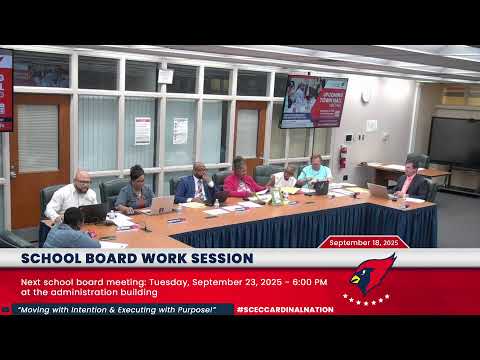
School City of Chicago trustees reviewed results of a fall tutoring pilot with Sylvan Learning Center on Thursday, hearing that 155 elementary students participated, the district paid Sylvan $282,000 from ESSER funds and that 67 students — 43 percent of the group — passed the state iRead exam after the program.
School City of Chicago trustees reviewed results of a fall tutoring pilot with Sylvan Learning Center on Thursday, hearing that 155 elementary students participated, the district paid Sylvan $282,000 from ESSER funds and that 67 students — 43 percent of the group — passed the state iRead exam after the program.
The presentation, led by Christine (staff member) and Miss Jorgensen, Sylvan Learning Center representative, summarized district benchmarking and program details. Christine said, “Our total contract was 282,000. That's what we paid Sylvan, for their services for the winter.” Miss Jorgensen described the program schedule as “30 total sessions,” offered three times a week at participating elementary schools.
Trustees and district staff framed the results two ways: by iRead passage and by midyear benchmark growth. District staff reported that, of the 155 students tracked, 67 passed iRead (43 percent) and 112 students, or 72 percent, showed growth on the NWEA (NWA) winter benchmark. The district used the beginning‑of‑year and midyear NWEA measures rather than Sylvan’s internal testing, staff said.
Program design and student selection varied by school. Each building’s data team selected up to 40 slots; the district set 40 slots per elementary school and 45 seats for the middle school. Christine said teams selected students based on grade level, proficiency scale and attendance; schools also focused on “bubble” students who were near the pass threshold as well as lower‑level students. For example, McKinley placed 21 below‑level third graders and 16 on‑level third graders into the program; Lincoln and Harrison used different grade mixes.
Trustees pressed for clarity about costs, attendance and which students benefited most. Board members noted the $282,000 contract amount and that the per‑student cost — given 155 participants — is roughly $1,800. Staff said elementary attendance for the sessions was high; the district reported an approximately 80–90 percent elementary attendance rate. Trustees also asked why middle‑ and high‑school participation was low; staff said scheduling conflicts, extracurriculars and students’ preference for homework help rather than the Sylvan curriculum limited participation at those levels.
Miss Jorgensen described the curriculum as targeted and adaptable. “The curriculum is designed to move test scores,” she said, adding teachers can adapt scripted lessons for students at different levels. Staff said most Sylvan instructors were School City of East Chicago teachers trained to deliver the Sylvan curriculum and that site coordinators and paraprofessionals supported classroom management.
Trustees and presenters cautioned that interpretation of the data requires context: some schools intentionally selected “bubble” students who were more likely to pass iRead, while others targeted students farther from proficiency whose gains in growth measures would need to be larger to reach passage. That selection variation affected passage rates across buildings, staff said.
Several trustees and a longtime former teacher who spoke during public comment described the elementary results as promising but raised funding questions. Linda Randolph, a retired district teacher who addressed the board during the public comment portion, said Sylvan had been “very beneficial” in prior implementations and urged continued support. Trustee Gomez said she had reservations earlier but was “in favor of continuing this program” if it is structured to match district priorities and available funding.
No formal action was taken during the work session. Staff confirmed the Sylvan pilot was paid with ESSER funds and said any extension or renewal would depend on board direction and future funding availability.
Board members asked staff for additional detail before a decision on continuation: clearer breakdowns of which students and subgroups benefited, attendance and cost per student if the program were scaled, and potential day‑time alternatives that could reduce after‑school scheduling conflicts. Staff said they would provide follow‑up information to the board for future consideration.