Get Full Government Meeting Transcripts, Videos, & Alerts Forever!
Get email alerts on the Board Governance Handbook topic
No spam. Unsubscribe anytime.
Board debates handbook revisions on member communications and agenda process; no formal action taken
Summary
Board members and a subcommittee discussed proposed handbook edits covering member-to-member communications, procedures for adding agenda items, and reporting back to the full board. The discussion identified practical challenges — including when three members meet with the superintendent — but produced no vote or final direction.
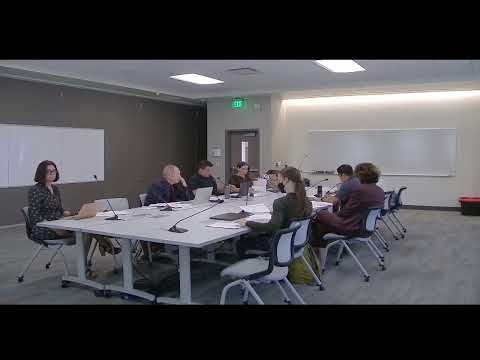
Board members spent a study-session segment debating proposed revisions to the board handbook that would clarify how members communicate with each other, how to place items on the formal agenda and how leadership should report back to the full board. No motion or vote was taken during the discussion.
The discussion centered on three recurring points: private conversations among members that sometimes prompt ethics or complaint concerns, the process by which a board member requests an item be placed on the formal agenda, and how any leadership follow-up should be reported to the full board.
Board member Mark Collins raised the role of the superintendent meeting structure, explaining that informal meetings involving multiple board members can escalate into actions: “They have seven of them. When all of them agree on direction to staff, the superintendent sends an email to the full board,” Collins said, describing the superintendent’s practice of notifying the full board when a subset of members has agreed on an action and soliciting objections.
Board member Dr. Connor and Board member Romano participated in the exchange about the frequency and threshold for subgroup discussions. Several speakers — including a staff member and board leadership member Brian — said the handbook should reflect the existing mechanism for placing items on the agenda: a requesting member emails board leadership, names a second member to support the request, and that triggers a timeline for leadership to respond.
Subcommittee members said their draft contained mostly minor handbook edits rather than policy changes. Subcommittee member Bryce and another subcommittee participant, Jensen, described the edits as clarifying language rather than new rules; the group debated whether the handbook changes should return for study-session discussion or be placed directly on a future regular meeting agenda for consideration.
Participants also raised practical problems in writing strict rules about private conversations. One board member said it is “tricky as to how to communicate” direction through leadership without forcing discussions into closed session or creating awkward interactions; another said that discomfort in private conversations does not automatically equate to a formal complaint but should be reported when it crosses a threshold.
There was agreement that the report-back mechanism should include the entire board, though speakers differed on how prescriptive the handbook language should be. No formal direction to staff was recorded and no vote was taken; the discussion ended with the committee and staff to determine next steps for placing the handbook edits on a future agenda.
Procedural context: speakers noted that requests to add agenda items currently require a supporting second member and an email to leadership, and that the superintendent sometimes circulates a confirmatory email when subgroup agreement is reached. The subcommittee described its recommendation as minor edits to handbook language rather than substantive policy changes.
Next steps were left open: the board did not adopt the draft and did not schedule a formal vote. The subcommittee and staff will refine language and return with a recommended path for formal consideration at a future meeting.