Get Full Government Meeting Transcripts, Videos, & Alerts Forever!
Get email alerts on the Water Main Breaks topic
No spam. Unsubscribe anytime.
36-inch cast-iron water main seam narrows Shoreway; custom clamp fabrication delays permanent fix
Summary
A seam leak in a 36-inch cast-iron distribution main near the Garrett Morgan Water Treatment Plant reduced the Shoreway to two lanes; the department implemented a temporary caulked fix and is having a custom clamp fabricated, with an estimated 10 days to two weeks for parts.
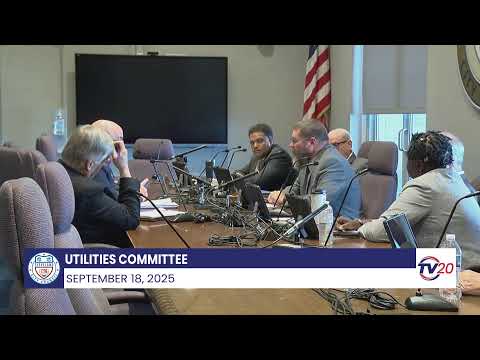
The Department of Public Utilities told the Utilities Committee that a seam leak on a 36-inch cast-iron distribution main near the Garrett Morgan Water Treatment Plant required full excavation and partial road closures on the Shoreway. Crews excavated the site over a weekend and installed a temporary caulked repair after a prefabricated clamp failed to fit the joint.
The director of public utilities said the temporary caulk has restored pressure and flow but "it's not a permanent fix." He said the department has contracted for a specialized clamp that is being fabricated and "it should take approximately 10 days to 2 weeks." The director added that the department is coordinating the permanent repair around special events, noting that lanes will remain reduced for the Browns game and through the following week until the permanent repair is scheduled.
Committee members asked why a prefabricated clamp did not fit. The director explained the clamp is a custom "belt clamp" that must be made precisely to the joint diameter and is not off-the-shelf. A council member noted the department previously had a clamp fabricated four years ago that did not fit the current joint and that trimming was required to attempt to make it fit.
On the causes and seasonality of breaks, a commissioner told the committee that in northern climates the peak season for breaks is winter and that severe cold and frost increase break frequency in January and February. He said the city sometimes sees a "secondary minor break wave" in hot, dry summers when ground drying and movement can stress pipes. The director added that detecting external corrosion on drinking-water distribution mains by internal camera is limited: "that technology doesn't work so much in the drinking water side," meaning televising can identify sewer defects but is less useful for detecting certain drinking-water pipe failures.
Committee members also raised pavement restoration concerns where utilities have completed repairs. The director said final pavement restoration is inspected to city specifications and inspectors take before-and-after photos; he asked council members to provide specific locations for follow-up. One member identified a roadway location on East 116th and Benham Avenue for the department to inspect.
The department said it monitors the plated and narrowed lanes daily to ensure the steel plates are secure and traffic control is appropriate; it will publish a timeline for the permanent repair once the fabricated clamp and crews are ready.