Get Full Government Meeting Transcripts, Videos, & Alerts Forever!
Get email alerts on the Utilities Procurement topic
No spam. Unsubscribe anytime.
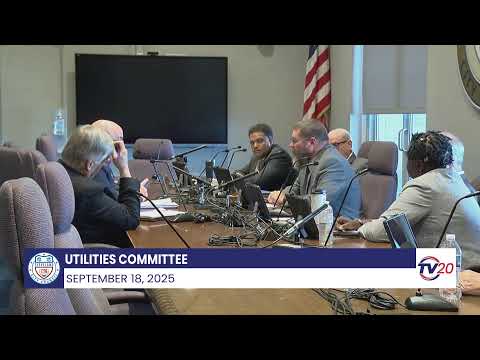
Utilities committee approves emergency procurement ordinances for Department of Public Utilities
Summary
The Utilities Committee approved a package of emergency ordinances authorizing two-year and three-year requirement contracts for landscaping, fuels, meter maintenance, debris disposal, fencing, HVAC and backup-electrical services for the Department of Public Utilities.
At a Utilities Committee meeting, members approved a package of emergency ordinances authorizing the Department of Public Utilities (DPU) to enter into multiple requirement contracts to maintain facilities and emergency systems. The ordinances cover landscaping, fuels for backup generators, proprietary meter testing equipment and software, debris disposal, fencing and gates, HVAC maintenance, and backup electrical gear and underground storage tank testing.
The director of public utilities told the committee the landscaping contracts will cover turf, trees, shrubs, rain gardens and litter removal at DPU facilities and city rights-of-way and that the department "anticipate[s] our budget $2,000,000 over the 2 years, approximately $1,000,000." The landscaping work will be bid as multiple contracts by geography and size to attract more vendors, the director said.
The committee approved an emergency ordinance for fuel procurement to support turbine and diesel generators, diesel drives for pumps and propane units at water plants; the director estimated that fuel procurement would cost "approximately $1,000,000 a year." He said the fuel contracts are intended to ensure deliveries for regular use and emergency refills during extended outages.
A three-year, proprietary contract with OW Investors Lehi d/b/a Mars Company was authorized for hardware and software maintenance of meter testing equipment and the M3 Enterprise meter-management software. The director said Mars is "the only manufacturer that produces computer driven high speed water meter test equipment and turnkey installations in The US" and that the first year of the new contract includes an estimated $300,000 for replacement components followed by ongoing maintenance costs.
Other approved ordinances include a two-year contract for debris disposal (budgeted at $1,400,000 over two years), fencing and gate services, HVAC maintenance for facilities with communications and server equipment, and a two-year contract for testing and repair of backup electrical gear and underground storage tanks. The director said current contracts are expiring and the department wants to solicit bids promptly.
Committee members asked whether the contracts would eliminate in-house jobs. A council member raised concerns about outsourcing and the director replied, "absolutely not," saying existing internal crews will remain for routine maintenance and that contracts are intended to supplement—not replace—plant labor. Council members also asked about fuel and generator readiness; a commissioner told the committee that backup generators at plants are tested monthly and that diesel tanks are "sized for 24 hours." The director said emergency fuel contracts are structured to provide refills during extended outages before tanks run out.
The committee recorded the ordinances as "stands approved" in the meeting; the transcript does not include individual roll-call votes for each ordinance.
What the ordinances do not change: the director and committee members emphasized that Cleveland Public Power (CPP) staff handle maintenance inside high-voltage substations and that some sensitive sites will remain under CPP labor rather than external contractors. Several members requested follow-up details about current staffing mixes and vendor solicitation timelines.
Next steps: the department will proceed with public procurement solicitations under the terms authorized by the emergency ordinances and return any additional details to the committee as requested.