Get Full Government Meeting Transcripts, Videos, & Alerts Forever!
Get email alerts on the Jail Financing And Reform topic
No spam. Unsubscribe anytime.
Cochise County officials ask voters to OK half‑cent sales tax to finance $130 million jail, outline design, funding and alternatives
Summary
County leaders held a public forum outlining a November ballot measure to reauthorize a half‑cent sales tax that would be used only to build a new jail. Officials detailed the budget, bond structure, planned design improvements, jail‑reduction programs and a contingency plan if voters reject the measure.
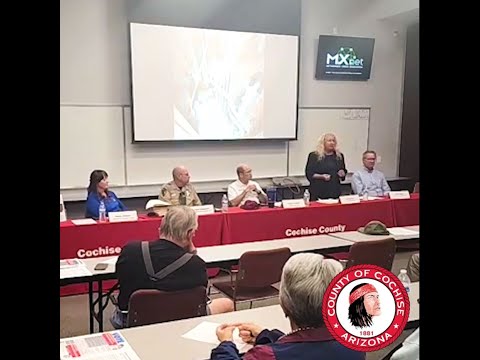
Cochise County supervisors and criminal justice officials told a public forum on Oct. 8 that they will ask voters on Nov. 4 to reauthorize a half‑cent sales tax dedicated to constructing a new county jail and described how the financing, design and operational plans would work if the measure passes.
At the meeting, County Supervisor Frank Antonori, board chair, said: "As you know, on November 4, we're asking the voters of Cochise County to approve a half cent sales tax to use that funding to build a new jail." He said the board changed the financing plan from the prior proposal so the sales tax would pay only for planning, design and construction while ongoing maintenance and operations would remain funded from the county general fund.
The nut graf: Officials said the measure responds to what they described as an aging facility with design and operational problems and a growing need for modern medical, mental‑health and courtroom space. They outlined a $130 million program budget (not including bond interest), a plan for a 15‑year bond backed by the sales tax, an existing $20 million state grant, and programs intended to limit jail population growth.
Funding and bond terms
Antonori provided a breakdown county staff has circulated: a $100 million bond plus $20 million in state funding and about $10–15 million currently held by the treasurer would produce roughly $130 million for the project. He said the county expects to ask the bond market for a 15‑year bond and has requested voter approval for a 17‑year sales‑tax period because the Arizona Department of Revenue requires six months’ notice to turn a local sales tax on or off.
Antonori said the county stopped using prior sales‑tax receipts for maintenance‑of‑effort (MOE) expenses and put incoming revenue into a segregated account held by the county treasurer. He told the forum: "The only way that money can be spent is with approval of the board of supervisors, and again, the board will only approve money if it's directly related to the planning and construction of the jail." He said the county had about $15.5 million in the account at the time of the meeting.
The county’s current plan allocates roughly: $90 million for physical construction, $20 million for site preparation and utilities, $10 million for planning and design, and $10 million as a management reserve to cover material inflation or, if unused, to be applied to pay down the bond principal at completion. Antonori said paying the bond early could save the county millions: paying the bond off in 13 years would save about $5 million in interest; paying it off in 11 years could save about $10 million, according to materials shown at the meeting.
Officials emphasized expected revenue flows. Antonori said the last full month the tax was collected (July) brought nearly $1 million ($998,000) from the Department of Revenue; county projections shown at the forum estimate roughly $1 million per month if the tax resumes, allowing a plan to cover a $7.5 million annual debt service and use remaining receipts to accelerate principal payments.
Design and operational improvements
Kenny Bradshaw, jail commander, described physical and operational limits of the county’s existing facility and the operational goals for the new building. Commander Bradshaw said the present jail was not designed for modern corrections needs, noting fixtures and layouts that complicate maintenance and safety. He said the county will design the new facility to isolate utilities so maintenance can occur without moving detainees and to include embedded mental‑health areas: "Being mentally ill should not be a crime," he said, arguing for spaces where mental‑health professionals are available 24 hours and that reduce harm and staff burden.
Officials described a modular plan for capacity. County planners and consultants recommended long‑range planning for up to 600 detainees, but the current ballot plan funds construction sized for about 400 detainees with support services (kitchen, medical, intake) designed to scale up to 600. Antonori said cell "pods" would be added later if population growth requires them.
Health and diversion strategies to limit jail population
Megan Kennedy, director of jail medical services, and County Attorney Maurie (Mauri) Zuko outlined clinical and case‑management approaches intended to limit population pressure on the jail. Kennedy said the jail’s medical space was adapted from former locker rooms and is too small for modern needs; she emphasized rising chronic care and substance‑use needs among people brought to the jail and said: "We have to provide constitutionally adequate health care." She described efforts to link detainees to community providers and to start medication for opioid use disorder in custody so people can continue care after release.
County Attorney Maurie Zuko reviewed diversion and pre‑charge programs the office has expanded. Zuko said the county’s GRACE (Giving Recovery a Chance) diversion program for people with serious mental illness has reduced expensive out‑of‑county restoration costs and that a separate prosecutor‑led drug diversion initiative (funded by a grant from the Arizona Criminal Justice Commission) screens low‑level possession defendants for treatment alternatives instead of prosecution. Zuko said: "We have saved the county millions of dollars in those restoration to competency rule 11 fees with our GRACE program." She noted that restoring competency at the Arizona State Hospital can cost about $100,000 per patient, while in‑county restoration or treatment models can be far less if the facility and programs exist locally.
Contingency if voters reject the tax
Officials outlined a fallback plan if voters do not approve the sales tax. Antonori and other panelists said renovating the existing jail would require gutting the structure, temporarily housing inmates in other counties with substantial transportation and housing costs, and a multiyear disruption. Antonori estimated transporting and housing inmates during a gut‑rehabilitation would cost tens of millions per year and that renovation could still leave the county with a short extension of useful life.
The board’s stated alternative would be to build a smaller facility under the county general fund and a 25‑year bond; that approach would consume general‑fund capacity and likely require program cuts or property‑tax increases. Antonori said the county is subject to a statutory spending cap for general‑fund operations based on population and that the jail district structure enabled by a voter‑approved sales tax would keep jail debt and operating flows separate from that cap.
Site selection, schedule and next steps
The board voted earlier to site the project adjacent to the current Bisbee jail on county‑owned land; Antonori and staff explained the chosen location reduced land‑acquisition costs though it requires significant site prep, including flood diversion work and terracing. Antonori said the Department of Revenue requires six months’ notice to reactivate a local sales tax; if voters approve in November, the county expects the tax to restart July 1 and to market the bond after revenues resume.
Public questions and turnout
The session drew elected officials, public‑safety leaders and residents who asked about length of stay, tax incidence, municipal impacts and alternatives. Judge David Thorne, presiding judge for Cochise County, noted courtroom and transport inefficiencies at the current jail and urged voters to consider the systemwide effect: "Every 50 years or so, you gotta... build a new jail," he said, arguing modern facilities improve safety and efficiency for courts, staff and detainees.
What remains unresolved
Officials repeatedly emphasized the measure’s outcome rests with voters and acknowledged legal and political risks. The earlier 2023 election was subject to litigation about inactive‑voter access and the county settled; Antonori said that settlement required in‑person voting this time for voters on the inactive list and was the reason the earlier tax collection stopped on July 31. Panelists also warned that litigation could follow this election, though they said following the appellate guidance and offering in‑person voting is intended to reduce that risk.
A voter approval on Nov. 4 would allow the county to move forward with architect selection, contracting and bond issuance; if the measure fails, officials said they would pursue a costlier, more disruptive path that would either shrink the planned facility or shift debt into the general fund. The board encouraged residents to tour the existing jail or contact county public information staff with questions ahead of the election.