Get Full Government Meeting Transcripts, Videos, & Alerts Forever!
Get email alerts on the School Closures topic
No spam. Unsubscribe anytime.
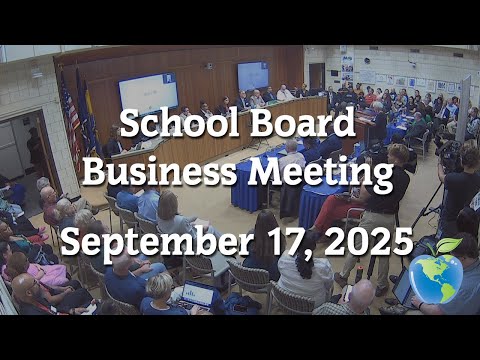
Norfolk school board delays vote on consolidation plan after hours of public comment and criticism of last-minute "Option 5"
Summary
The Norfolk School Board voted to delay action on a draft school closure and consolidation plan after dozens of speakers criticized a late-added “Option 5” and raised concerns about process, transportation, recent renovation spending and equity.
The Norfolk School Board voted to delay action on a draft school closure and consolidation plan after an extended public-comment period in which dozens of residents, parents and community groups urged changes, called for more time, or warned of fiscal and equity harms associated with a late-added “Option 5.”
The board adopted a motion to table the vote on the consolidation plan and to hold a special-called meeting on Sept. 29 at 5 p.m. to continue deliberations. The motion to delay passed on a roll call in which one board member voted no; the board recorded the majority as aye and the dissenting vote as nay.
Why it matters: The draft plan would reshape elementary and special-program locations across the city, affect transportation patterns, and shift where some students and staff will be assigned. Several speakers warned that the implementation timeline in Option 5 was vague, that the plan included relocations not covered in the committee’s scope, and that moving programs could waste recent investments.
Public comment: More than two dozen speakers addressed the board during the citizens’ comment period. Speakers who identified themselves and their affiliations included Charlotte Smith Worley (facilities committee member), Cathy O’Hara (community member), Barrett Hicks (executive director, Concerned Citizens Association, Tidewater Connection), Noelle Gabriel (parent and Maury community member), Emily Bosch (Ghent School parent), and others representing Saint Helena families and community groups. Their concerns overlapped in three areas:
- Process and scope: Several speakers said the facilities consultant’s original options should be reconsidered and that the board should not adopt a last-minute plan described by many as “Option 5.” Charlotte Smith Worley said Option 5 “went against the recommendation of your consultant” and criticized a lack of timelines for closures. Cathy O’Hara warned that city council could respond to ambiguity by taking fiscal actions, including returning the division to categorical funding, citing past examples.
- Specific program moves and cost: Multiple speakers objected to relocating the Madison Alternative Center from Easton and to closing Easton after recent renovation work. Emily Bosch and others flagged that Easton had received more than $500,000 in renovations for programs and said moving those programs would appear to waste taxpayer funds. Speakers supporting Maury High School urged the board to preserve or relocate programs in ways that would allow Maury to gain regulation athletic fields as part of a planned rebuild; proponents urged that the Maury rebuild include a natatorium and full athletic facilities.
- Equity, transportation and community impact: Saint Helena parents, students and community members said moving children to Campus Stella or other sites would force long walks across railroad crossings and raise safety and transportation questions, particularly for families who rely on walking or neighborhood buses. Doctor D’Aashni Smith, a Saint Helena parent, said many families rely on nontraditional caregivers and that outreach to some elders and grandparents had been insufficient.
Board action and next steps: After public comment, a board member moved to delay the vote and schedule a special meeting; the motion was seconded and then approved by roll call. The board chair asked staff to coordinate the special meeting; the clerk will provide the formal notice. The board also discussed an administrative proposal to relocate the Ghent program by 2027 with the exact location to be determined by the administration no later than 2026 after rezoning. The chair emphasized that the stated reason for relocating Ghent was program expansion rather than creating athletic fields for Maury.
What speakers asked the board to provide: clearer timelines for closures and consolidations; an impact analysis for students with disabilities, IEPs and 504 plans; explicit transportation plans for moved students; transparent cost accounting (including the fate of renovated buildings); and authentic neighborhood-level engagement before final decisions.
The board did not vote on any closure or consolidation at the meeting; it postponed action to the special call meeting slated for Sept. 29 to allow additional discussion and staff briefings.