Get Full Government Meeting Transcripts, Videos, & Alerts Forever!
Get email alerts on the Small Business Assistance topic
No spam. Unsubscribe anytime.
Council Reviews $100,000 Pilot for Food‑Related Business Grants in Rockingham Corridor
Summary
Councilors considered a staff proposal to spend $100,000 of a previously allocated $500,000 on small grants (roughly $5,000–$25,000) to help food‑related businesses in the Rockingham Corridor, drawing criticism from existing business owners who said the amounts are too small and urged prioritizing longtime operators.
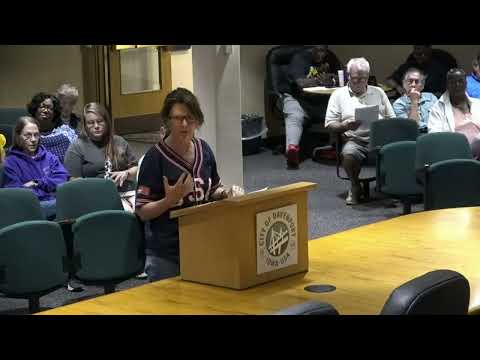
The council considered a staff proposal Sept. 17 to use $100,000 of a previously allocated $500,000 (ARPA interest dollars) to create a pilot grant program aimed at assisting existing and new food-related businesses along the Rockingham Corridor. Why it matters: The Rockingham Corridor has lost several anchor businesses in recent years, including a major grocery in June 2024, and city staff said targeted small grants could help stabilize and attract food‑related retail to the corridor. Community and Economic Development Director Bruce Berger told the council the pilot — tentatively called the “fresh initiative” — would offer grants in the $5,000–$25,000 range to help with startup costs, equipment, short-term operating support or expansion. Berger said the $100,000 is the initial tranche of a broader $500,000 allocation that came from ARPA interest dollars earlier this year. He emphasized the grants would be coordinated with existing small-business programs and resources such as Eastern Iowa Community College’s small business center. Several existing corridor business owners spoke during public comment and urged the council to prioritize businesses already operating in the area. One longtime owner said a $5,000 grant is insufficient to address capital needs and suggested the city instead consider incentives or outreach to attract larger tenants or use larger awards for established operators. Another speaker asked whether the Chamber of Commerce would partner on the program; staff said the chamber’s new GROW model may offer complementary services but generally does not have a fund of direct incentives. Council members, including Alderman Rick Dunn and Alderman Kelly, supported the pilot as a first step and said staff should focus on including neighborhood expertise in application review and outreach. The council placed the resolution on the consent agenda for formal vote next week but asked staff to consider how to prioritize existing local operators and whether the chamber or other partners could amplify the program.