
Buffalo board adopts revised suspension policy limiting exclusions for youngest students
Get AI-powered insights, summaries, and transcripts
Subscribe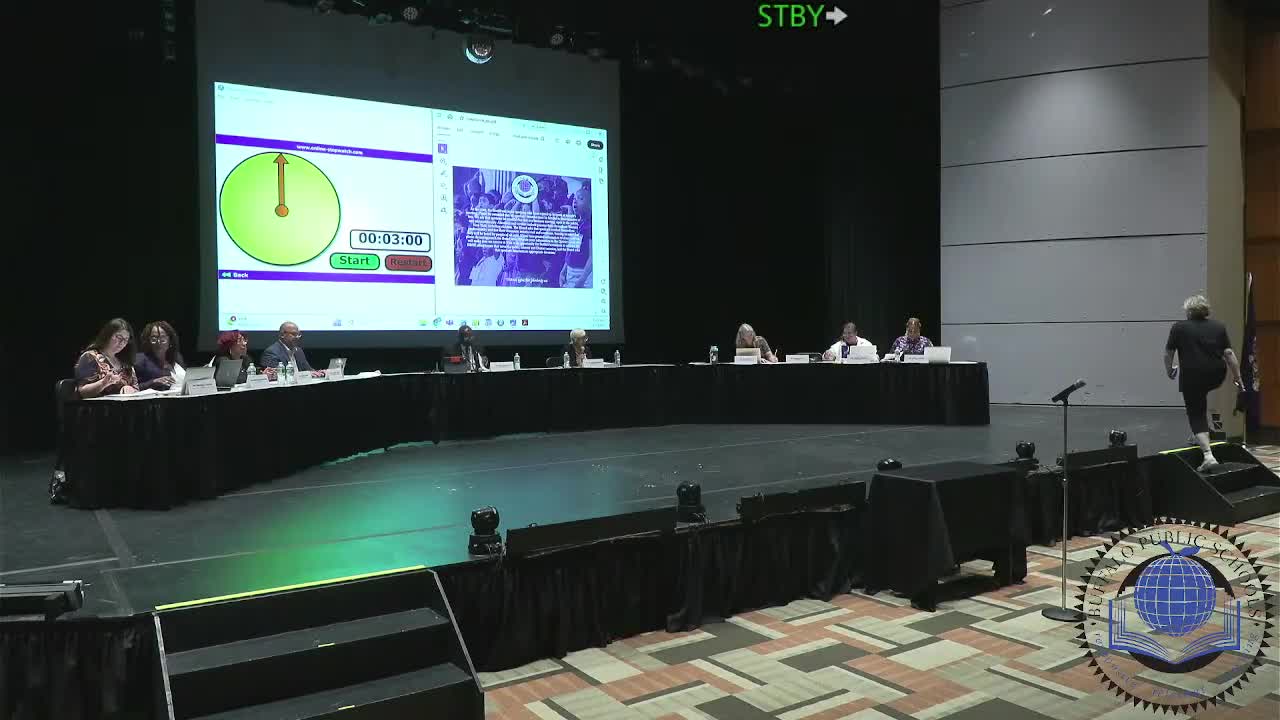
Summary
After months of public comment urging limits on exclusionary discipline for pre-K–3 students, the Buffalo Board of Education voted to adopt policy 7313 on first reading, directing changes to the code of conduct and promising regulations and implementation steps.
The Buffalo Board of Education on Sept. 17 adopted a revised student suspension policy, known in the packet as policy 7313, after extended public comment and debate about limiting suspensions for prekindergarten through third-grade students. The board voted to waive a second reading and adopt the policy at the meeting.
The change follows repeated testimony from parents, advocates and community members who urged the district to limit exclusionary discipline for its youngest learners and to adopt restorative and trauma-informed alternatives. “This language isn’t the final step, but it is a good step,” parent and ad hoc committee member Caitlin Kroll said during public comment. “It’s a move toward making the schools work better for our entire city, and let’s take it.”
Board members framed the vote as a policy-level decision that will be followed by regulations and an implementation process. The superintendent and district staff said the adopted policy will be aligned to a revised code of conduct and that more detailed regulations — including procedures for restorative interventions and family engagement — will be drafted and returned to the board for review. The board also said an implementation committee will monitor roll‑out and offer supports to schools.
Opponents at the meeting, including Board Member Woods, said the policy language as presented was too “generic” and called for clearer, mandatory operational steps to ensure restorative practices and family involvement are carried out in practice rather than only in policy.
On the formal vote to waive the second reading and adopt policy 7313, seven board members voted yes and one voted no. The board also instructed staff to draft the regulations that will operationalize the policy changes and to work with the ad hoc and implementation committees named in the packet.
District leaders emphasized that policy adoption is the first step and that changes to the code of conduct and training, monitoring and community co‑production will follow.
The board’s action ends with staff commitments to return with the implementing regulations and to continue community engagement about how the policy will be enforced and monitored.