
School board approves fiscal 2026 budget after public hearing; construction spending drives planned deficits
Get AI-powered insights, summaries, and transcripts
Sign Up Free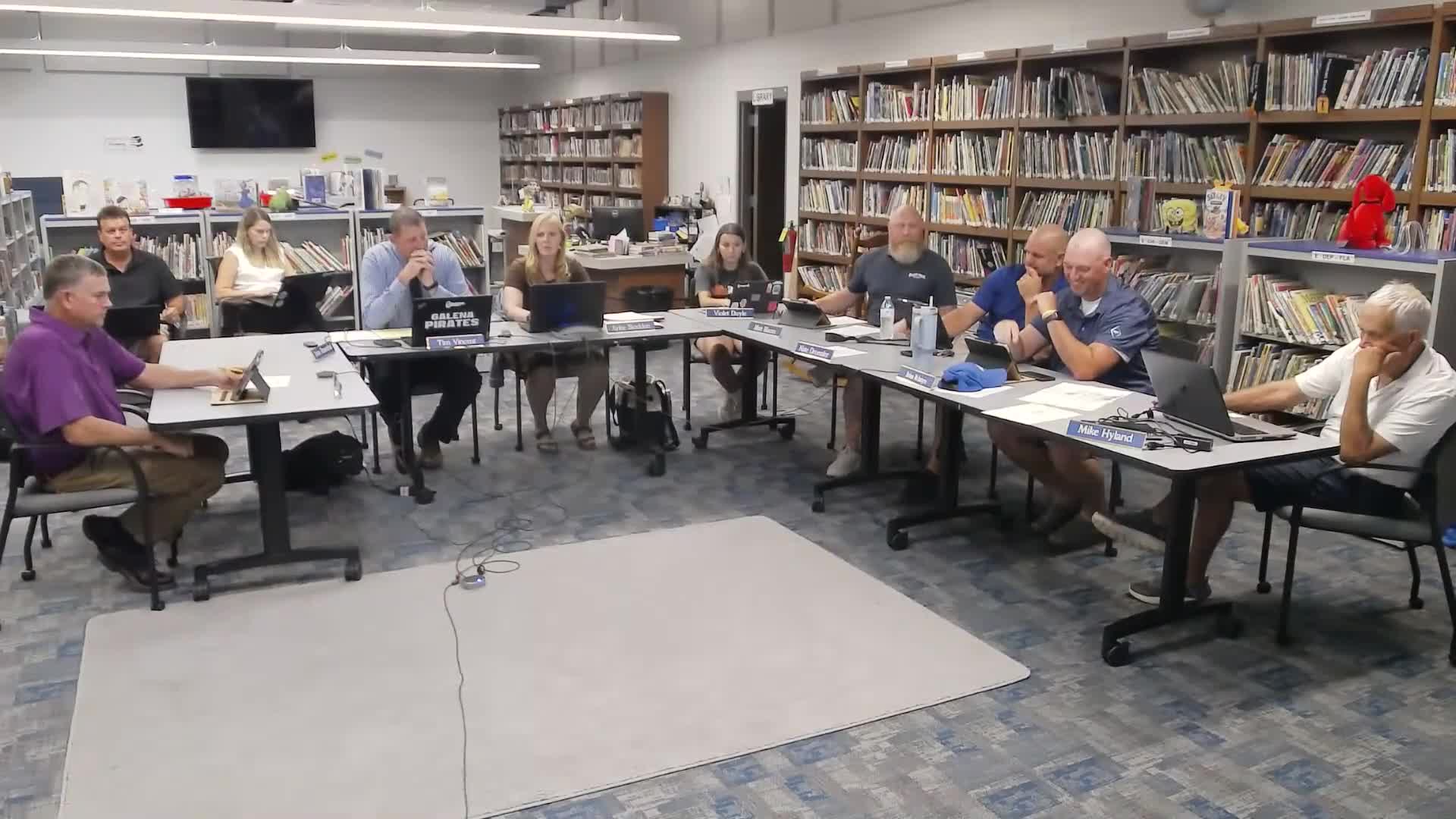
Summary
After a public hearing, the Galena Unit School District board approved the 2025–26 fiscal year budget. District staff said planned capital work on the new high school and related projects will intentionally draw down several fund balances to pay for furniture, vocational equipment and asbestos abatement.
The Galena Unit School District board approved the district’s fiscal 2026 budget following a public hearing at its regular meeting. District staff presented the final budget and asked the board to adopt it before the state’s September deadline. Mister Vincent, district staff member, told the board the district’s largest fund, the education fund, shows a planned $430,000 deficit for the year. “We are purposely eating into our annual surplus…largely because of a very large furniture purchase that we’re going to make out of there to equip the new school,” he said, adding that vocational equipment and cafeteria fixtures also contribute to the cost. The presentation stressed that several funds — education (Fund 10), operations and maintenance (Fund 20), capital projects (Fund 60) and the health/safety fund (Fund 90) — are budgeted “in the red” on purpose to reflect construction spending and scheduled abatement work. Vincent said the district transferred about $14.6 million into capital projects at a prior meeting and has since cashed several certificates of deposit to lock in about 4.25 percent interest on reserves. Vincent also described restricted accounts that cannot be repurposed: money in the district’s Social Security and IMRF accounts is limited to those obligations, and the district intentionally under‑levied last December to spend down excess reserves. He said the final budget differs little from the tentative budget presented in August overall, though projected interest income changed after the transfers and market moves. During the public‑hearing portion of the meeting attendees had an opportunity to ask questions before the board moved to adopt the budget. A motion to approve the fiscal 2026 district budget passed on a roll call vote. Board officers said timing will determine whether some capital payments — including a roughly $400,000 specialist asbestos abatement phase — fall in the current fiscal year or are carried into the next year’s budget. The approved budget authorizes the district to use capital reserves and planned transfers to complete construction and abatement work while keeping restricted funds reserved for their statutory purposes.